Sign in. It’s quick, free and it’s up to you.
An account is an optional way to support the work we do. Find out more.
Sign in. It’s quick, free and it’s up to you.
An account is an optional way to support the work we do. Find out more.
(Seo alt ónár bhfoireann Gaeltachta. Is féidir an bunleagan as Gaeilge a léamh anseo)
A MAJORITY ON the island of Ireland – north and south – supports the Irish language, according to a new all-island survey published today, and there is also a majority calling on the Irish government and the Stormont Executive to do more to promote education through Irish.
According to the survey commissioned by Foras na Gaeilge, the cross-border language body established under the auspices of the Good Friday Agreement, 78% of respondents in the Republic of Ireland expressed support for Irish, an increase of 11%, while 55% of those who responded in Northern Ireland said they “support Irish”, up 10%.
The survey was conducted by Ipsos/B&A in partnership with Trinity College Dublin and involved 1,498 respondents, 1,000 from the Republic and 498 from Northern Ireland. It is the longest established survey on the island on public attitudes to Irish, with surveys having been conducted from 1973 onwards in the south and from 2001 north and south.
The report is based on data from a large-scale representative survey carried out in the Republic of Ireland and Northern Ireland in the summer of 2025, with a margin of error of plus or minus 4%.
At a time when there are political controversies about bilingual signage in the North and delays in an Irish language strategy from the Executive, it is noteworthy that there has been a significant reduction in opposition to Irish in Northern Ireland – down from 14% in 2013 to 7% in 2026.
Included in this reduction in the percentage of people opposed to Irish, 23% of respondents among the Protestant/Unionist/Loyalist (PUL) community indicated that they were opposed to Irish, down from 28% in 2013.
Indifference towards Irish is the attitude reported among 60% of the PUL community, up from 55% in 2013. There has also been a reduction in the proportion of the population in the south who are opposed to the language, down 10% to just 2% between 2013 and 2026.
Of concern to Foras na Gaeilge chief executive Seán Ó Coinn is the increase in the number of young people who lack fluency in the language.
“50% of respondents in the south, when assessing their own Irish, indicated that their ability was limited or that they had no ability in Irish – a result that is a cause for concern and is 7% higher than what was reported in 2013,” he said.
“This highlights an urgent need to improve the Irish-language learning outcomes in our schools.”
Speaking at the launch of the survey, Dara Calleary, minister for community and rural development and the Gaeltacht, said the results would “also be a valuable source as the next Government strategy is being developed when the 20-Year Strategy for the Irish Language comes to an end in 2030.”
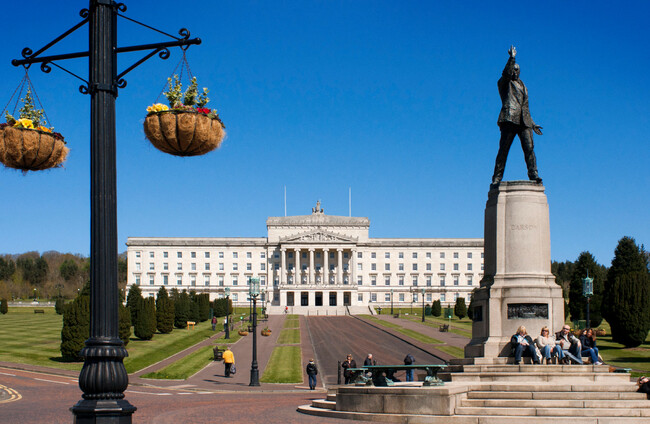
The survey was launched in Buswells Hotel in Dublin today, and there will be another launch event at Stormont in Belfast on Thursday.
The Journal’s Gaeltacht initiative is supported by the Local Democracy Reporting Scheme.

To embed this post, copy the code below on your site














have your say