Sign in. It’s quick, free and it’s up to you.
An account is an optional way to support the work we do. Find out more.
Sign in. It’s quick, free and it’s up to you.
An account is an optional way to support the work we do. Find out more.
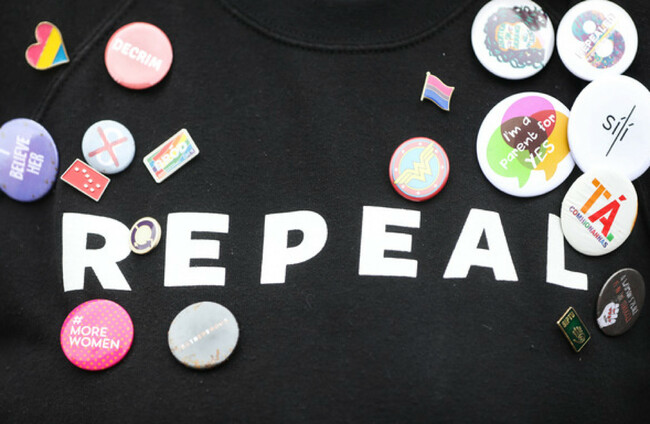
TODAY IS THE fifth anniversary of the referendum vote to repeal the 8th Amendment, which paved the way for legalising abortion in Ireland.
Five years on and the debate has turned to how abortion services are being delivered across the country and what changes to the legislation may be required.
Speaking to The Journal, Labour leader Ivana Bacik said the change in abortion services has been a “massive step forward for women”.
“Given where we’ve come from, it’s incredible to see how many doctors have signed up. It’s so welcome to see so many women who are now able to access abortion services in Ireland,” she said.
Despite this positive change though, she said “clearly we need to do more.”
Concerns have been raised about certain aspects of the current legislation that have led to women and couples continuing to travel abroad for terminations, although in much smaller numbers than before.
Last month, an independent review of the current abortion legislation commissioned by the Government was published, which recommended 10 changes to current legislation.
“Compared to where we were before the implementation of the legislation, there’s been a huge advance in the availability of termination of pregnancy services in the country and the vast majority of women do not need to travel anymore,” Dr Peter Boylan told The Journal.
“However, there are clearly difficulties and problems which have been identified in the report. The three-day waiting period, the criminalisation aspect, and the fatal foetal abnormalities are causing a lot of problems. Those are the main issues that need to be addressed.”
Abortion was initially outlawed while Ireland was under British rule in the 19th Century, but it was in 1983 that the equal right to life to a mother and the unborn was enshrined in the constitution in the form of the 8th Amendment.
The Journal takes a look back at the key moments in Ireland’s abortion law history that brought us to where we are today.
In the wake of abortion being made legal in the United States through the landmark Roe v Wade Supreme Court decision in 1973 and similar legislation brought in by France and Germany that allowed abortion in certain circumstances, a lobbying campaign was begun by The Pro-Life Amendment Campaign.
The group’s aim was to lobby for the introduction of language into the Irish Constitution that would prevent such developments from taking place in Ireland.
Although abortion was still illegal at the time, a 1974 Supreme Court case entitled McGee v The Attorney General found that individuals had a right to marital privacy and that this extended to the importation of contraception, which led the lobbying group to launch their campaign to amend the Constitution.
Initially proposed by Charlie Haughey’s Fianna Fail government 18 months earlier, the referendum was eventually put to the public by Garret Fitzgerald’s Fine Gael-led coalition with Labour despite concerns that the wording of the amendment would lead to legal ambiguity.
After an extremely divisive campaign, the referendum enshrining equal right to life of the mother and unborn child was passed by a majority of 66.9% in favour of the amendment to 32.1% against, with an overall turnout of 53.7% of the population. It was signed into law just one month later.
A High Court case concerning a teenage girl who was pregnant as a result of being raped became a famous example of the confusion brought about by the wording of the 1983 referendum.
The girl wanted to travel to England in order to get an abortion and the case was brought to the attention of the Attorney General, who decided that it was necessary to apply to the High Court for an order preventing the child from travelling.
The tension came from the overlapping rights of the mother and the right to life of the unborn, which the amendment had made equal.
The High Court accepted on the basis of the evidence it heard that the teenager was at risk of suicide should the pregnancy continue and that therefore her life was at risk. It also accepted that there was a threat to the life of the unborn if the girl travelled to England intending to have an abortion.
Eventually, The High Court granted the order preventing the girl from leaving Ireland but in a hastily convened appeal, the Supreme Court disagreed, ruling that abortion was allowed in circumstances where there was a substantial risk to the life, as distinct from the health, of the mother and that this risk could only be avoided by the termination of her pregnancy.
Following the X case, the government at the time attempted to introduce three new amendments.
The Twelfth Amendment proposed to amend 40.3.3 to specifically allow for abortion where there was a real risk to the life of the mother but that this would not include a threat of suicide, which would have permitted abortion in more limited circumstances than those allowed by the Supreme Court.
This effort failed however, with the result that the status quo remained in place – meaning that abortions could be performed if there was a direct threat to the mother’s life, including from suicide.
The two other proposed amendments were adopted though:
The Thirteenth Amendment, meaning that the abortion ban would not limit freedom of travel from Ireland to other countries for a termination
The Fourteenth Amendment, meaning Irish citizens had the freedom to learn about abortion services in other countries
Another referendum was held in 2002 that would have seen citizens given the right to get an abortion in circumstances where they were at risk of suicide but it was rejected, although this time by a tighter margin and with a lower turnout than the previous 1983 and 1992 votes.
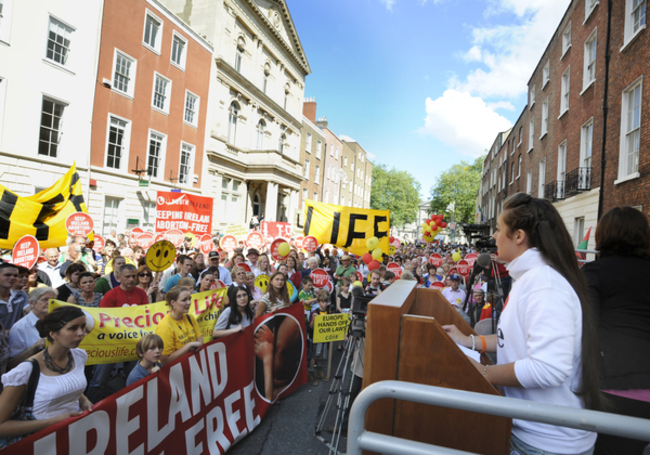
In the case of A, B and C, the ECHR ruled that Ireland had failed to clarify the circumstances under which a person could get an abortion.
With regard to C, the court found that Ireland was in violation of Article 8 of the European Convention on Human Rights, which provides a right to private and family life, home and correspondence, because C did not have an effective way of determining whether or not she had a right to get an abortion.
The court also ruled that abortion was not a right guaranteed under Article 8.
The UN Committee on the Elimination of Discrimination Against Women criticised Ireland’s legal position in 2011, which prompted Irish politicians to examine the issue.
An expert group was set up by the government to recommend how the state might respond to the ECHR judgement, but it was overshadowed by the death of Savita Halappanavar, who died of sepsis at University Hospital Galway after her request for an abortion following a miscarriage was denied.
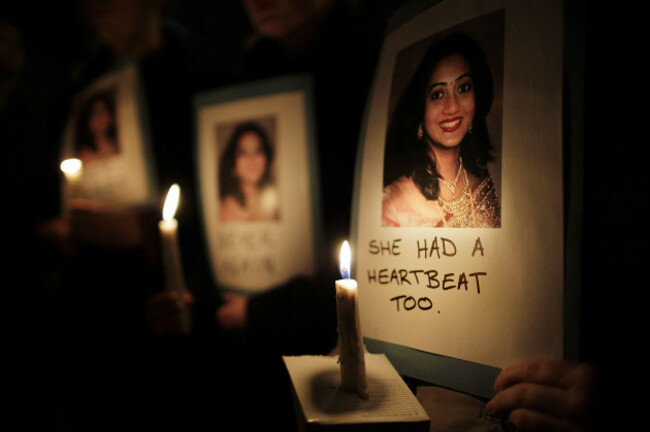
Savita Halappanavar’s case brought the ambiguity of the Irish legal position on abortion even further into the political spotlight.
Her death sparked outrage among the public and led to an investigation by the HSE and HIQA, which found multiple failings on the part of the medical team. The report also made a number of recommendations at local and national levels.
After the news of her death became public, a sitdown protest attended by over 2,000 people was held outside the Dáil. There were similar demonstrations and vigils in cities around the country.
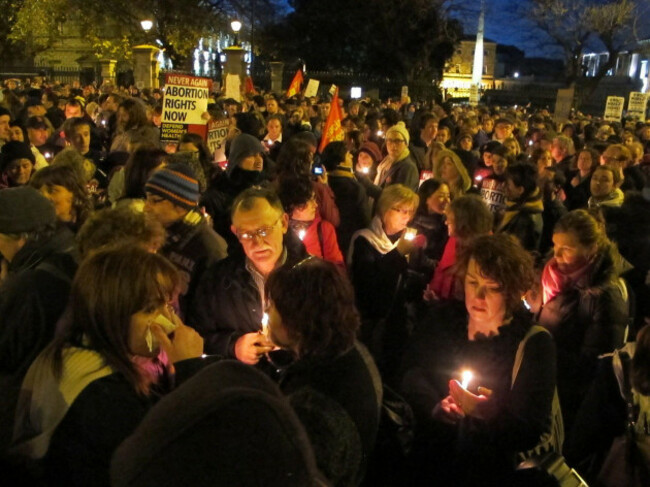
Investigations into her death did not specifically examine whether Article 40.3.3 had any act or part in her illness but two of the three recommended further scrutiny of the law of the day. (Her parents later called for the Eighth Amendment to be repealed.)
When discussing Ireland’s abortion laws in October 2017, the Oireachtas Eighth Amendment Committee heard from Sir Sabaratnam Arulkumaran, Professor Emeritus of Obstetrics and Gynaecology at St George’s University of London. He was the author of the HSE report into Savita’s death.
“It was very clear to me during the inquiry that the thing preventing the physician from proceeding was the legal issue because she repeatedly said she was concerned about the legal issue. I will give a little bit of explanation,” he said.
“The mother was sick. There was no question about that. Even at the last minute they were using a hand probe to see whether the baby’s heartbeat was present or not. Any junior doctor would have said it was a serious condition and they must terminate.
“They were just keeping her going because of the mere fact the heartbeat was there. The legislation played a major role in making a decision. Somebody else might say they would have done the termination much earlier. That is a personal interpretation. It is why things are made difficult because of the legislation.
“I agree that if the legislation had been different, Savita’s case would not have happened.”
The Protection of Life During Pregnancy Act codified the Supreme Court’s 1992 ruling in the X Case, legalising abortion in cases where doctors deem there is a threat to the mother’s life, including in cases where there is a risk of suicide.
It also set the maximum penalty for assisting an unlawful abortion at 14 years in prison.
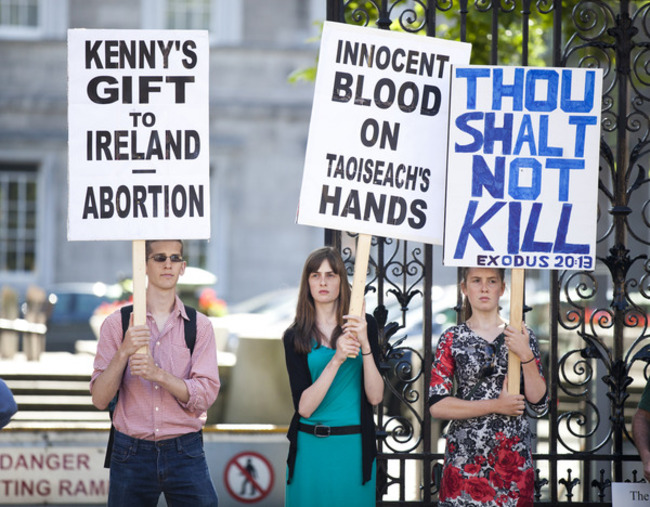
Ireland was again criticised for the lack of clarity as to what constitutes a “real and substantive risk” to a woman’s life. The UN Committee on Economic, Social and Cultural Rights called for a review of the 2013 Act.
The Committee also called on Ireland to hold a referendum on Ireland’s “highly restrictive” abortion legislation. The body made particular reference to the criminalisation of abortion, including in cases of rape, incest and health risks for pregnant women.
Pressure from the UN continued to mount as the The United Nations Human Rights Committee said that Ireland’s ban on abortion subjected a woman carrying a foetus with a fatal abnormality to discrimination and “cruel, inhuman and degrading treatment”.
The Irish government was ordered to pay Amanda Mellet, who travelled to the UK for an abortion, €30,000 in compensation.
Ireland was again criticised by the UN Human Rights Committee, which found that Ireland’s law prohibiting and criminalising abortion violated the human rights of a woman.
The finding was made in relation to the case of Siobhán Whelan, who was denied an abortion in 2010 after the diagnosis of a fatal foetal abnormality.
Earlier that year, the Citizens’ Assembly recommended that the Eighth Amendment be replaced or amended, and that a provision should be made in the Constitution to allow the Oireachtas to legislate for abortion.
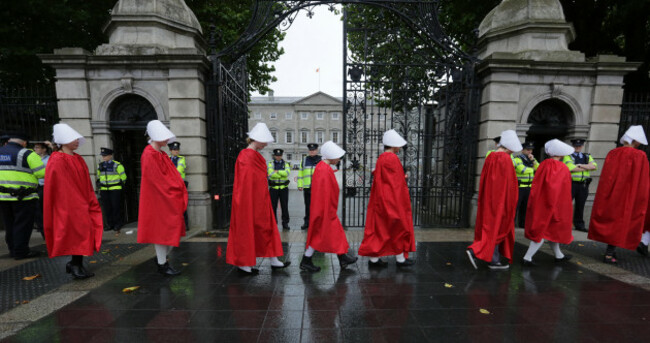
The CA recommended that terminations should be allowed without restriction up to the 12th week of pregnancy, for socioeconomic reasons up to the 22nd week of pregnancy, and during any period of the pregnancy in cases of fatal foetal abnormality (where the child is likely to die in the womb or shortly after birth).
An Oireachtas committee was established to look into the recommendations of the CA. Over the course of four months, the group of 22 TDs and senators questioned medical experts as well as people with direct experience of the issue.
In its report, the Oireachtas committee recommended that the Eighth Amendment should be repealed, and that terminations should be allowed up to 12 weeks of pregnancy “with no restriction as to reason provided that it is availed of through a GP-led service delivered in a clinical context”.
The committee’s final report recommended the following:
Termination of pregnancy should be lawful where the life or health of the woman is at risk and that a distinction should not be drawn between the physical and mental health of the woman.
Provision for gestational limits for termination of pregnancy should be guided by the best available medical evidence and be provided for in legislation
that any assessments in relation to the termination of pregnancy where the life or the health of the woman is at risk should be made by no fewer than two specialist physicians.
That it shall be lawful to terminate a pregnancy without gestational limit where the unborn child has a foetal abnormality that is likely to result in death before or shortly after birth.
The law should not provide for the termination of pregnancy on the ground that the unborn child has a significant foetal abnormality where such abnormality is not likely to result in death before or shortly after birth.
The law should be amended to permit termination of pregnancy with no restriction as to reason provided that it is availed of through a GP-led service delivered in a clinical context as determined by law and licensing practice in Ireland with a gestational limit of 12 weeks.
Speaking at the time, Chairperson Senator Catherine Noone said: “It is fair to say that the issue of abortion remains one of the most divisive issues in Irish life and people hold deeply held views on the matter.
To that end the work of the Joint Committee was never about one side or the other. It was about women’s health and how best to ensure swift and safe support in sensitive and difficult cases.
“Termination of pregnancy and indeed continuation of pregnancy is not a black or white issue. Every case is unique.”
After a bitterly contested campaign, the Irish public voted to repeal the 8th Amendment providing the basis for making abortion legal.
The Repeal campaign won 67% of the vote while 33% voted to keep the amendment in place.

President Michael D Higgins signed the Health (Regulation of Termination of Pregnancy) Bill into law, making abortion services legal in Ireland.
The legislation passed through all stages of the Oireachtas, completing its passage in the Seanad.
The Act allows for terminations of pregnancy up to 12 weeks. It also provides for terminations where there is a risk to the life or a serious risk to the health of the pregnant woman.
Women who have been given a diagnosis of fatal foetal abnormalities will now be able to legally avail of early termination of pregnancy in the hospital they are being treated in.
Concerns about Ireland’s abortion legislation were raised by the UN Human Rights Committee in July last year, with issues like waiting periods and barriers to access among them.
In its report, the Committee welcomed that the 8th Amendment was repealed in 2018, which provided the basis for abortion to be legalised in Ireland.
However, the Committee criticised the abortion laws themselves, particularly around the three-day waiting period and the lack of availability of abortion services in some parts of Ireland, particularly for women in rural communities and vulnerable situations.
“The Committee is concerned by provisions that subject women to a mandatory 3-day waiting period prior to termination of pregnancy, as well as by the challenges faced by women and girls to access safe and legal abortion due to alleged low percentage of general practitioners providing abortion services, disproportionately affecting women and girls in vulnerable situations and rural communities,” read the report.
The report called on the Government to “review” these provisions to ensure that there are no barriers for women seeking abortions.
The Committee also raised concerns about the number of women and girls who were reportedly travelling abroad to seek abortion care, either after being denied one in Ireland or being unable to access the procedure.
A review of Ireland’s abortion legislation recommended that the required three-day waiting period to access a termination should no longer be mandatory.
It also found that there is an “uneven geographic coverage” of service providers, which requires some women to travel, sometimes at significant cost, to access a termination.
The review of the Health (Regulation of Termination of Pregnancy Act) 2018 was led by barrister Marie O’Shea, who was appointed as the independent chairwoman last year.

To embed this post, copy the code below on your site













have your say