Sign in. It’s quick, free and it’s up to you.
An account is an optional way to support the work we do. Find out more.
Sign in. It’s quick, free and it’s up to you.
An account is an optional way to support the work we do. Find out more.
PARENTS WHO SADLY lost their young daughter to meningitis almost five years ago are making it their mission to ensure that people know the signs and symptoms of the deadly disease.
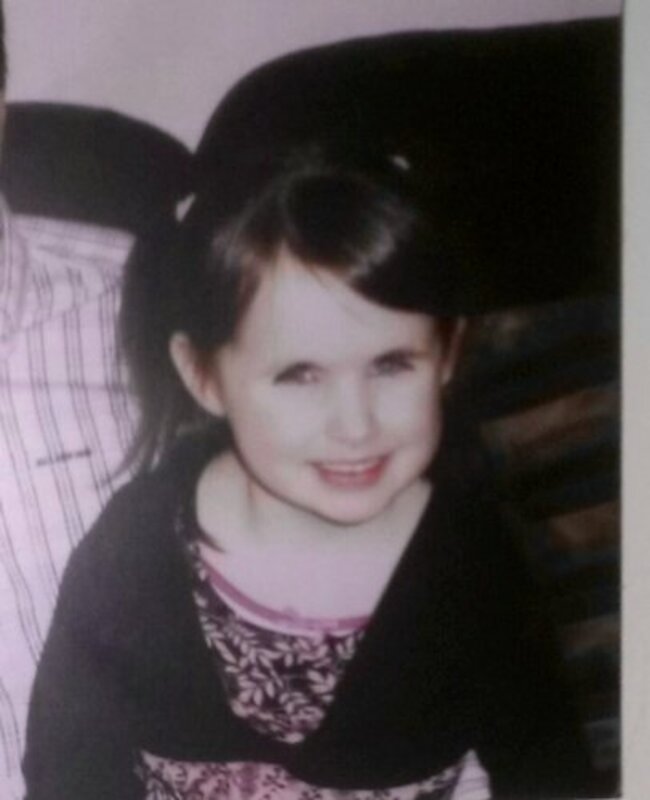
Siobhán and Noel Carroll’s four year old daughter Aoibhe passed away after becoming seriously and rapidly ill. “We never thought we could be affected by meningitis – how wrong were we,” Siobhán told TheJournal.ie.
Aoibh Carroll
Tragic loss
Their loss led them to set up ACT for Meningitis in 2011 to highlight the signs and symptoms of the illness. Carroll told TheJournal.ie that ACT is a way for the family to “get the awareness out there” and get people to know the kinds of symptoms of meningitis.
There is a lot of confusion around the signs and symptoms.
A recent survey carried out by ACT showed that 82 per cent of Irish people believe a rash is one of the first symptoms of meningitis to look out for.
However, for children with pneumococcal meningitis a rash is rare and only appears in less than 10 per cent of cases. For children with meningococcal meningitis, who also have infection of the bloodstream, a rash appears in approximately 50 per cent of cases.
What people don’t always realise, said Carroll, is that while anyone can get meningitis, there are three high risk age groups for the deadly disease:
The big message they want to get across to parents is: Trust your instincts – you know your own child.
If they are gradually getting worse and Nurofen or Calpol doesn’t bring down their temperature, trust your instincts and go to the doctor, get a bit of reassurance.
Carroll says that if parents start to worry, they should “go straight to hospital – and go get medical advice. If you are not happy go somewhere else. If you are very concerned ring an ambulance. Always ask for a senior paramedic as they can administer penicillin.”
Shocked
Aoibhe’s death five years ago completely changed their lives, said her mother – and it also showed them that there was work the family could do to help others.
We were really shocked about the lack of information out there about meningitis. We felt there was a major need to get the correct information out there to stop another family going through what we were going through.
They received fantastic support, which has helped them in dealing with such a terrible loss. But it also showed them there is a major need for awareness, and that their work is important.
The parents want to help others who have been through similar situations, as they realised “people are really left on their own when they are affected by it”, said Carroll. There are those who are bereaved, but also those who have suffered serious side affects from contracting meningitis.
“People are starting to come to us looking for help,” she said. “We do whatever we can to help. We get it.”
It is easy to say “that will never happen to me”, but meningitis does happen, and it can take lives. The Carrolls have a strong message – get to know the signs and symptoms of meningitis, get to know the most at-risk age groups and be assertive. Trust your instincts, because they could save a life.
Signs and symptoms of meningitis:
Babies and infants
Young children

To embed this post, copy the code below on your site















have your say