TheJournal.ie uses cookies. By continuing to browse this site you are agreeing to our use of cookies. Click here to find out more »
Dublin: 10 °C Wednesday 22 May, 2013

Minister: Primary school system needs to “adapt to more diverse society”

A report on patronage and pluralism in the primary sector showed that there is increased demand for new forms of multi-denominational and non-denominational schooling.

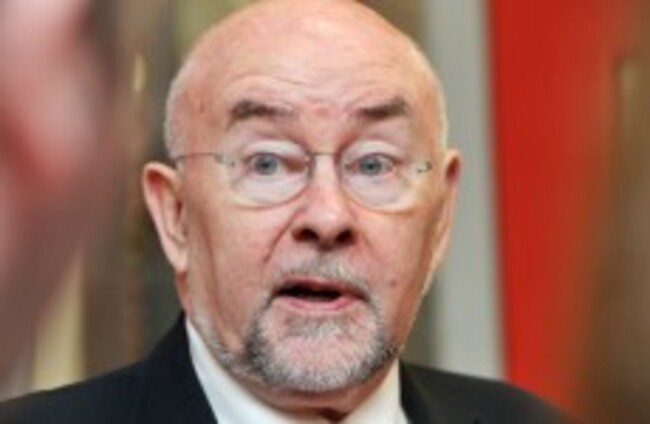
Image: Laura Hutton/Photocall Ireland

A NEW REPORT on patronage and pluralism in the primary sector has been published today.

The Minister for Education and Skills, Ruairí Quinn TD, welcomed the report of the Advisory Group to the Forum on Patronage and Pluralism in the Primary Sector.

He commented:

We live in a changed and changing nation. There is a general acceptance that a greater diversity of primary schooling is necessary and I welcome the readiness among partners to embrace this. The key issue is how best to promote and develop this diversity.  The Advisory Group report will assist us in this complex area.

The Minister thanked the independent Advisory Group members, Professor John Coolahan, Chair of the Group, Dr Caroline Hussey and Ms Fionnuala Kilfeather for their considerable work and commitment to the Forum.

The Minister said the report “shows the need for the primary school system to now adapt to the needs of a more diverse society”.

In total, 247 submissions were received from interest groups, parents and members of the public.

The report notes that while 96 per cent of education provision at primary level is denominational arising from the historical development of Irish primary education, there is clearly increased demand for new forms of multi-denominational and non-denominational schooling, as well as increased demand for Irish language schooling.

Minister Quinn said parental choice should be the main concern, and that primary school provision needs to reflect Ireland’s changed society. He asked that the Education Partners and interested parties examine the report and take time to reflect on and digest the recommendations.  He plans to outline his official response in May. A White Paper on pluralism and patronage in the primary sector will follow.

The recommendations of the Advisory Group can be divided into three key areas:

  • Divesting patronage where there is a stable population and demand for diversity of schools
  • Dealing with Irish medium primary schools
  • Promoting more inclusiveness in all schools, including ‘Stand Alone’ schools where divesting patronage to another body is not an option

The report recommends achieving diversity of patronage by using the existing stock of schools in areas where the population is stable.

The Advisory Group advises that change of patronage should happen in a phased way. It recommends that phase one would involve examining school patronage in 43 towns and four Dublin areas identified by the Department in 2010, arising from a request by the Catholic Church, as likely to have substantial demand for diversity.  This will involve 18 dioceses and scrutiny of approximately 250 schools, out of which approximately 50 may be divested.

A three stage process is recommended, whereby the DES would gather information on the demand for divestment through parental surveys.  This would be followed by a report on the options for patronage and finally patrons would be required to respond within a certain timeframe.

This would occur alongside a programme of provision of new schools in areas of population growth, the patronage of which would be based on parental demand.

The report makes a number of recommendations concerning the  provision of Irish medium schools,  including the piloting of the concept of a “satellite” school, which would be linked to a well established ‘parent’ Irish medium school.

For communities served by one ‘Stand Alone’ school, where transfer of patronage is not an option, the report makes recommendations aimed at ensuring such schools are as inclusive as possible and accommodate pupils of various belief systems.

The report suggests the development of a protocol which would facilitate all  schools in developing clear policies accessible to parents on how they manage diversity and ensure an inclusive and respectful environment for all their pupils.

The Minister said he is mindful that changes should, wherever possible, be cost neutral.

Read: No major difference in quality between large and small schools>

Read: Teachers call for reduced Church control of schools>

Read next:

Comments (30 Comments)

  • Faith formation should be removed from the classroom, with Sunday school (or extracurricular classes) being the obvious time & place for it, if that’s what parents wish for. Primary school children are currently spending 10% of their class time on religion, which is over double the amount in other OECD countries, surely this time could be used more constructively, especially when you consider Ireland’s poor scores in literacy and maths in the international PISA survey.

    Ireland spends the highest percentage of class time on religion in the OECD table of developed countries at both primary and second levels; this really needs to change if we’re going to move up the educational ranks.

    Reply
  • Really and truly, an out and out ban should be brought in forcing churches to relinquish the power they have over schools. Sure, there are plenty of people who want their children to be taught their religion therefore it is up to them to set up sunday schools in their churches ect. and it should not be funded by the taxpayer.

    Reply
    • mcbab 10/04/12 #

      Michele and Stephen above have given a logical and simple solution to the teaching of religion. Sunday schools set up in local churches, as was and is done in the UK and other countries is the perfect answer. Who could find fault with that idea? The relevant religion is taught outside of school hours leaving more teaching time in school. Everyone happy !

      Reply
  • Hours spent teaching kids religion is brainwashing and indoctrination. Instead they should be taught critical thinking and science. As the real story if far more amazing than any fairy tale. And it doesn’t involve talking snakes!

    Reply
  • Brian 10/04/12 #

    This should really be a very simple debate. Religion should have absolutely nothing to do with a child’s education. If you can’t handle that then you have all the time in the world at home and at mass to brainwash your child. Anything else is just shoving it into people’s faces.

    Reply
  • The education report is a step in the right direction but doesn’t go far enough. Fact and fiction need to be separated in the education system. Culture and facts are not the same thing. Just because some adults wish to believe things doesnt make them valid subjects. The majority of parents in certain US States want creationism taught in schools and the teaching of evolution removed but the law doesnt allow this.

    Reply
  • I agree that tax payers money and teaching time should not be used for the indoctrination of children. If you want your child to have a religious education classes outside of school hours or a Sunday school arrangement should be set up. The argument of asking to be removed from religion classes does not work as catholic schools make children say prayers several times a day. No school should have a religious ‘ethos’ as its not a teacher job to conscript followers into a religion. The church should provide these services if they are wanted. Schools should be neutral.

    Reply
  • Fundamental change in this area is long overdue and as other contributors have already correctly pointed out, religious indoctrination should have no place in a modern and progressive education system. And there is strong public support for change – according to a report in The Irish Times today, 61% of parents favour the state and not the church running schools.

    Another welcome recommendation in the report is the abolition of the rule (introduced in 1965 I believe) that states religion is the most important subject in the school day. It was absurd to insert such a rule in the first place and it now needs to go – a relic of another era.

    Reply
  • Does this mean closing the muslim schools too?

    Reply
    • Paul 10/04/12 #

      Only if the Muslim schools were your only available options, which isn’t really the case, there are only two as far as I know so in fact there should probably be more Muslim schools to cope with parental demand, although I wouldn’t be happy with schools converting to Islam or anything like that… There needs to be balance and choice which is often denied to families with no interest in Catholicism but no alternative, and a legal obligation to send their children to school, even when the school’s ethos conflicts with their own. Those are some seriously mixed messages for a small mind to interpret.

      Reply
    • Catholic schools are pretty much open to kids from all faiths and backgrounds, Muslim schools are not.

      Reply
    • Paul 10/04/12 #

      That may be true but no Christian, or other non-Muslim, is left with no alternative but the Muslim school. Nobody is left without a choice. The same can’t be said for families all over the country where there is no alternative to Catholic schools.

      Reply
  • The principle is correct but please don’t chose Educate Together in it’s existing form
    It has an open enrolment policy and is based on a first come first served basis which means that a child can live in any area and as long as they turn up early enough on enrolment day they get a school place
    This has the potential to disenfranchise the child living local to the school
    ET should be forced to change their enrolment policy before they can be part of this process

    Reply
    • The problem is not Educate Together’s Enrolment policy but the lack of Eduate Together Schools which results in them being massively oversubscribed. If you have 100 children looking for 30 places then 70 are going to be dissappinted no matter how you arrange it. The solution is, as the Forum recommends, the changing of patronage in some schools so as to provide an education system that reflects the demands of Irish people today and not 50 years ago. Why should choice be limited to only those who are lucky enough to live near an ET school?

      Reply
  • The report is a welcome step in the modernisation of our education system. However, and this view will not be popular in this forum, for those of us who want our children educated in a particular ethos we should not have unreasonable impediments to make the appropriate arrangements to enable this.

    Reply
    • Why not introduce Sunday school for those who want a particular religion taught?

      Reply
    • I agree with Michelle. The burden of religious education should not lie with the education system and therefore the tax payer. Instead, if parents want religious education for their children they should arrange for it on the weekends at the parish centres where the parish cathecists can indoctrinate them.

      Reply
    • Sunday school is certainly an option but there is still a place in the education system for schools run along a particular religious ethos. There may not be as many of them when this process is completed as now and I do not have any issue with that.

      Reply
    • Michelle and Robert are dead right… The church is wealthy enough to provide extra curricular religious education for parents who want that for their children, taxpayers shouldn’t be funding religious indoctrination. Even more importantly for me however is, any school which adopts a religious ethos potentially discriminates against the children of families who do not share that religious ethos. It’s shameful that any public institution would have such discrimination (even towards a potentially tiny minority) integrated into its very existence.

      Reply
    • Where this is going is that the state will in time take over in full the responsibility of the basic provision of education once the details can be worked out. The default education option should be the state operated school. The state should have no role in the religious education of children. However, there should not be undue impediment to those who wish to make the appropriate arrangements to have their children educated in a particular ethos. For many that may due to lack of numbers be restricted to a Sunday School situation but if there are sufficient numbers of parents who wish to come together to support a school with a particular ethos that is not a state run school then there should not be undue impediment to that and by that I mean that there is no outright ban against such arrangements. Whether such arrangements may receive some or no support from the state in the provision of education is an entirely different matter.

      Reply
  • All or None! If religion is to be taught in our schools then insure that all religions are represented. Since this is impossible… Then insure that no religion is taught in our schools. it is important that this country should move towards seperation of church and state. If a parent is concerned with the moral and spirtual development of their child, then they should modify their lifestyles and teach their children themselves… Or fund religious training outside of school.

    Though many issues exist in the US, I can attest that in general, seperation of church and state works very well in the US and the school system. I spent my primary and part of my secondary education in Catholic Schools. For this, my parents paid a fair tuition. I had friends of other religious denominationsspend four hours every weekend for related trainings.

    What’s so difficult to intiate something like this in this country?

    The bottom line is this…. This country is becomomg more diverse. All things decided to benefit the general public should embrace all of our differences. Anything extra should be paid for by the individual.

    Reply
  • Lots of double speak and lack of clarity from catholic church rep Michael Drumm on the News at One. It appears everyone has “misunderstood” or “misinterpreted” report, except him of course…

    Govt must not allow themselves to be diverted in this task by all too predictable foot dragging from the catholic church.

    Reply
  • This minister and the rest of his labour cronies really don’t like the catholic church!

    Reply
  • Reading this report, I am left with the undeniable conclusion that I should go back to school. Not because of satellites or social inclusions, but because the only thing I really understand is “it mustn’t cost anything”. Woof.

    Reply
  • If you don’t want your child learning religion then tell the teachers not to include your kids in that aspect of education, a few done this when I was in school and there was no problem. The hard liners like some above are a minority not the majority so I don’t think the country should bend over to their demands

    Reply
    • Paul 10/04/12 #

      Happened in my school too. That proddy girl got very good at colouring in as that’s pretty much all she did in communion a d confirmation year. If you’re that bothered to get your child brainwashed drop them off at Sunday school on your way into mass, or whatever service you regularly attend.

      Reply
    • I haven’t attended any service since I was a child aside from weddings or funerals but I would be perfectly happy about my children to be informed about all religions in school and let them make their own minds up.

      Reply
    • Paul 10/04/12 #

      That’s religious education which is a compulsory subject as far as GCSE in England and more or less what happens in educate together schools. What happens in most Irish primary schools is religious instruction (i.e. they’re instructed on what to believe from the perspective of the one true faith). Educate Together do religious education where kids learn about “belief systems” (not just the one) as well as moral, spiritual and ethical aspects of life, this I’ve no problem with and they’re prepared for any sacraments they’re going to take part in by someone else while their teacher continues working with the rest of the class. I wasn’t joking about that girl, she really was left to do drawing and colouring in. An inclusive classroom is no place for religious instruction.

      Reply
    • That’s fair enough but there are a few people that want absolutely no religious teachings because of their own beliefs and that is no better than catholic church only wanting theirs.

      Reply

Add New Comment