Sign in. It’s quick, free and it’s up to you.
An account is an optional way to support the work we do. Find out more.
Sign in. It’s quick, free and it’s up to you.
An account is an optional way to support the work we do. Find out more.
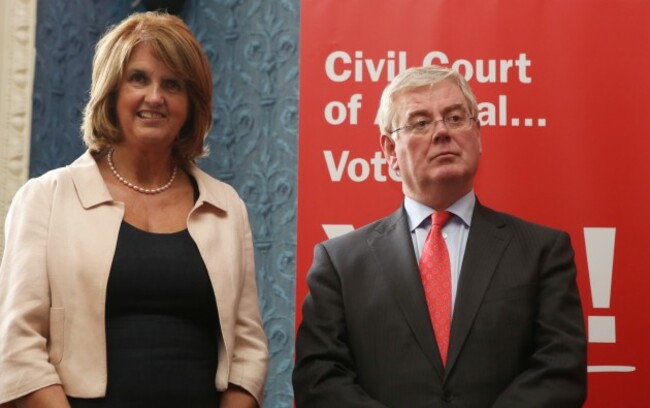
EVEN BEFORE THE resignation of Eamon Gilmore as Labour Party leader, Joan Burton has been repeatedly asked about her leadership ambitions as her party slid down recent opinion polls.
The Minster for Social Protection will be the favourite to replace the Tánaiste, but other parliamentary party members like Alex White, Seán Sherlock, Brendan Howlin and Alan Kelly will mentioned ahead of the nomination process.
Joan Burton has been installed as short odds 2/5 favourite to succeed Gilmore. With good reason, she is certainly the most recognisable face within the party and gained much public backing when she was the party’s finance spokesperson in the dying days of the previous Fianna Fáil administration.
It’s not a stretch to say that her consistently strong Dáil performances were one of the driving forces behind Labour’s record breaking seat haul in the last general election.
The fact that she wasn’t made Finance Minister was not only a shock to party members but also to the public. There was even some sympathy at the time for what was perceived as an undeserved sleight.
But that was over three years ago. In the interim, Burton has been a prominent Cabinet member in a Government that has proved electorally disastrous for her party, something which my count against her.
She has achieved a degree of success in protecting her department from some of the more stringent cuts that have occurred elsewhere, in health for example, with reports that cuts in her department were half what was originally expected in the last budget.
But her association with initiatives like the much maligned JobBridge scheme and the deep cuts to child welfare payments may count against her if Labour is looking for a leader that’s not so closely associated with the austerity programme.
Cabinet colleague Ruairí Quinn intimated as much over the weekend when he said that he didn’t think Burton as leader would significantly alter the perception of the party.

One of those who doesn’t carry that burden is Minister of State for Primary Care Alex White, currently the Government’s man answering the questions in the Dáil about the emotive issue of medical cards.
He has had to hear some tough stories from both the opposition, and indeed his own colleagues, but it’s fair to say that the public’s anger at the issue of medical cards is being directed more generally at the Government as part of overall policy than any particular individual.
A qualified barrister and former President of the Trinity College Students’ Union, Dublin South TD White could also be viewed as the type of leader who could repair some of the damage to Labour’s reputation in its traditionally vital bases in Dublin and among young people.
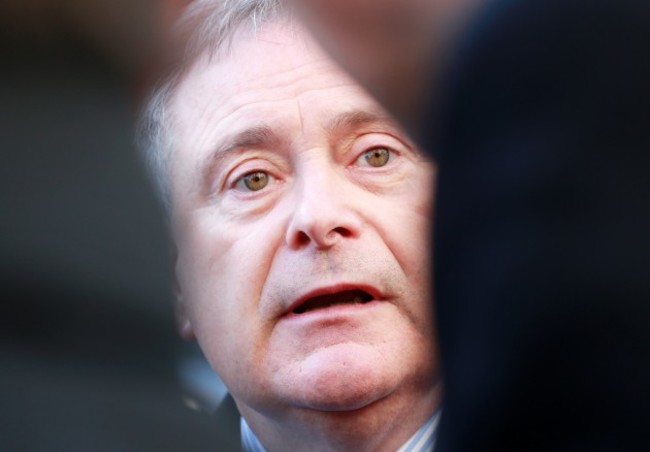
One outside contender who cannot be ruled out is Public Expenditure and Reform Minister Brendan Howlin.
He has twice ran and failed to win the leadership, but has been easily the best performing Labour minister in the Cabinet with his extraordinary work in bringing most of the public service along with him on the renegotiation of pay and conditions.
Howlin is said to have been quietly reaching out to Labour backbenchers in recent months as the leadership issue has come to a head but it’s not known what outcome he is seeking. This is one to watch.
Another one to keep an eye on is Dáil first-timer and current junior minister Alan Kelly. He has a record of electoral success having won a seat in the European Parliament and in the Dáil, both in his first attempt. The Tipperary man also entered the Seanad in 2007 and the journey from Senator to party leader via Leinster House and Brussels would be quite the swift quick and eventful.
Kelly is the Minister for State with special responsibility for Public and Commuter Transport, an area important to Labour voters, and if proximity to power means anything, he was the standing closest to Gilmore as he announced his resignation today
At 38, Kelly would be youthful choice to lead the party and presumably take on the role of Tánaiste. Something which may count against him as it may seem like the progressive move from a party point of view but perhaps premature for the lofty position in Government.
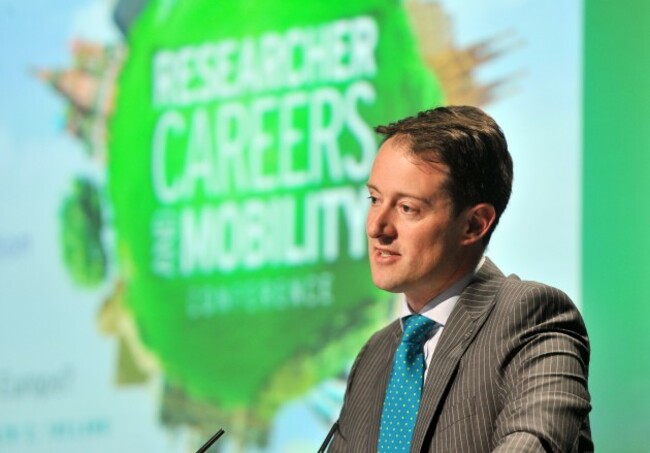
Another potential leader from among the newer generation of Labour TDs would be Minister of State for Research and Innovation Seán Sherlock.
Demonstrably well on top of his brief and well versed in the party line, Sherlock has proven that he would be well capable of dealing with the minutiae involved with building a party at ground level
Sherlock succeeded his late father Joe as TD, a man who was a representative in Cork first in 1967. So Kelly could appeal to several generations within the Labour Party who’s architecture will have all ordinary members voting on 4 July.
Other outside bets that could be considered include junior minister Kathleen Lynch or possibly backbenchers like Aodhán O’Riordan or Arthur Spring.
- Additional reporting from Hugh O’Connell

To embed this post, copy the code below on your site










have your say