Sign in. It’s quick, free and it’s up to you.
An account is an optional way to support the work we do. Find out more.
Sign in. It’s quick, free and it’s up to you.
An account is an optional way to support the work we do. Find out more.
TWO SCIENTISTS WHO unlocked some of the mysteries linked to obesity or a professor who figured out how to make stem cells without human embryos could be candidates for the medicine award when the first of the 2011 Nobel Prizes are announced tomorrow.
The prize committees don’t give any clues — they even keep nominations secret for 50 years — but winners usually have won many other awards and distinctions before they are considered for a Nobel.
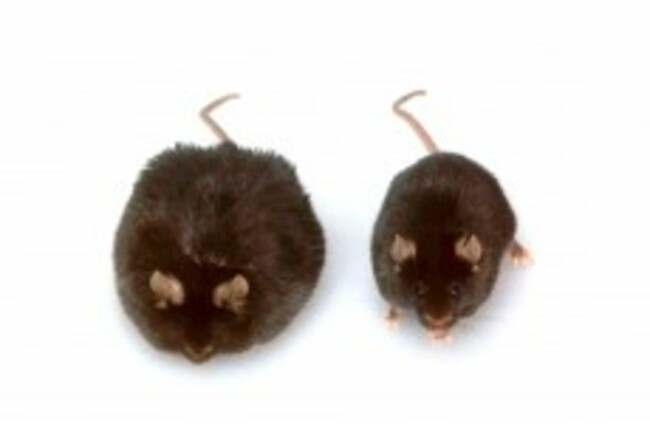
Canadian-born Douglas Coleman and American Jeffrey Friedman have won several prizes for their discovery of leptin, a hormone that regulates food intake and body weight, and could be in the running for the coveted prize worth $1.5 million.
Last year, Coleman, of the Jackson Laboratory in Bar Harbor, Maine, and Friedman, of Rockefeller University in New York, received the Lasker Award, often seen as a precursor to the Nobel, for having shown that obesity is frequently linked to metabolic disruptions, or the lack of leptin, rather than being a self-induced problem.
Stem cells
Japanese Shinya Yamanaka, another potential Nobel candidate, offered the world of regenerative medicine a breakthrough with experiments showing that stem cells can be made from ordinary skin cells. The discovery led to a leap in stem cell research, reducing the need for using human embryos.
Yamanaka won the Lasker Award in 2009 and this year shared Israel’s Wolf Prize. One out of three Wolf award-winners in chemistry, physics and medicine have also won a Nobel Prize.
Yamanaka, of Kyoto University in Japan and the Gladstone Institute of Cardiovascular Disease in San Francisco, could share the prize with British cloning pioneer John Gurdon or Canadian stem cell researcher James Till. Till discovered blood stem sells, which have saved the life of many thousands of leukemia patients.
“Gurdon’s cloning technique and Yamanaka’s stem cells are highly interesting in the field of basic science,” wrote science reporter Karin Bojs of Swedish daily Dagens Nyheter, who has stood out as a leading Nobel guesser over the years. “But so far, not a single sick person has been cured with these discoveries. It is therefore possible that Yamanaka and Gurdon get to share the prize with Canadian James Till.”
Bojs said other possible candidates for the prize are the American-French trio Ronald Evans, Elwood Jensen and Pierre Chambon for their research on nuclear hormone receptors, and American David Julius for his discoveries of the molecular mechanisms by which the skin senses pain, heat and cold.
“It will be awarded to fundamental discoveries that leads to an understanding of the human body and, or treatment or prevention of illnesses,” said Nobel Prize Committee Secretary Goran Hansson, declining to give away more details.
He said there are so many Nobel-worthy achievements in medicine that it can be hard to select a winner.
Cloak of secrecy
In an unusual leak last year, a Swedish newspaper revealed the jury’s selection — British test tube baby pioneer Robert Edwards — before the announcement. The committee has since applied even stricter rules on keeping their discussions and documents surrounding potential candidates secret.
But that doesn’t keep people from making predictions.
The scientific department of Thomson Reuters, which analyzes high-impact academic papers to make predictions, suggested U.S. scientists Brian Druker, Nicholas Lydon, and Charles Sawyers, could be awarded for work related to Gleevec and Sprycel, drugs that transformed chronic myelogenous leukemia from a fatal cancer into a manageable chronic condition.
Its predictions also include Robert Langer and Joseph Vacanti “for their pioneering research in tissue engineering and regenerative medicine,” as well as Jacques Miller, Robert Coffman and Timothy Mosmann for their discovery of two types of blood cells and their role in regulating immune responses.
The Nobel Prizes date back to 1901 after a will left behind by Swedish dynamite inventor Alfred Nobel, and medicine winners are typically awarded for a specific breakthrough rather than a body of research.
The other award categories include physics, chemistry, literature and peace. The economics award isn’t technically a Nobel and was established by Sweden’s central bank in 1968.
The prizes are handed out every year on 10 December, on the anniversary of Nobel’s death in 1896.

To embed this post, copy the code below on your site














have your say