Sign in. It’s quick, free and it’s up to you.
An account is an optional way to support the work we do. Find out more.
Sign in. It’s quick, free and it’s up to you.
An account is an optional way to support the work we do. Find out more.
Updated at 5.20pm
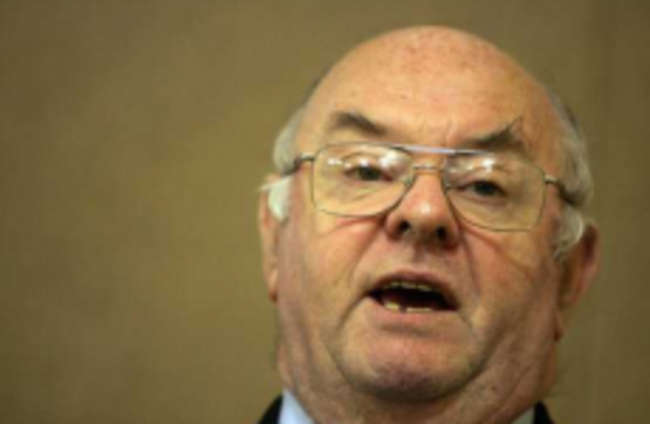
FORMER CENTRAL CRIMINAL Court judge Paul Carney has died.
Mr Justice Carney retired from the bench earlier this year, after a long career.
He was 72, and leaves behind a wife and four children.
Born in Dublin in 1943, Carney was educated at Gonzaga College and the King’s Inns in Dublin.
He was called to the bar in 1966 in Ireland and in 1969 in London.
He was made a senior counsel in 1980 and was appointed a judge in the High Court in 1991.
From there, he became the Presiding Judge at the Central Criminal Court, where he would hear some of the country’s most notorious and high-profile murder and rape cases.
President of the High Court Nicholas Kearns called Carney’s death a “sad loss”.
He was the pre-eminent criminal law judge in the Central Criminal Court in our time, presiding in a long career over well more than a hundred murder and rape trials.
“He did so with exemplary fairness throughout, a fact acknowledged by not only by practitioners but in many instances also by those standing trial before him.
“He will be greatly missed, particularly by his colleagues in the High Court, who held him in such high esteem.”
‘Society’s dirty work’
Minister for Justice Frances Fitzgerald said she wished to express her “deepest sympathy to Mr Justice Paul Carney’s wife and family on their very sad loss”.
“Mr Justice Carney was a judge of exceptional ability who made a huge contribution to the High Court bench, in particular in presiding over many high profile criminal law trials,” Fitzgerald said.
“I know he will be greatly missed and sadly he did not get to enjoy the benefits of a long and well-deserved retirement.”
Ken Murphy, Director General of the Law Society of Ireland, said he was “one of Ireland’s’ greatest ever criminal judges”.
“He did society’s dirty work,” Murphy’s statement said.
“Every working day, he heard evidence of depravity and of man’s inhumanity to man, but he never allowed himself become cynical about humanity or about our system of criminal justice.”
With reporting from Daragh Brophy.

To embed this post, copy the code below on your site












have your say