Sign in. It’s quick, free and it’s up to you.
An account is an optional way to support the work we do. Find out more.
Sign in. It’s quick, free and it’s up to you.
An account is an optional way to support the work we do. Find out more.

“THE STATUTORY ROADMAP for the full and complete unwinding of Fempi” is how the Minister for Public Expenditure Paschal Donohoe has described the bill providing for a new public sector pay deal.
The bill was published last night, and provides for a nine-month delay in pay restoration for groups who do not subscribe to the agreement.
The public servants’ pay deal cements an agreement on how Fempi measures, which were introduced during economic hardship, will be unwound and how wages for public sector workers will be increased between now and 2022, with 90% of pay restoration promised by 2020.
The deal also means that there will be no pay increases for the Taoiseach, Tánaiste, Ministers, Ministers of State or the Attorney General as part of this bill.
The deal was approved by the government in June this year and was ratified by the Public Services Committee of the Irish Congress of Trade Unions in September.
But the three teachers’ unions, the ASTI, the INTO and the TUI, rejected the agreement because of its failure to unwind a two-tier pay system introduced for newer teachers.
The executive of the ASTI is meeting in Athlone this afternoon to decide what it’s members think of the rejection of the deal, which was defeated quite narrowly.
In June, president of the Teachers’ Union of Ireland Joanne Irwin said that from their point of view, the talks were not satisfactory.
“My initial reaction on it is that it would have addressed new-entry pay and it doesn’t. [Union members] won’t be too pleased. Our new entrants have waited long enough.”
The total cost of the Public Service Stability Agreement, which will come into effect from next year, is €887 million – that’s around the same cost as the Lansdowne Road Agreement at €844 million according to the Department of Public Expenditure and Reform.
It is believed that more than 300,000 government employees will benefit from pay restoration and changes to pension contribution arrangements.
Here’s some of the details of the pay agreement:
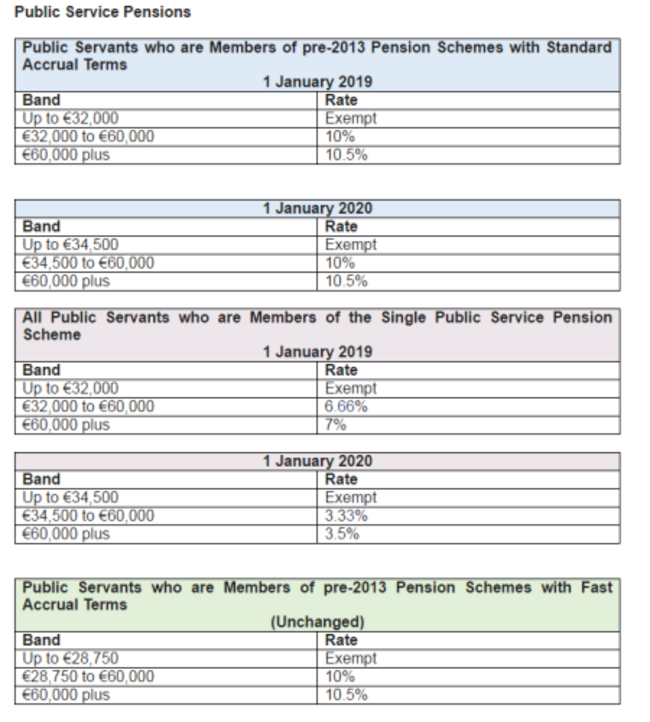
The existing pension related deduction (PRD) will be converted into a permanent contribution while providing what the government called “modest increases in the threshold”.
Minister Donohoe said this contribution will ensure make public pensions “sustainable into the future”.
The opt-out option will only be available upon the approval of management and will not impact on frontline services.
Donohoe also said he was liaising with Minister for Health Simon Harris on “a process to remove contractor fees from the Fempi legislation and to place those payments on an alternative statutory basis”.
This will mean discussing fees, contract forms and service delivery with GPs, pharmacists, dentists, eye specialists and other healthcare professionals about new arrangements for those on private contracts.
- With reporting from Sean Murray

To embed this post, copy the code below on your site













have your say