Sign in. It’s quick, free and it’s up to you.
An account is an optional way to support the work we do. Find out more.
Sign in. It’s quick, free and it’s up to you.
An account is an optional way to support the work we do. Find out more.
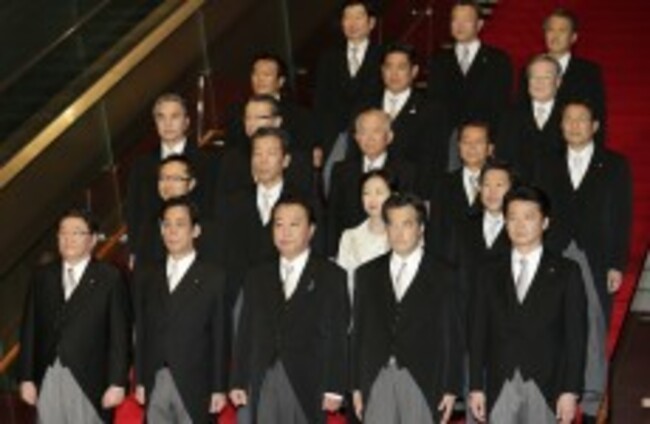

AT THE START of this month, Japan went through a process that in most other democratic nations is deemed of massive importance and cause for rigorous discussion and analysis by news media and some, more or less interest from the person on the street.
The first cabinet reshuffle of Prime Minister Yoshihiko Noda floated by without any of these things and in truth the whole exercise was little more than the J-PM’s attempt at consolidating party support for a modest tax hike in the coming months.
This simple political act is an opportunity to frame some of the things that set Japan apart other countries and in this observers opinion contrasts it closely with an Ireland that is suffering from the fallout of our own innocent national proclivities.
Cabinet reappointments of a government are often a way for a ruling party or coalition to revive flagging public faith perhaps tainted by failings of the past. In truth it rarely has the drama of an election but does at least often provide some topics of news for a week or so.
However in this ever-confusing part of Asia, the news was met with little more than a nod to the newcomers, a lot of solemn bowing and the click of the closing door as several career politicians marched back into relative obscurity.
I have made Japan my home for the better part of two years now and it surprises me not at all to see as much interest on the BBC website in this activity as I do amongst my co-workers and in the local media.
To understand the Japanese apathy to democratic politics it is important to remember two things. The first of these is that unlike so many countries that had to claw at each individual modicum of self-determination from a foreign colonial power, Japan has never had to fight for its democracy.
Japan had democracy forced upon it by the crushing defeat meted out on it by the Allied forces in World War II.
“Japanese people retain a certain submissiveness to authority”
Only after the complete capitulation of the country proceeding from the nuclear explosions in Hiroshima and Nagasaki were Japan at the mercy of the American architects who guided the drafting of the new Japanese constitution. The main aims of the victors were twofold, to prevent further aggression by limiting the power of the emperor and encouraging stability by allowing the emperor to remain as a figurehead but moving legislative power gradually to the democratically-elected parliament.
The second thing to remember is that although Japan is undoubtedly a democracy, due to a whole raft of deep seated cultural and historical reasons, Japanese people retain a certain submissiveness to authority.
This is visible across the culture in myriad different examples, where seniority and authority command levels of loyalty and submission that would be deemed insulting and perhaps unhealthy in Ireland. Taking an example from my own subjective observation, the mothers of children who are in the same soccer club will be served tea by mothers of children who are the most recent additions to the team. It is simply the “done” thing.
For the vast majority of Japan’s democratic life it has been tethered to the fortunes of the Liberal Democratic Party who were in the majority in Japan’s Diet from 1955 up until very recently. Why would one party continue to be voted back in election after election regardless of policy successes and failures? Well people in Japan tend to believe what they are told and governments tend to tell people what they want them to hear ergo… over fifty years of almost uninterrupted control for the LDP.
“How Japanese people interact with their state is the inverse of the Irish”
However this figure is confusing as it does not show the revolving door that has left the average tenure of a Japanese PM at a meagre two years.
The real story is that the constant changing of faces and cabinets diluted the power of those in the public eye never leaving them in power long enough to influence policy. In this situation it was backroom party powerbrokers who held the real power and still largely do to this day.
In 2009 when the LDP were swept from power and replaced by the Democratic Party of Japan (DPJ) it was seen as a seismic shift in Japanese politics.
The shift was never more than superficial and now Japan is having to fight against the old cronyism of the past to try and push through financial reforms for the future. It may be shown to be too little too late.
It is here that the magnifying glass turns into a mirror. For a time now I have been percolating the idea that how Japanese people interact with their state is the inverse of us Irish.
Let’s take a look at the evidence. Japan is an ageing population, with a strong manufacturing base which venerates obedience and a reserved nature. Ireland has a high birth rate almost no heavy industry and currently these guys are national heroes (although, to be fair, they made €20,000 for charity out of it later):
Both Japan and Ireland have financial problems with Japan’s debt to GDP ratio the worst in the world at well over 200 per cent. The attitude to these problems is once again where the two nations diverge.
Japan almost never talks about debt and spends lavishly on public works, military hardware, community services and education. A Canadian friend of mine watching RTE’s Spain versus Ireland coverage couldn’t understand why Eamon Dunphy couldn’t even talk about the fans without a quick nod to the financial crisis.
One last example of the differences (I really could go on all day) is the attitude to social services. In Japan last November, three people died in their apartment from starvation rather than suffer the stigma of appealing to social service. In Ireland, the ESRI recently felt the need to downplay a paper that indicates people are better off staying home than trying to work.
For years we have been ruled by our friendly nature and adversity to the stuffiness of officialdom, the electorate and TDs alike appointing people based not on their fitness for the role but on how much they were liked. Japan has appointed those already perceived to hold the reins and responsibility of power. Neither electorate have been served well.
As in all things, the best strategy is everything in moderation. The Japanese do not approach things the same way as us and in many cases their strategies and problems seem as flawed as our own. But taking a glimpse at the far extreme from ourselves perhaps tells us a little something about how off of centre we really are.
Mark Boyle is currently working with the Japanese Exchange and Teaching program, teaching English in rural Japan.
To embed this post, copy the code below on your site














have your say