TheJournal.ie uses cookies. By continuing to browse this site you are agreeing to our use of cookies. Click here to find out more »
Dublin: 9 °C Sunday 26 May, 2013

Column: The Irish beef business model is broken and needs to change

In the wake of yet more details about beef products contaminated with horse meat, Patrick Burke asks why Ireland’s beef industry – valued at €1.9bn exports in 2012 – has been importing raw food ingredients from Poland in the first place.

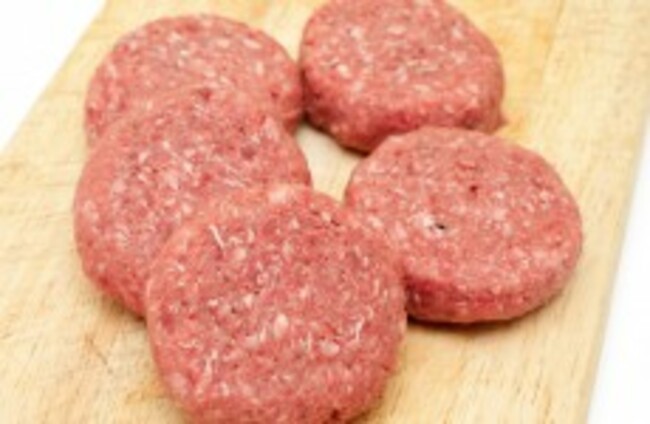
Image: Smart7 via Shutterstock

THE DISCOVERY ON Monday that “beef” at Rangeland foods contained 75 per cent horse meat, and yesterday’s announcement from Findus that its lasagne ready meals in the UK could contain up to 60 per cent horse meat, have made any chance of this scandal dropping out of the headlines quickly vanish.

When the dust finally settles, the question should not just be about which Polish or French supplier provided the meat, or whose heads should roll, but rather why in the first place was our beef industry – valued at €1.9 billion exports in 2012 – importing raw food ingredients from Poland in the first place?

Imbalances in the food chain

Ireland needs to re-examine its food supply chain, and the imbalances that have gradually built up within it. Often it takes a scandal, rather than a positive news story, to bring about a debate on the need for change. This scandal should push the issue of sustainability and security of supply chain firmly on the agenda of Irish industry leaders, the government and consumers alike.

The current beef business model is broken. Producing a beefburger for a few cent is putting extreme pressures on both farmers and processors to meet the demands of retailers, who are getting a disproportionate share of financial reward relative to the risk they bear. The pressure on farmers and processors to squeeze margins often results in cost-cutting measures and mistakes being made – the horse meat scandal is a by-product of such pressure.

With ABP’s products being purchased by a reported 50 million European consumers each week, there is a mutually dependent relationship between the supermarkets and ABP. Quite simply, many supermarket meat fridges would be sparsely populated if ABP was removed as a supplier overnight. It is therefore in everyone’s interest to ensure that the current business model is changed to one that ensures full-scale transparency and equity from farm to fork.

Who will pay for this crisis?

There has been much media speculation about who will pay for this crisis and whether major litigation is imminent from affected parties like Burger King and Tesco. Certainly the shareholders in these businesses may want to see action, but given the nature of the food supply chain, we expect that this issue will be settled outside of court.

The McLibel case in the 1990s, taken by McDonalds against a number of members of Greenpeace, is an interesting case study to consider. The lawsuit ran for 10 years, making it the longest running libel case in English court history. The positive outcome was that it led to an overhaul of McDonalds business model, introducing a number of successful operational changes; the downside – it brought unprecedented media scrutiny on McDonalds, at the time devaluing the brand.

The reality is that the major cost to Tesco, Aldi and Burger King is the reputational damage not the withdrawal of the product, and protracted litigation is only likely to keep the question mark over the provenance of their meat at the front of customers’ minds. At Grant Thornton, we believe that arbitration and a mediated settlement behind closed doors is by far the most likely outcome.

Growth potential

In spite of the scandal there is plenty of reason to be optimistic about the Irish food and beverage (F&B) sector and its growth potential. M&A activity in the F&B sector rose 32 per cent to €726 million in 2012, driven by a surge in deal activity between the US and Ireland. Food exports to Asia rose by 25 per cent in 2012, and we are only still scratching the surface of the potential for Irish food companies in the giant Chinese market.

The reputation of Irish produce has its foundation in high standards of regulation and food safety, and our natural green environment. The supply chain must be forced to change to ensure producers deliver on this promise to consumers whose level of trust in the industry has been damaged.
The positive consequences will be that the sector moves from a food income model to a food production model , where reward and risk are distributed evenly, and all stakeholders reap the rewards of a sustainable business model.

By leading the charge in making these changes, the food sector and Ireland In in general stands to thrive rather than winning a race to the bottom which is in neither consumers’ or producers’ long-term interests.

Patrick Burke is a Partner at Grant Thornton. You can follow all Grant Thornton’s food sector news and views @GTIrlFandB.

Download the Smart Money in Food and Beverage: Tracking Growth in Turbulent Times report here and “Food 4.0: The Dynamics of Supply and Demand” here.

Read next:

Comments (41 Comments)

  • When you can import product and label it irish what do u exp

    Reply
  • Good news for butcher shops. Some of them can practically tell you the name of the animal on top of the name and location of farm it came from. That’s real traceability.

    Reply
  • Now hold on a minute. Irish farmers are the most tightly regulated in th world. Its the processors who are cutting the corners not the farmers. If the had half as many inspections regulations and form filling to be done we wouldn’t be in this mess. They were to busy trying to produce a ten cent burger and bypassed quality irish suppliers to get cheaper foreign muck

    Reply
    • Excellent comment Sunshine and I would add that the bid to continually cut costs was driven by the Multiples who are now screaming foul. Blaming producers who are reacting to market pressure is mad economics.

      Reply
    • Absolutely agree with sunshine. Frankly this article is bullshit.
      Pressure on the farmers? What pressure is that exactly, in this context? I delivered a bull calf this morning. Ive tagged him and Ill be registering him, date and all other relevant details. Im absolutely certain he’s a bull calf, and not, say, a FOAL. He is destined, as far as im aware, for the beef market. He’ll be looked after with the best of care and cost until I bring him to market. Then the fun and games will start. My husbandry, time and money wont matter a damn. Ill probably get much less than what hes worth, because theres huge cartelism amongst dealers in marts around the country. After that animal leaves my care, and until he is slaughtered, he will remain, to the best of my knowlege, a bovine.
      The pressure on livestock farmers has been to maintain the highest levels of standards, anybody visiting a mart can see that for themselves. The idiocy of greed will defeat us, and it appears theres no pressure on that particular faultline or its chief protagonists in this business.

      Reply
    • But what if he exhibits tendencies to run quickly? Would you no be tempted to run him at the old Point-to-Points? You could put a coat and a saddle on him, and giddy up.

      Reply
    • I have a cow that is able to clear a stone wall with two strands of bull wire above it. Not sure whether she can manage two miles though. Ill sell her to you and you’ll be in time for the grand national lol

      Reply
  • Only thing that has changed here is peoples eating habits from healthy home cooked food to convenience rubbish. Turn off bloody eastenders or home and away and cook yourself and your family some decent food thats not been frozen for the last 6 months. Pure laziness is all this is.

    Reply
  • Now it seems Tesco, Lidl, Dunnes & Aldi are in trouble again after it was revealed today that traces of penguin have been found in the biscuit aisle.

    Reply
  • All they have to do is rename it a can’t believe it not beef

    Reply
  • I surprised that these food companies have not been hit with a class action law suit. They have claimed for years that their products were 100% pure Irish Beef but as we know now that was just pure lies. Every CEO and all their senior management should and must be held to account.

    Reply
  • One word springs to mind……….Greed

    Reply
  • This only shows that none of these companies actually knew what was in there products yet they were labelling them as if they did. The other scenario is of that someone in theses companies did know what was going into them and that would make it a criminal offence. The whole notion that the beef industry would have us believe that their product is traceable from field to plate is well and truly blown to bits. Given the structures that were brought in after the BSE scandal which we were led to believe were going to prevent such a thing from ever happening again are in this case non effective the whole industry needs to be looked at again, do we know this horse meat was fit for human consumption, what about the traces of pork, what was this foreign meat doing being made into so called 100% Irish and British burgers in the first place? There are cases to answer by both the product makers and the sellers over mis-labelling their products for a start, it also puts into question all the other information on the pack regarding nutrition, fats etc if they don’t know what’s in it how can they claim to know all this other information. People need to be brought to book for this and both the manufacturers and the supermarkets should face massive fines as a result which they are not allowed to simply pass on to consumers. This really dents confidence in this whole industry and the trust of consumers is not something they should take for granted. Governments need to ensure that from now on it is made clear to all involved that they will pay a heavy price for such transgressions and that it will not be tolerated.

    Reply
    • The column is wrongly balanced , I feel. The work of SFAI detected this scenario. How about congratulating them?.

      Our neighbours on the adjoining Island , along with their SFA, did not. Good work ,then.

      Greed will , for some people , seek to triumph. Now we need to ascertain whose greed it was. Then sue the bastards.

      Reply
  • What do Findus have to do with the Irish Beef Business model. Findus are Swedish. This article is a serious case of hind sight being 40/40. Irish beef business has to react to the market same as all other industries and the greed of large multiples is a world wide issue not an Irish one. Cop on GT aint you the guys who advised us of soft landings on the way 5 years ago.

    Reply
  • Beef has infiltrated the horse meat industry.

    Reply
  • Larry Goodman up to his old tricks again ?

    Reply
  • If you bought an Irish carrot and discovered that it also contained DNA of imported parsnip ‘product’ wouldn’t you be amazed? But this is what has been going on in the Irish meat industry for years.

    Reply
  • Excellent and informative article. Yes indeed heads should roll and the damage that has been done will make it near impossible to unscramble the eggs. Is the supply chain not double checked by our officials and if not why not..maybe its here that heads should roll also.

    Reply
  • Paul 08/02/13 #

    It looks like we’ve been eating horse meat here in Ireland for years without knowing it. It hasn’t done us any harm. Neighhhh

    Reply
  • Its not just that, the bullocks have been depressed for years, it’s plain to see. What we need is a tribunal, for the cattle, figure out whats making them depressed, address the issue, no expense spared. I wouldn’t mind but horses seem happy enough. Theres just no justice in it at all.

    Reply
  • Well at least we finally found Shergar…..

    Reply
  • Cat Food has no cat’s in it !
    Dog Food has no Dog’s in it !
    Now our Beef Burger’s Have No Beef in them !
    Are you really surprised ????

    Reply
  • The problem with food labelling is if your food has a label on it at all it’s probably no good for you anyway. Salt, sugar, preservatives… and obviously horse.

    Reply
  • Has no-one even considered here that what we might be seeing, considering the amount of press directed at the Irish industry above others, could be deliberate industrial sabotage? Just a thought, as many in the meat industry already suspect

    Reply
  • Just to point out something.

    As long as the total beef content of a product is a minimum of 50.1% beef, the product is entitled to be called beef.

    Adult Humans are 55-70% water, but we are classified as Humans not water.

    Beer is over 90% water, but is classified as beer.

    I am sure this will be used as a defence by the food producers.

    Reply
  • the “100% irish beef” statement in burger joints has always been misleading. we all know preservatives and additives were put in. the above statement merely states, the beef in the burger is 100% irish and not that the burger itself is 100% beef. granted i doubt we all expect the donkey we lost on the national with to be between our buns.

    Reply
  • What’s wrong with horse meat?

    Reply
  • Wasn’t it in Dunnes too?

    Reply

Add New Comment