Sign in. It’s quick, free and it’s up to you.
An account is an optional way to support the work we do. Find out more.
Sign in. It’s quick, free and it’s up to you.
An account is an optional way to support the work we do. Find out more.

I DON’T THINK I’m unusual among my middle-aged parental demographic when I admit that I’ve yet to get to grips with ChatGPT, in looking for answers to exam questions.
The reason is in the fine print disclaimer at the bottom of every instant e-tutorial: ‘AI responses may include mistakes’.
But I did try to harness AI when reflecting on the worries of parents of the 66,000 students sitting the Leaving Certificate Examination (the ‘Leaving Cert’) in Ireland these days.
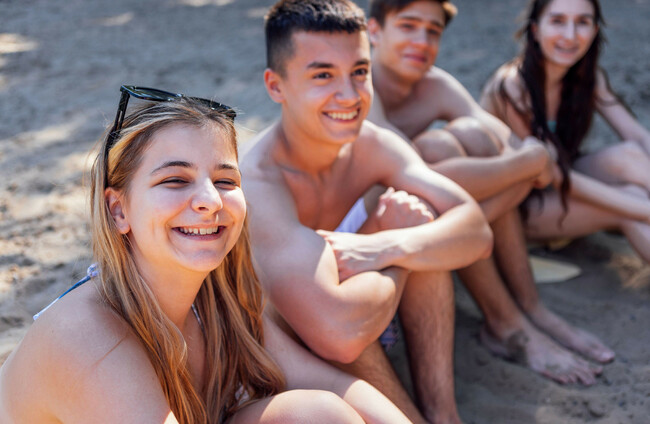
And I’m not referring to obvious concerns about the exam results, and all that they may signify. Instead, I’m thinking of the gnawing seasonal anxiety that most parents keep to themselves at this delicate point in the proceedings, about what often follows the conclusion of their offspring’s schooling: the traditional ‘Leaving Cert Holiday’.
An ‘AI Overview’ of our 6th (final) school year explains that it ‘marks the culmination of students’ secondary education and their preparation for the Leaving Certificate exams.
It’s a period of intensive revision, project work and practical application of learned knowledge. It’s also a time when ‘counsellors discuss future pathways, including college applications and career options’… and ‘students are encouraged to manage their time and stress levels effectively’.
All of this seems accurate and (school resources permitting) factual. But what the AI overview omits is the colossal levels of parental stress throughout the ‘6th year’, which only begin to decline when their offspring get back safely from wherever the fashionable destination is for this year’s secondary school escapees.
To be fair, parents are justified in worrying about what goes on in these mainly Mediterranean fleshpots, given the amount of expenditure, partying and risk involved.
So, writing as someone who was once a fully credentialled teenage ‘party animal’, who has provided emergency medical care for ‘party animals’ for decades, and given talks for years to secondary school pupils and parents about the hazards of ‘partying’ and — in the absence of more online content — I pose a few key questions and humbly offer some hopefully helpful suggestions to concerned parents.
What could — suddenly — go wrong medically with your son/daughter on a Leaving Cert holiday (or at a festival, etc)? The answer begins with accounts of what went wrong for others (see below).
And then, it depends on any chronic or longstanding medical conditions that your son/daughter may have. These include recurrent fainting, dizzy spells, crampy abdominal pain, low blood sugar due to diabetes, asthma, epilepsy, eczema, or migraine, all of which may ‘flare up’ in unfamiliar surroundings, with extremes of heat, exhaustion or intoxication.
And what about other ‘emergencies’? It is highly likely that a gang of young friends abroad will suffer from various minor injuries, such as stings, bites, bruises, sprains, cuts, burns, bone breaks, wound infections and concussion (a head injury with fleeting unconsciousness, but a normal scan).
Other ‘medical’ issues classically include allergy, anaphylaxis (if they’re really unlucky and forgot the EpiPen), and food poisoning.
Well, remember that, from Albufeira to Zakynthos, holiday hazards are primarily related to location (i.e. unprotected hotel balconies, deceptively shallow or deep swimming pools, jellyfish, treacherous riptides, rock-strewn scrubland behind a beach bar, that is unlit at night, and so on).
Online holiday advisories will point out the main risks a tourist faces in the intended destination.
Certain resorts are notorious for pickpockets, harassment on the streets and random-seeming violence outside bars and clubs, while some cities are infamous for their shocking homicide rates (e.g. Kingston, Rio, Acapulco).
But remember — most nightlife deaths are not caused by violence or intoxication: they are caused by conflagration (e.g. the Kiss nightclub fire in Santa Maria, Brazil, 2013: 242 deaths), crowds (e.g. the stampede in Seoul, 2022: 159 deaths) or roof collapses (e.g. the Jet Set club in the Dominican Republic, 2025: 231 deaths).
Events like these often happen in unsafe environments, possibly with differing health and safety standards from Ireland. So, please tell your loved ones to stay vigilant and get out of a venue if it feels overcrowded with no clear exits, and there’s any talk of a fireworks display.
In truth, the greatest ‘routine risk’ on a Leaving Cert holiday is the risk from intoxication. Every seaside resort where there are hundreds of intoxicated young people will see drunken rows, and it is the neurobiological effects of alcohol, cannabis, cocaine and ecstasy (in the main) that are the underlying causes of most problems.
In short: sedation or ‘irrational exuberance’ can impair the user’s thinking. And while many muddled or addled young people stagger out from clubs and collide with belligerent (or very attractive) strangers, others may wander into a pitch-black and unfamiliar landscape, get lost and fall down a ravine, fall over an edge while taking a selfie, or jump off a balcony into a partially filled swimming pool.
And occasionally, given the wrong dose or the wrong drug, powders or pills will kill (that’s why the HSE sampling-and-warning systems at summer festivals can really help in preventing tragedies).
Holiday romances
Bear this in mind. The top two sexually transmitted diseases in the typical holiday regions for this country are probably Chlamydia and Gonorrhoea: both can produce ‘silent infection’ which can be devastating for male and female fertility. That, and the perennial issue of unplanned pregnancy, are two good reasons always to use condoms, especially with new partners.
So here is my heartfelt take-home message for parents to digest before the students head off…
Thinking is the source of all ‘power’
Wishful thinking is the source of most mishaps. Unthinking (or impaired thinking) is the source of most calamities. But it is parents who must now (rather than the maximally stressed student) think ahead about the risks to their offspring of a week or two in a sun-drenched resort or bustling city.
Failure to prepare is to prepare for failure (and mishap)
The first step in preparation is researching the risks (and the allure) of ‘Leaving Cert’ and similar teenage holidays. In theory, this means that parents might undertake an online search for any difficult news stories in this realm. In practice, this may be too grim a process to embark upon, even for a parent about to dispatch their big, beautiful child overseas in a matter of days. But, perhaps, like all parenting issues, it is better to know than not.
Finally, get the best ‘intel’ from friends who’ve been to the same destination, specialist Leaving Cert Holiday travel agents, and the Department of Foreign Affairs, which offers location-specific advice to Irish tourists. It also provides consular assistance in the event of a crime, a medical crisis, a lost passport, or anything more serious.
In addition, a top recommendation is arguably the most important financial step a parent can take: ensure that your student offspring takes out the sort of insurance that allows medical repatriation to Ireland in the event of a genuine calamity.
After all that, let them go off and have an unforgettable time, for all the right reasons.
Dr Chris Luke is a retired Consultant in Emergency Medicine and host of the Irish Medical Lives podcast.
To embed this post, copy the code below on your site












have your say