We need your help now

Support from readers like you keeps The Journal open.

You are visiting us because we have something you value. Independent, unbiased news that tells the truth. Advertising revenue goes some way to support our mission, but this year it has not been enough.

If you've seen value in our reporting, please contribute what you can, so we can continue to produce accurate and meaningful journalism. For everyone who needs it.

Alamy Stock Photo

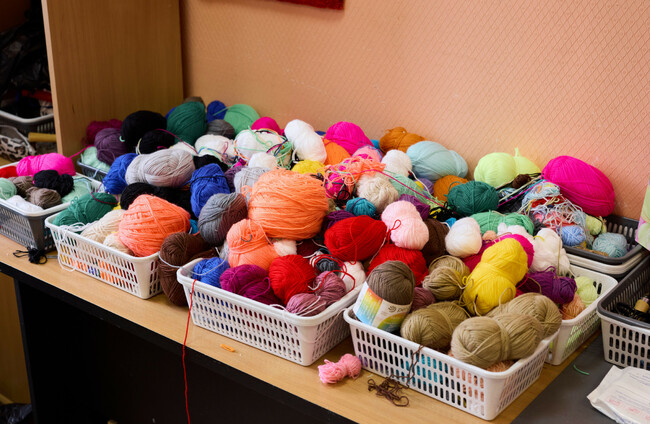
Grandmother Hobbies How cosy crafts could keep you alive for years

From birdwatching to banana bread, stitching to knitting — old pastimes are back with a bang, and they’re good for us, writes Gwen Loughman.

THE OXFORD DICTIONARY cites the definition of a hobby as “an activity done regularly in one’s leisure time for pleasure.”

It fails to mention, however, the many benefits gained from enjoyable pastimes, such as social interaction, improved mental health or even the contribution towards longevity. It also seems blithely unaware of a recent study claiming that women with “grandmother or cosy hobbies” live an extra eight years.

The hobbies listed were knitting, gardening, birdwatching, painting and jigsaw puzzles. (Does no-one play bingo anymore?)

I’ve another question. Is that eight years per hobby? Because if it is, I’m going to be around for a very long time to come indeed, as are a lot of my contemporaries.

I feel it is somewhat unfair to label such pursuits with the moniker “grandmother hobbies” when social media is teeming with videos and tutorials uploaded by millennials, demonstrating how to make an açai bowl and weave lavender baskets.

And why are these pastimes garnering attention now? After all, most, if not all of them, have been hanging around since forever. Take baking and cooking, for example. Look at all of us still alive and walking around. Remember that sourdough starter and the mess it made when it exploded in the hot-press? And who hasn’t made an attempt at producing a Michael Tea Higgins tea cosy?

Back to basics

OK, I haven’t made that particular leap, but I do know several people who have become quite enamoured with gardening. They swap cuttings and seedlings and regularly post videos to each other, only delighted with themselves and their green fingers. My own garden is thriving in spite of an “I’ll just fire it in there and see what happens,” approach.

Back in the day, my search history would have unveiled quandaries such as how to remove Pernod from suede and, more recently, how to make hand sanitiser. But now my queries include when is the best time to cut back my teasels, and what are the best ways to deter slugs?

A good friend is a jigsaw fiend, and when she has completed her puzzles, she painstakingly glues the pieces and frames her work.

This is the fifth summer in a row I can lay claim to being a robin whisperer — they fly down to my hand for food. And the bird box outside the kitchen window has housed many sparrow families over the years.

Hobbies and interests are rarely static, often subject to change, reflecting whatever is currently in vogue. Remember loom bands and, if you’re of a certain age, collecting fancy papers? Having interests in common with others offers opportunities to bond over shared endeavours and allows us to unwind after a busy day with something to look forward to.

It’s no accident that hobbies such as knitting, sewing and upcycling really took off during the pandemic. In a time when we were confined to limited space, with restricted access to the outside world, we craved a little normality, some simplicity, and when it arrived in the form of banana bread, Zoom quizzes and writing letters, we lapped it up. With plenty of time on our collective hands, we embraced what we previously may have shunned or deemed old-fashioned.

Mindfulness

Many of those recreations have endured, and for the common betterment, as research shows there are other benefits to so-called grandmother hobbies besides taking time out from busy schedules and scrolling mindlessly on our phones.

It has been suggested that pursuing hobbies, particularly those requiring hand-eye coordination, promotes neuroplasticity, the brain’s capacity to change and adapt to learning. Furthermore, participating in a hobby helps process stress or traumatic experiences. Different parts of the brain, other than those typically employed during talk therapy, are activated, which help process emotions an individual may struggle to articulate.

I can’t help but be reminded of an idiom that irked me no end during times of familial stress and overwhelm: “Use it or lose it.” The message being that if a skill or resource is not regularly utilised, over time, we will lose it. As nettled as I was by it, I now feel obliged to acknowledge the obvious truth behind the catchphrase. Keeping mentally active by engaging in and completing familiar tasks staves off feelings of frustration. The individual feels valued, a sense of accomplishment is achieved, and as a result, the risk of cognitive decline is reduced.

There’s plenty more. Taking up a new hobby keeps boredom at bay, and new relationships with those who share the same hobbies are fostered.

Think back to the dopamine hit and confidence boost you received upon finishing that simple but ridiculously colourful scarf, or when you finally slotted in the last piece of that 1000-piece jigsaw. Wasn’t it worth it to persevere?

How many of us embarked on a necessary fitness regime in order to combat high cholesterol or blood pressure, but now consider it a hobby after discovering, hey, I like this!

Meditation has been part of our vernacular for a long time now, but it doesn’t mean we must feel compelled to adopt the lotus position, bring the tips of our thumbs and ring fingers together before softly humming a mantra. We can lose ourselves just as easily in our creative process of choice. It’s what we extract from it that matters, regardless of our age.

Hobbies are for everyone, young and older. Hands up, those whose kids had volumes of albums containing Pokémon and/or football cards? That was just a modern twist on collecting stamps. It really doesn’t matter what your hobby is; it is simply a way to immerse yourself in something that is enjoyable, a way to provide some joy in our lives

To paraphrase Mr. Shakespeare, “A hobby by any other name would still be a hobby.” Even if it has been described as a cosy one.

Basically, doing a little bit of what makes you happy contributes to a happy and ultimately, longer life.

Gwen Loughman is gatekeeper of four boys, one husband and watcher over two dogs. 

Readers like you are keeping these stories free for everyone...
A mix of advertising and supporting contributions helps keep paywalls away from valuable information like this article. Over 5,000 readers like you have already stepped up and support us with a monthly payment or a once-off donation.

Close
7 Comments
This is YOUR comments community. Stay civil, stay constructive, stay on topic. Please familiarise yourself with our comments policy here before taking part.
Leave a Comment
    Submit a report
    Please help us understand how this comment violates our community guidelines.
    Thank you for the feedback
    Your feedback has been sent to our team for review.

    Leave a commentcancel

     
    JournalTv
    News in 60 seconds