Sign in. It’s quick, free and it’s up to you.
An account is an optional way to support the work we do. Find out more.
Sign in. It’s quick, free and it’s up to you.
An account is an optional way to support the work we do. Find out more.
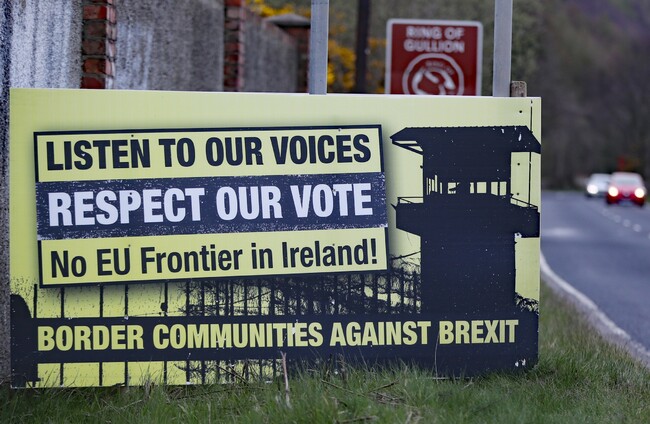

LIKE MANY PEOPLE who are from Northern Ireland, I am someone who is very proud to consider themselves Irish. However, when I am south of the border, I feel there is a sense that my nationality is somewhat diluted because I’m from the north.
This dilution generally comes in the form of derogatory comments from those who have not yet ventured into the six counties, and they appear to be “just a bit of craic” or “just a laugh”, but in reality reveal a deeper feeling held by some in the south, and that is those of us from the north can be Irish, just not as Irish as they are.
Similarly, those of a unionist persuasion at home often find themselves neglected by the rest of Britain when it comes to a sense of belonging regarding their Britishness and they feel they’ve been sold down the river as a result.
People in the north have no doubts about where they come from or belong, but our two closest neighbours often leave us in a state of limbo. We’re not wanted by either, we’re a problem child for both.
Long ignored
For Britain, this problem child grew into a problem teenager post-2016 as the Brexit crusade encountered the inevitable iceberg of the Good Friday Agreement. For Brexiteers, to come this far and be tripped up over a border issue in Northern Ireland was incredibly frustrating.
Former Vote Leave staffer, Oliver Norgrove, said in an interview with James O’Brien in 2019 that “we have this very weird thing in the UK where we treat Northern Ireland as an unwanted son”, and his comments rang true when Boris ditched the DUP in pursuit of a faster Brexit.
The neglect of NI by successive British Governments is abundantly clear. The position of Secretary of State for Northern Ireland is seen as the least desirable post when it comes to a cabinet spot.
This is evidenced by the quality of personnel that have held the position. Theresa Villiers backed a harmful Brexit, James Brokenshire was as good as invisible, Karen Bradley openly admitted she was scared of Belfast and when we were afforded a decent SoS in Julian Smith, he was promptly removed from the post amidst a cabinet reshuffle.
Long misunderstood
The misunderstanding of NI filters down into British political and social discourse. Last year when in London with my girlfriend, we met a couple who suggested that “we enjoy blowing each other up” in Belfast. It is not an uncommon occurrence to hear comments such as this when you are from here. I am often greeted in the south by an eye roll upon telling somebody where I am from before being asked “orange or green?”.
The biggest fear amongst unionists is that NI may be the collateral damage for a clean Brexit. The fear that their identity and their stake in the Union is expendable for the holy grail of exiting the EU.
This would push the north into what unionists believe would be the open arms of the south. But herein lies the worry for nationalists. That when push comes to shove, does the south really want us?
An eye on the future
The Sinn Féin surge would suggest that of course, voters in the Republic are not averse to reunification. Moreover, multiple polls illustrate that around 80% of people want a United Ireland and a majority would like to see a border poll take place in the next five years.
These stats would lead one to think that the south would overwhelmingly support a United Ireland. But Taoiseach Micheál Martin has recently ruled out a “divisive” border poll and the context of Covid-19 will mean that the possibility of a move in this direction will have to be put on ice once more, taking a back seat to economic recovery.
When the economy is steadying once more, perhaps years from now, and the issue of Irish unity is put back on the table front and centre, those in the Republic will have to face up to the very real possibility that reunification will mean yet another economic downturn.
And so, the same arguments will be rolled out again. Arguments taken straight from the sensible government playbook that will sound something like “not just yet” when it comes to Irish unity.
Northern Ireland finds itself in an unfortunate and unique position. We are caught up in the whirlwind of a Brexit we did not vote for, represented by a fragile Stormont that could collapse again at any moment, This, while being overlooked by an English nationalist Conservative Party and reneged upon by the Irish government.
Charlie Power is a government and politics student at UCC and the founder of the North South Perspective.
To embed this post, copy the code below on your site
















have your say