Sign in. It’s quick, free and it’s up to you.
An account is an optional way to support the work we do. Find out more.
Sign in. It’s quick, free and it’s up to you.
An account is an optional way to support the work we do. Find out more.
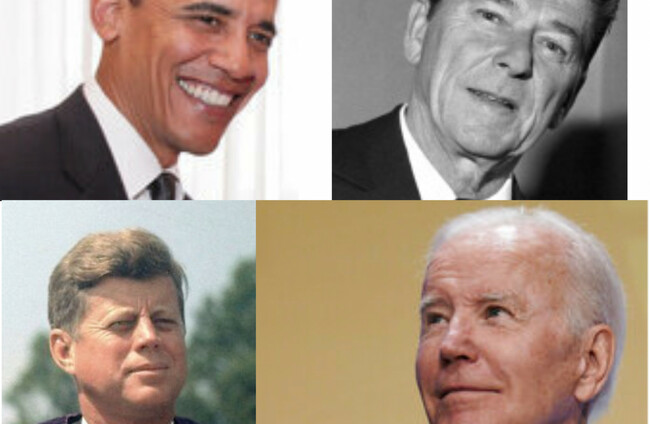

IN A WEEK when countless millions around the world declare that they are Irish – by birth, heritage or mere affinity – we finally got the long awaited confirmation that the President of the United States, Joe Biden, will soon be in our midst.
A 2023 visit by one of the “most Irish” occupants of 1600 Pennsylvania Avenue had been rumoured for ages.
As a brief aside, some of the reporting on President Biden’s itinerary has been divergent and rooted more in conjecture than in reality. It is evident that he will be in Dublin, Belfast and Mayo. His fans in Louth were surely taken aback by a story that suggested he would be favouring the Blewitts in Ballina over his kin in the Cooley Peninsula. Yet I’d be shocked if he didn’t pay homage to each of the two places that are very special to him.
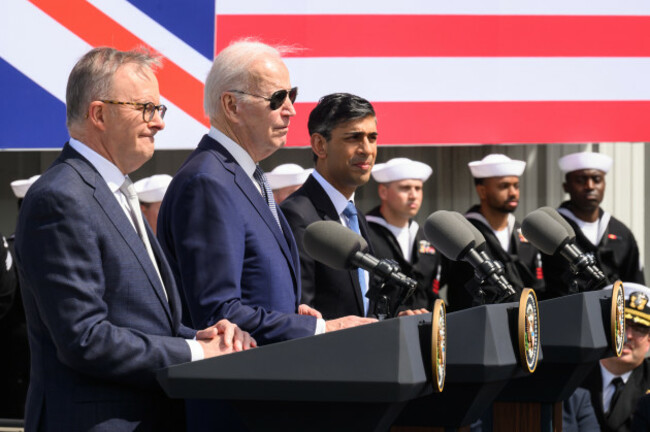
The US Secret Service isn’t inclined to share details of the president’s movements much ahead of schedule, with anyone. The key word there is secret. All will be revealed in due course and dictated mainly by security concerns.
The proud son of Ireland will be feted as a hero when he arrives in April in the 26 counties. A quarter of a century on from the Good Friday Agreement, his commitment to its principles and spirit has been rock solid.
His fondness for this country is thoroughly genuine and has been an animating impulse since he was in the US Senate.
In the north, however, as a Morning Ireland interview on Wednesday with a testy Sammy Wilson indicated, the reception may be more mixed. Plenty in the unionist community regard him as a typical Irish American nationalist and cite his past disparaging remarks about the BBC and wearing the colour orange, for instance, as proof of his true orientation.
President Biden will have to be careful with what he says at this fraught juncture, as critics in the DUP and political figures to the party’s right scorn aspects of the Windsor Framework and block a resumption of power-sharing at Stormont. In his lengthy career, Biden has garnered a reputation for sometimes saying the wrong thing; a gaffe could adversely affect chances for the progress that so desperately needs to be made.
On this occasion, the 80-year-old will bask in authentic admiration and also must execute a high-wire diplomatic balancing act. It will be fascinating to observe.
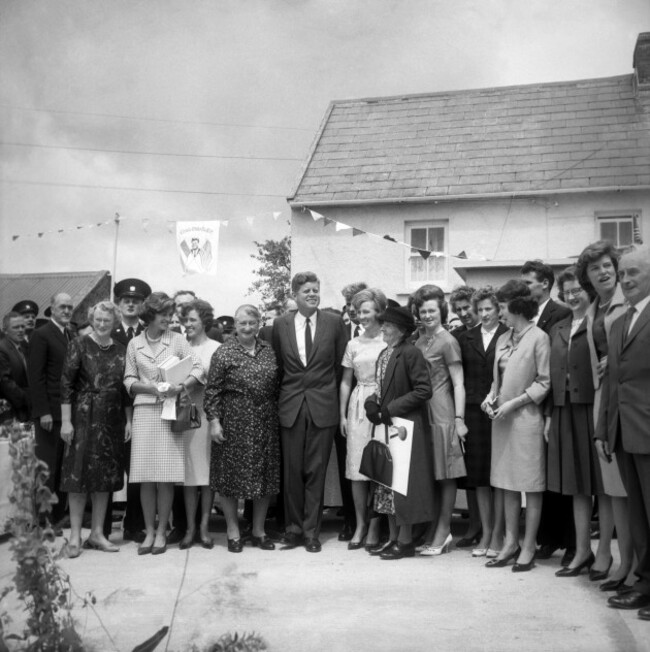
These transatlantic pilgrimages of American presidents have become routine. The return of John F Kennedy in 1963 was a seminal moment for the relationship between the US and Ireland.
President Kennedy, whose forebears had fled poverty in Wexford and rapidly climbed the socioeconomic ladder in the face of initial discrimination in Boston, was the embodiment of the American Dream that so many Irish emigrants pursued relentlessly and realised eventually. Trips by two of his successors, Ronald Reagan and Barack Obama, were important in a different way.
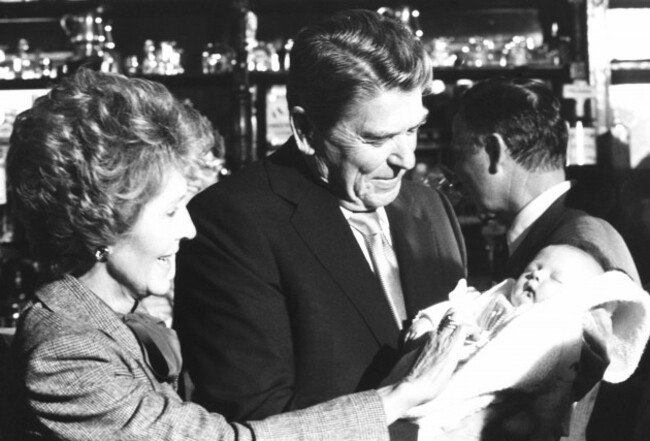
For in President Reagan, a stalwart Republican, the Irish could see the political drift of a substantial cohort of their family and friends stateside away from the Democratic Party. This stemmed in equal measure from the GOP’s support for lower taxes and its cultural conservatism as Democrats stopped identifying as readily with labour unions and tacked left on issues like abortion.
The ascension of the first Black man, Barack Obama, to the presidency signalled that the collective skin complexion of America was darkening and, arguably, that the virus of racism, though not cured, had at least been allayed. The Irish rejoiced.
That a distant genealogical connection to Offaly was discovered meant that he could be claimed. The couple of hours he then spent “back” in Moneygall with the local publican, Ollie Hayes, his eighth cousin, Henry Healy, and the village’s residents symbolised two additional developments.
First, Irish Americans, following on from generations of intermarriage in a society that is the quintessential melting pot, are not racially or ethnically homogenous. Second, in the wake of the recent phenomenon of inward migration, Irish people are not either.
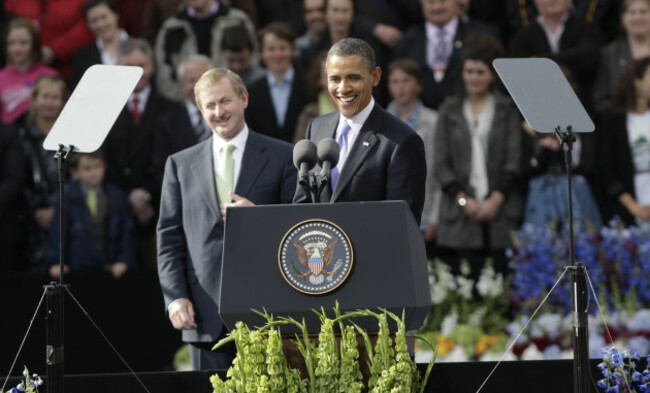
Whereas Reagan and Obama were ideological opposites, they had a grá for Ireland in common. In this vein, ongoing Irish engagement with Irish America that reflects and respects its heterogeneity, in all spheres, is aptly conceived and will bear fruit.
The now-expected visits of US presidents are a prominent recognition of and tribute to the ties that bind Ireland and America. Notwithstanding challenges, the slow-to-a-trickle of emigration, in particular, this relationship is extraordinary and sacred.
There is no greater manifestation of it than today, when this tiny, strategically inconsequential island enjoys unparalleled access to what is still the most powerful country on earth that many, a lot bigger than it, are envious of.
Inevitably, my vantage point as an Irish American leads me to focus on the indelible imprint of my ancestral and adopted home on my birthplace. The former’s stamp, or brand, or influence – no matter which admittedly crude label one prefers – is so much broader. Why?
There is something about Ireland that draws an amazingly diverse range of individuals from everywhere to it, from President Biden to the abundant tourists who one regularly encounters in Galway or Dublin and who invariably assert that this is a “bucket list” adventure for them. It is nearly impossible to find anyone who regrets the journey. As Joe Biden said to Micheál Martin when the then-Taoiseach extended an open invitation to him shortly after he vanquished Donald Trump: “Just try and keep me out.”
Based on personal experience, I believe that, above all, it’s Irishness and an innate desire to be a part of it that is so attractive to the 46th POTUS and innumerable others who love Ireland and its people as he does. Defining Irishness is too complex a task to be attempted in this space. But suffice it to say that Irishness is magnetic, contagious, a unique force of nature.
And that is what is celebrated on 17 March – from the White House, to here in Wicklow Town, to the furthest corners of the globe.
Happy St Patrick’s Day!
Larry Donnelly is a Boston lawyer, a Law Lecturer at the University of Galway and a political columnist with TheJournal.ie.
To embed this post, copy the code below on your site













have your say