Sign in. It’s quick, free and it’s up to you.
An account is an optional way to support the work we do. Find out more.
Sign in. It’s quick, free and it’s up to you.
An account is an optional way to support the work we do. Find out more.
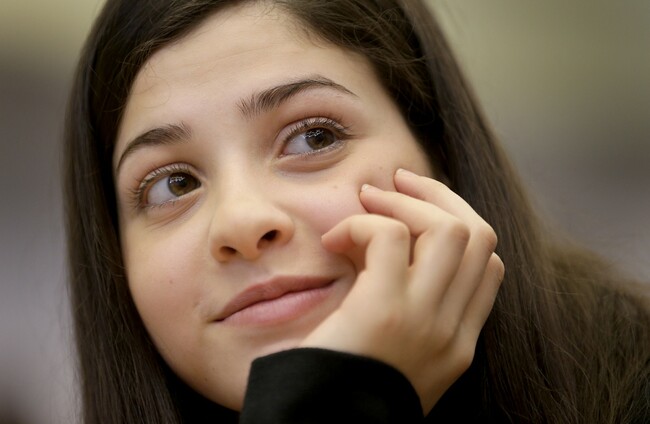
YUSRA MARDINI SAYS it so matter-of-factly.
“Sometimes we couldn’t train because of the war. Or sometimes you had training but there was a bomb in the swimming pool.”
She even points upwards, indicating the bombers, with a smile on her face.
“When you have a problem in your life it doesn’t mean you have to sit around and cry like babies or something,” the 17-year-old swimmer continues.
Her problem was the five-year-long conflict ravaging her native Syria. Not something that can be married easily with a decade-long dream of representing your country at the Olympic Games.
A wish that could easily fade as your family decides whether to leave or stay; whether to take the dangerous path to Europe or live with the destruction and hopelessness.
After four years of living through the war, a decision was made. She and her sister Sarah reached their destination in Germany seven months ago.
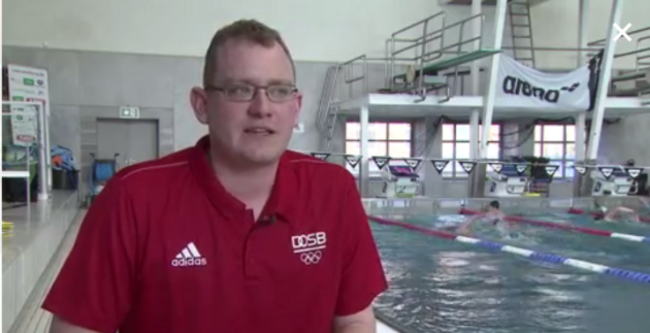
A talented swimmer hoping to still travel to Rio this summer, Mardini joined the local club and has impressed coach Sven Spannekrebs.
She was soon identified as one of 43 athletes who could make the International Olympic Council’s new refugee team.
The Refugee Olympic Athletes (ROA) will likely be made up of between five and 10 athletes who have been displaced from their own countries.
In a press conference yesterday, the president of the IOC Thomas Bach said by welcoming the team under the IOC flag and with its anthem, they are sending a message of hope across the world.
Mardini agrees.
“I think first of all I want to do it for all the people, I want to inspire everyone.
The problem was the reason I am here and why I am stronger and I want to reach my goals. So I want to inspire everyone that everyone can do what they believe in their hearts.
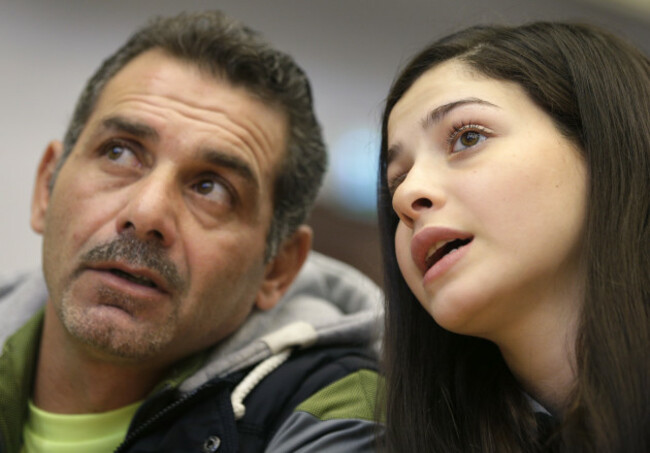
The teenager’s hardships didn’t end when she left Syria. She first travelled to Lebanon and then Turkey before taking the life-threatening passage to the Greek island of Lebos, where many of her fellow country men and women perished.
Border-hopping for the next while, they eventually landed in Berlin. The trauma of those months has stayed with her.
I want everyone to stay strong for their goals in life because if you have your goals in front of your eyes you will do everything you can and I think even if I fail I will try again, maybe I will be sad but I will not show it, but I will try again and again until I get it.
“I want to show everybody that it’s hard to arrive at your dreams but it’s not impossible. You can do it; everyone can do it if I can do it, any athlete can do it.”
Spannekrebs describes his young talent as “remarkable” and “an inspiration”.
“She is really good in her mentality she has seen a lot on her way from Syria to Germany and she has really dealt with it really, really well,” he says.
She needs, however, to work on her aerobic and power foundations in the pool, he adds. She also needs to stabilise her techniques which are already “really good” but need to be consistent.
Other contenders for the ROA team include a judoka from the Democratic Republic of Congo who was living in Brazil and an Iranian taekwondo fighter training in Belgium.

To embed this post, copy the code below on your site













have your say