Sign in. It’s quick, free and it’s up to you.
An account is an optional way to support the work we do. Find out more.
Sign in. It’s quick, free and it’s up to you.
An account is an optional way to support the work we do. Find out more.
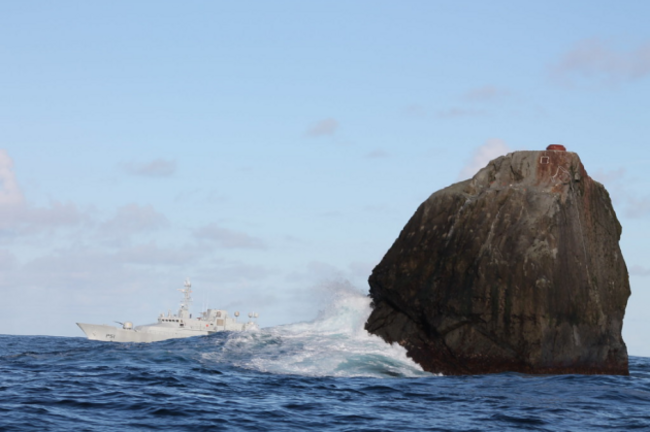
A SCOTTISH MINISTER has said that Irish vessels are fishing “illegally” in the area around Rockall, and said an “enforcement plan” will be put in place unless the ships desist from their activity there.
Speaking to RTÉ’s This Week programme, Scottish Minister for the Rural Economy Fergus Ewing said that this action will see Irish captains asked to cease and desist if they are found fishing in this area. If they refuse, he said further action would be taken “in accordance with the law” which would involve vessels being boarded.
However, speaking to the same programme, Minister for Agriculture Michael Creed said Ireland has never recognised the UK’s claim on Rockall, and that all legal avenues would be explored to allow Irish vessels to continue to fish there unhindered.
Rockall
The jurisdiction over Rockall has long been disputed. Ireland’s position is that the waters around Rockall form part of European Union waters under the Common Fisheries Policy, to which the principle of equal access for the vessels of all EU Member States applies.
Irish vessels have operated unhindered in the Rockall zone for many decades fishing haddock, squid and other species. The area is seen as particularly important to fishermen in Donegal and the north-west area in general.
The UK, however, claimed Rockall back in the 1950s and it’s the Scottish government’s position that Ireland has never had authority to fish there.
Ewing said that Scotland’s decision announce it would to initiate enforcement action in the past few days was “routine”, as they’ve been advised by “international convention and law”.
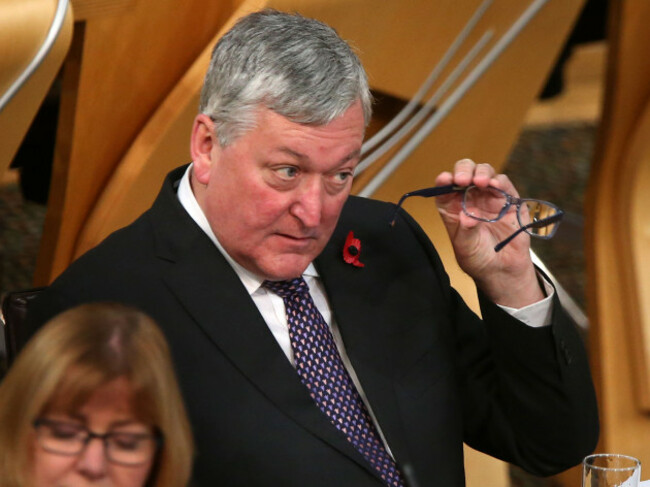
“They’ve never been allowed to fish in the UK’s territorial sea around Rockall,” he said. “It’s disappointing this activity continues.”
He said that if UK authorities discover Irish vessels in the area it believes they shouldn’t be in, then it will be dealt with “in the normal way”.
When pressed on what the normal way is, the Scottish minister said: “The normal approach is to invite the captain of the vessel to cease and desist… If that instruction is obeyed, there’s no need for further action.”
However, if that’s not the case Ewing said “action would be taken in accordance with the law” which would see vessels boarded.
“It is our preference that the Irish government should intervene and give advice to Irish fishers that they should cease and desist or they’ll feel the consequences of any illegal activity,” he said.
Ewing added that taking this action now was “nothing to do with Brexit” and it was a matter that had been raised repeatedly at a diplomatic level. He added he’s always at the other end of the phone should Minister for Agriculture Michael Creed wish to resolve the matter.
‘A number of options’

Subsequently, Minister Creed told RTÉ that Ireland has never recognised the UK’s claim on Rockall and that Ewing’s description of the current activity as routine was “very wide of the mark”.
He said he had met his Scottish counterpart at a meeting in 2016 and the matter wasn’t raised then.
Creed said that under the EU’s Common Fisheries policies, Irish fishermen have a right to be there and fish according to set quotas.
“Our fishermen there now are doing so under EU law,” he said. “We won’t be asking our fishermen to leave the area of Rockall.”
The minister said a number of legal options were available to the Irish government to try to resolve the matter.
This included the European Court of Justice – which would be problematic given the UK’s current plan to leave the EU by 31 October – as well as the UN or the International Court of Justice at the Hague.
“We will exhaust all legal options here to protect our fishing industry,” Creed said.
When asked if the government would consider enlisting the Naval Service to protect Irish vessels, Creed said: “I honestly don’t believe escalating the issue to that level serves any purpose.”
He added he hopes a “sensible solution” can be found.

To embed this post, copy the code below on your site
















have your say