TheJournal.ie uses cookies. By continuing to browse this site you are agreeing to our use of cookies. Click here to find out more »
Dublin: 9 °C Friday 24 May, 2013

Poll: Would you support the modification of embryos to prevent genetic diseases?

Do you agree with a procedure involving the genetic modification of an embryo in order to prevent serious genetic diseases? Have your say…

Image: PA/PA Archive/Press Association Images

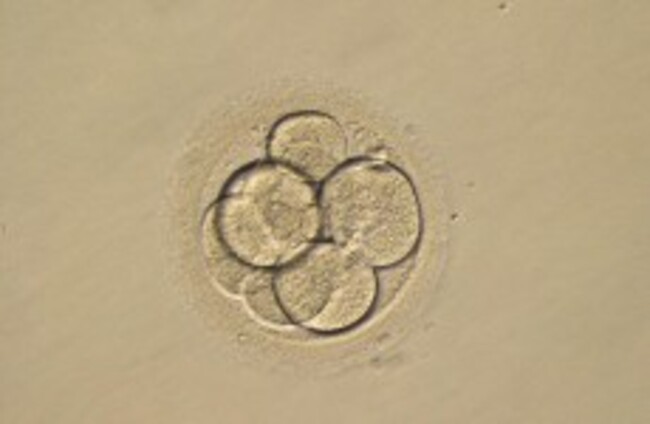
THE UK’S FERTILITY regulator has launched a public consultation over a controversial new medical procedure that would involve the genetic modification of embryos in order to prevent serious genetic diseases.

Debilitating medical conditions can be passed onto a foetus by a ‘carrier’ parent, meaning hereditary diseases can be passed down through the generations of a family line.

The new procedure has sparked controversy as it would involve an IVF embryo carrying DNA from both parents and a third, healthy, female donor – meaning a baby would carry DNA from three biological parents.

Scientists say the technique could not only prevent a baby from inheriting a devastating genetic disease but may also have the potential wipe the condition from a family line forever.

British law currently forbids such genetic modifications of embryos and, while new legislation could be written as early as next year with approved support, serious ethical concerns have been raised over the proposals – with opponents condemning the any modification of a human egg.

Although the proposals are not currently under consideration in Ireland, we’d like to know what you think: would you support the genetic modification of an embryo in order to prevent a hereditary disease?


Poll Results:


Read next:

Comments (95 Comments)

  • I reckon these geneticists know a thing or two about what they do.

    The choice should be available. Obviously the child should be loved either way but if it means wiping out particular diseases i cant see much of a downside.

    Reply
  • It sounds to me to be a bit like eugenics. However giving every child at least a starting chance in life is a good thing. I really don’t know what to make of it.

    Reply
    • Eugenics is bad, but if you know any children who have suffered from Tay-Sachs or cystic fibrosis, it’s easy to understand why a parent would want to prevent their suffering.

      Reply
    • I have severe concerns not only about the ethics, but also about the application. Serious genetic defect = what, precisely? In some countries being female is a serious genetic defect, being gay is a serious genetic defect, being inconvenient is a serious genetic defect. Just because something *can* be done does not mean it *should* be done

      Reply
    • There’s no evidence to suggest homosexuality is due to genetics.

      Reply
    • Sorry felicity but none of those things would be considered a serious genetic defect. None of them, by themselves reduce your life expectancy or quality of life.

      Reply
    • JayK 17/09/12 #

      Modern medicine has provided us drugs to treat most diseases. No one questions, “how do you quantify disease? Is homosexuality a disease? Will medicine provide drugs to treat homosexuality? I have ethical concerns about all this ‘modern medicine’ stuff”. Treating kids with cystic fibrosis won’t suddenly turn everyone into a Nazi eugenicist. Treating kids with Tay-Sachs won’t suddenly turn everyone to a racist, gay-hating bigot. It will just treat kids with serious diseases. There’s no secret agenda here.

      Reply
  • I would definitely support it, why not erradicate genetic diseases once and for all. China are already light years ahead of the western world in their use of stem cells to treat diseases. A family where I live raised €250,000 to take their baby girl over to have surgery to restore her sight. She wasn’t born blind but at 2 months, it started to go. The family were told by doctors here that there was nothing they could do. A google search on the condition directed them to Chinese surgeons. She has now had the surgery and has her sight back. I think any parent would do anything they could to help their children. We all have our views on topics but our views tend to go out the window when one of our own needs treatment that is currently unavailable here. My children are all fit and healthy thank God but I would support any parent opting for treatment such as this if there was a chance their child could be born with a terminal illness.

    Reply
  • @Regina We “tamper with nature” with every medical intervention that a person receives. Should we not treat a cancer patient or people struck down by viral/bacterial epidemics because nature has a grand plan to keep populations down? While parents undoubtably love their children with or without debilitating and life limiting genetic conditions, if there is a means to give them a chance of avoiding inherited genetic abnormalities, then why not? It is not about eugenics and cleansing the world of people with disabilities. Disabilities come in all shapes and sizes and having a child with a genetic condition, whether profound or mildly affected can enrich your life and society as a whole, despite the challenges. But if you were offered the possibility from the outset, that reduced the likelyhood of passing on known familial genetic disorders to your as of yet unborn child, it is surely worth advancing in this area of research.

    Reply
    • I understand that Lorraine, I just think when it comes to genetics things go onto dodgy ground. Will it always be used for medical help? What about when people want the perfect child with the perfect face and intelligence? Where does it stop and who gets to decide what you can or cant do?

      Reply
    • Oh no! We could end up as a species of intelligent, attractive humans. Oh the humanity!

      What would happen to the church when the world has rid itself of ignorant ugly people? Who would join the priesthood?

      Reply
    • Lorraine
      In so many respects you are right and then I stop and ask about the safeguards against the second generation being born without a more serious defect that the corrective procedure caused thirty years previously. At that stage the genie is out of the bottle and we could have started something that is far worse than the original disability or disease.
      At least with GM foods you can conduct limited and controlled trials over generations of plant life to see the dangers though you can also get that wrong. It is not possible to conduct such trials in humans as it would lead to the loss of embryonic life forms.

      Reply
    • Lorraine
      In so many respects you are right and then I stop and ask about the safeguards against the second generation being born without a more serious defect that the corrective procedure caused thirty years previously. At that stage the genie is out of the bottle and we could have started something that is far worse than the original disability or disease.
      At least with GM foods you can conduct limited and controlled trials over generations of plant life to see the dangers though you can also get that wrong. It is not possible to conduct such trials in humans as it would lead to the loss of embryonic life forms.

      Reply
    • Lorraine
      In so many respects you are right and then I stop and ask about the safeguards against the second generation being born without a more serious defect that the corrective procedure caused thirty years previously. At that stage the genie is out of the bottle and we could have started something that is far worse than the original disability or disease.
      At least with GM foods you can conduct limited and controlled trials over generations of plant life to see the dangers though you can also get that wrong. It is not possible to conduct such trials in humans as it would lead to the loss of embryonic life forms.

      Reply
  • Science is evolving every day. Mostly for the good , and I would agree with using genetics to give every child a fair crack at life. A lot off people won’t agree with genetic fiddling But put yourself in a situation where you had to choose one or the other for your child or unborn child, don’t think to many would refuse the genetic approach .

    Reply
  • Yes!

    Reply
    • Anyone remember the film Gattaca , eugenics opens up all sorts of dangerous doors. It’s a tough question as if it works to help people then it seems like a good idea but who would be the regulators. Hitler was a supporter of this kind of science too.

      Reply
    • Hitler was Christian too, but we haven’t outlawed Christianity because one monster said he believed in it.
      Nor should we ban a medical treatment that can cure horrific diseases because the general public don’t understand it.

      Reply
    • If a Hollywood science fiction movie forms part of your argument against, it wouldn’t hold up well…
      To have this procedure available as an option, rather than the modus operandi, would be beneficial.

      Reply
    • Naziism was the worst thing that ever happened to eugenics. They took it to a horrific extreme and set it back 50-100 years. Comparisons are valid but saying no to it because of what the nazis did is very regressive.

      Reply
    • No james that was called eugenics this is genetics and eugenics was practiced by lots of countries around that time including the uk and the usa. Try using that reasoning with the people who suffer from these genetic diseases.

      Reply
    • @ James Quirke: I agree with Phil, if you have to quote a science fiction movie as a reason not to approve of such treatment your argument is flawed from the start. And modern eugenics has nothing to do with Nazis or Hitler

      Reply
    • It wasn’t just Hitler who supported this kind of science, in fact it was in America where most of the support and funding for the idea came from. I think this kind of science while seeming to be rationally beneficial and harming no one is opening up a dangerous can of worms. It can be used to remove genetic defects but where do we stop with what is or can be labeled a genetic defect – could being left handed, brown eyed or from a certain ethnic background soon be considered a defect. I mention the film Gattaca not as to make the argument just to show an example of how such science could potential make the world a place full of people who are the same and produced just like robots on a factory line. While its great to imagine all the ills that could be cured by this science it’s also worth considering all the possible negative consequences of such rational arguments for genetic interference when taken to their logical end.

      Reply
    • James, you’re confusing genetics (a science) with eugenics (a social policy)…

      Reply
    • …one gives you options; the other takes them away.

      Reply
    • @ Matt, you say tomato I say tomahto. Just because they call it something different doesn’t make the reason and arguments behind it any different it’s still aims to remove ‘undesirable ‘ traits from the population. Anyone remember all the debate over the genetic modification of food?

      Reply
    • Eh, James, that’s not tomato/tomato; that’s tomato/taxation. You’re seriously mixing things up here, and not in a positive way. Developing a new kind of hammer shouldn’t be outlawed just in case someone hits someone else in the head with one…

      Reply
    • No being left-handed, brown eyed or from a certain ethnic background are not genetc defects. I think the scientific and medical community all agree on that so no worries there.

      Reply
    • @ mark, Eugenics is the “applied science or the bio-social movement which advocates the use of practices aimed at improving the genetic composition of a population”, usually a human population.( Wikipedia definitions) while Genetic engineering, also called genetic modification, is the direct manipulation of an organism’s genome using modern DNA technology.
      Thus genetic engeneering could be used as a direct tool in bringing about eugenic methods of practice in medical fields something which wold need to be examined and regulated strongly, this as I say could be used for good but also has dangerous implications if used incorrectly and applied to the population as a whole. If we’ve learned anything from the past its that when humans start to play God, bad things can and have happened when they are left to their own devices.

      Reply
    • @James. You talk about “undesirable traits” like you’re talking about ginger hair. We’re talking about crippling or fatal diseases here. How can you stand in the way of other peoples health an well-being just because you take your scientific education from fictional films?

      Reply
    • @ Ross, maybe they do agree but who’s to say that won’t change? Once the technology is there what’s to stop it from being hijacked by political lobby’s and movements to enforce controlled genetic selectionsism. I’m not saying the science is all bad as it could be used for good as long as it stays controlled and regulated and in the right hands it can help people to live longer, fuller and healthier lives and who could rationally argue against that?
      i’ just warning of the perrils of such technology and seeing that while we may remove dibilating genetic desease the same technology in the wrong hands can be used for evil and the removal of certain traits from the population without consent. It could for example lead to genes for genetic sterility being implanted in certain populations, I just thinking outside the box at some of the possible risks such technology holds much like those who protest neculear power and the atom bomb.

      Reply
    • @ Luke , I’m not saying the technology is inherently bad but what I am saying is its potential dangerous. No one could stand in the way of something that could potentially help millions but I see that the same technology in the wrong hands and used in a different way could have negative consequences, the mentional of the fictional film was simply meant to paint a picture in people’s minds of such a possible future if this same kind of technology is taken to its logical end i.e why stop and fixing genetic diseases why not remove genetically inferior traits from the human genome altogether. I’m simply arguing that just like we can use all sorts of technological advances to improve the quality and lengthy of human life so too we can use it to regulate and control it – sometimes with dour consequences.

      Reply
    • @James The genes aren’t being modified in any way, the nucleus from one egg is simply being extracted and placed into another which doesn’t contain the same problematic mitochondrial DNA. The reason this is currently illegal is because it is one of the steps involved in cloning.

      But I really don’t understand how anybody could rationally think this could lead to a Gaticca type situation, for one it would be prohibitively expensive and completely pointless beyond curing genetic defects. Secondly if you are worried about designer babies, then the area to be concerned about is IVF treatments in general, because it is much more feasible to collect a couple eggs, combine them with sperm and test to see which ones would give you the desired traits. (still probably a couple of years out and still very expensive, but at least currently plausible). But to think that this will lead to a Gattica type homogeneity is insane, because it assumes that the whole human race will get aboard and switch to IVF instead of sex. Which isn’t something I’m really worried about.

      All the arguments against this are either religiously based or just a generic (and generally uninformed) fear of science. But it isn’t right that peoples religious dogma or their ignorance should stand in the way of other people being able to be born free of the horrible afflictions of their parents, of those parents being able to have kids without fear of passing those conditions on.

      Reply
    • @ John I’m an atheist so my arguments have nothing to do with religion, they do however have everything to do with thinking about both sides of the potential uses for science and technological advancements. Let’s us not walk blindly into a path of rational ends for fear of loosing a part of our humanity.

      Reply
    • @John. That was so well put I want to upvote it twice.

      Reply
    • @James, what part of humanity should we be afraid of loosing here? Because, at least for this specific treatment, all I can see us loosing are some very horrific and debilitating illness. Perhaps we need to take it on a treatment by treatment basis, and I’m okay with that. But at the very least, for this one treatment, I can say resoundingly yes, because so far I haven’t heard a single thing that would give me pause.

      Reply
    • ” But to think that this will lead to a Gattica type homogeneity is insane, because it assumes that the whole human race will get aboard and switch to IVF instead of sex. Which isn’t something I’m really worried about.”

      Exactly. The only person I know who has had IVF with pre-implantation testing (in the UK, one of the limited number of countries that permits this for medical reasons) did so because she had had multiple miscarriages and tests revealed that she was passing on a fatal hereditary genetic disorder to a high percentage of embryos. She’s now a mother of two thanks to genetic testing and considerable effort/expense (and the fact that she wasn’t passing it on to *all* embryos). Hardly “designer babies”, unless you interpret “designer” as “not dead”.

      Reply
    • Jonno 17/09/12 #

      @Lisa yeah not now everyones not goin for IVF but like in the movie surely down the track as people want an advantage for their kids others will follow so they dont leave theirs disadvantaged and Im sure as with most things business will start to go for the profit and will start engineering out unwanted traits like I dunno being short or whatever. I vote yes tho because if there is a chance to further humanity and end the possible suffering of future peeps then who am I to say no.

      Reply
    • James, do you use the film industry and Ignorant church. To help you make decisions, you have a brain and use it!

      Reply
    • @ stephen, indeed I do think for myself unlike a lot of people who are simply accepting that this is always going to be a good thing,I agree that it has potentially brilliant benefical implications but as I say it gets us one step closer to a potentiall dangerous place. I try to look at both sides of things before I contribute to debate and it seems I’m one of the only ones who seems to be seeing both sides of the potential this kind of technology has. P.S. Read my coments before you go mouthing off, I’ve stated I’m an athiest so religion has nothing to do with my point of view, and the mention of the film although science fiction was meant to simply paint a picture however fictional of how this kind of thing might potential be used for ends other than its original intention of helping people- a point I’ve explained twice already in responce to peope above!

      Reply
    • Wonderfully put Mark Dennehy. Personally I have witnessed at first hand how genetic disorders can debilitate and destroy a young child’s life. We should do all we can to investigate genetic based treatments for these dreadful diseases, but within a tightly regulated international code of practice.

      Reply
  • Yes! As I have a sister who suffers with Retts Syndrome I could be a carrier of that gene and if the technology is there to help me stop passing that onto my child I’m all for it!!!!

    Reply
  • I cant believe there is even an argument against this.

    Reply
  • The luddites would as usual prefer to stick to their strict and erroneous idea of ‘nature’ , all whilst conveniently forgetting agriculture, building and everything else we do are not natural in any meaningful sense.

    If you have the ability to cure a disease and improve someone’s life, why should inane petty considerations about what is and isn’t natural even enter into the discussion?

    Reply
  • As domesticated animals, Humans are no longer subject to natural selection pressures. Due to this our genetic makeup can only degrade. Without employing some form of genetic manipulation our species Richard Dawkins and others predict our species will degrade into some form of Barbarism.

    That doesn’t mean we have to act immeditely. We’re talking about timescles of tens of thousands to hundreds of thousands of years.

    Genetic research isn’t yet at a point where we could comfortably and safely manipulate the genome, but research should continue as it is, with a view to engaging in genetic manipulation in the not too distant future.

    Reply
  • This is a great advancement and great news for the fight against diseases but I would be concerned about who defines what a genetic disease is and who would regulate it. We all have our own opinion regarding what is considered a genetic disease and be quite different as you go from culture to culture. Also, how much will this cost? Will everyone be able to afford it or only people of certain wealth?

    Reply
  • Yes but I think it will cause more problems. We could be introducing more medical conditions etc. All this needs extensive testing before it can be mainstream’ed.

    Reply
  • I think our morality, vanity and our desire for health and well being is sometimes separated into convenient ‘boxes’ that allow us make judgements that lack a kind of ‘big picture’ view of the effects these judgements have on our society in general.An anti abortion supporter would almost certainly have to say no, yet I feel some anti abortionists would understand the benefits this type of research can have for future generations.Pro abortionists may consider this type of research to almost a logical step to take in the fight against disease and inherited disabilities.I voted yes because I believe some good will come of this research,yet to be honest ,at the back of my mind I think that it may,as has happened before ,the research will be used for what I would describe as ‘ purposes not in keeping with the spirit of the researchers original goals’ The military uses for one….You cannot answer this question without asking a lot of other questions ,and very soon the waters are muddied and the true nature of the original question is lost.Just for the record…I am pro abortion. It needs to be stated,though I completely disagree with it being freely available for the sake of convenience.

    Reply
    • I agree with your comment Alyn. It’s very difficult for me to answer this type of question with a simple yes or no. This progress raises a few questions some of which have been discussed above. Any human has the right to a decent life, but for me this is slightly clouded by the fact that I don’t know enough about the potential dangers, if any, associated with this type of “intervention”. So, I’m in the “I Don’t Know” camp.

      Reply
  • In my opinion the good outweighs the bad. People can live better lives with Genetic Engineering. It will prevent a lot of extremely bad inherited conditions. Definite yes.

    Reply
  • At Mark Dennehy – I dont know what you are trying to do with putting down the valid comment made by Alvean Jones. You appear to be trying to say that she and other Deaf people are anti-hearing. You are way off the mark. There are load of things I’d like to add but you would typically only dismiss me as bollocks like many other audists. Your view is very much in line with audism. If you want to know what is means – google around. What Alvean is trying to say that she is proud who she is. So am I. Everyone is entitled to be proud of who we are. No one can take them away. Alvean’s point is that the fact she is Deaf. So am I. She grew up being Deaf and faced many different things. I had my share – faced deep-rooted societal prejudice and so on but I do have many happy days that I wouldnt swap for anything. Alvean and I are proud of who we are. We are not ashamed of being Deaf (and disability if you like). We have our own culture, language and identity. Would you take away the cultural, identity and linguistic pride from ethnic minority group or travelling communities? Would you dismiss women, who are proud of their genders or gay/lesbian who are proud of their sexuality? Are they bullshit?

    I never ever tried to stop people who wants to hear. Many Deaf people I know do not try stop anyone trying to search such hearing cure. We know it is matter of choice. If Deaf people wants to hear by means of such cure if there are any, that is their business. There are people who does not wish to opt for “cure” that is their business too. They prefer to remain hearing because they are happy being Deaf – why should they not? Deaf community are tight-knitted community and they are always happy who and where they are.

    You have to be Deaf to understand us Deaf people… (Note the capital “D” – google to find out why!)

    Feel free to say bullshit or what I said are full of cobblers that I may need head examined. I dont give a shit what you or anyone say for this matter. I am proud of who I am, being Deaf with my own culture, identity and language and will always be. I do have the option of going for Cochlear Implant at Beaumont Hospital to improve my hearing – FOR FREE! It cost about €30,000, which Dept of Health very generously foot the bill plus post operation service. Some of my friends got the Cochlear Implant with mixed results – some are happy but others are not. My choice is why should I want my body to be invaded and why do I need to improve my hearing? I am happy enough with my life – I am a successful self-employed person with such an extensive managerial career, had BA and Masters Degrees, happily married for 20 years with three wonderful educated children, own house and car – I am just simply a middle-class person with wide circle of friends (Deaf and hearing), many social/political activities and still enjoy banter with few pints of Guinness at Mulligans with my mates. What more do I wish for? I am happy as I am, being Deaf person. Cochlear Implant does not cure deafness – it is just a mere supersonic hearing aid that enhance hearing but not necessarily always the case. The state has been spending millions of euros for this but not with clear cut outcome. Whether it is worth, considering the savage economic climate with serious cutbacks, etc, it is for you and others to think.

    I think I said too much but thank you for your attention and feel free to attack me or whatsoever…

    Reply
  • Will it be made available to EVERYONE for nothing? If yes, then I have no problem with it.

    Reply
  • fantastic news ,,great progress.

    Reply
  • I really dont think we should tamper with nature

    Reply
  • Definitely not.

    Reply
    • Damn right! And no vaccinations either! And bandaids are the work of the devil, if your child’s bleeding, it’s Gods Will and who are you to stand in the way of that?!!!

      Reply
    • I think I would explain my stance a bit more. I’m not into religious excuses for stopping scientific advances.. I’m all for vaccinations. You think you are being funny or smart.

      There are plenty of Deaf people (members of the Deaf community, not hard of hearing people, there is a difference) who are very worried about the eugenics movement. When it comes to illness like CF, sure,as it would help people with the genes, but when it comes to people with a totally different world view, such as Deaf people, we do not want to see an end to our culture.

      If you scoff at this, you obviously have no idea of what it is like to be Deaf. (note the capital letter, D)

      There was an international agreement between the WFD (World Federation of the Deaf) and the IFHOH (International Federation of the Hard of Hearing), to agree on two terms to be used, and these two terms are to be Deaf and Hard of Hearing. Here is the link: http://www.ifhoh.org/wfd.htm

      In a joint declaration signed in Tokyo in 1991 the International Federation of Hard of Hearing People and the World Federation of the Deaf agreed that “hearing impaired” is a term intended to cover deaf and hard of hearing individuals under a single category. However, deaf and hard of hearing persons in most countries reject this definition because it fails to recognize any distinction differentiating these two social categories.

      The joint declaration recognizes and respects the right of individuals with hearing losses ranging from mild to severe to regard themselves as either “deaf” or “hard of hearing” and both organizations agreed to recognize the terms “deaf” or “hard of hearing” only in their official terminologies.

      IFHOH wishes to make it clear that references to “hearing impaired” people in any document accessed through this web-site is not the responsibility of IFHOH nor are they intended as a contravention of this agreement.

      There is such an ideological chasm between members of the Deaf community and the wider hard of hearing community. If you use the term ‘hearing impaired’ the general public will more than likely think of issues that are more relevant to hard of hearing people such as assistive listening devices, hearing aids, and so on, and completely discounts the whole experience of being a member of the Deaf community.

      As you know, this is why Deaf people do not want the concept of ‘hearing difficulties’ associated with them. They’re DEAF, end of. The problem here is that when a member of the Deaf community sees the word Deaf, they think of something very positive, like the values of the Deaf community, friendship, comradeship, the richness of the various sign languages, Deaf culture, Deaf Arts and so on, whereas the man on the street sees the word DEAF and thinks of affliction, loss, suffering, left out, and all the other negative things they think of.

      When it comes to sicknesses like CF or Tay Sachs, I would look for cures, of course. However, poeple who do not understand Deaf culture would seek to find cures for Deafness without considering the possibility of Deafhood. Yes, there is such a thing. http://www.deafhoodfoundation.org/Deafhood/Home.html

      Do you care? Probably not. But we do.

      Reply
    • What a tangent you went off there Alvean

      Reply
    • Bullshit Alvean. If a cure for deafness was found, that would be nothing but good news. Only if it was forced on people without their consent, would it be something to fear. And frankly, if the Deaf community were to try to force people not to take a cure, that would be just as wrong and just as bad as having a cure force on them.

      And none of this has anything to do with the news story above; you’re talking about eugenics, it’s talking about medical care. It’s got as much to do with eugenics as the legal ban on siblings marrying has to do with eugenics (ie. yes, if you stretch a dictionary, you can call it that, but you’re being daft when you do so)

      Reply
    • No, for us Deaf people, this is VERY on point.

      Just my explanation to you why we are concerned about genetics when it comes to people with the Deaf gene.

      Reply
    • so if you were to have a child that was going to be deaf, and you had the chance to prevent it, but you didn’t just so they could fit into some deaf culture?!
      if so you are an idiot

      Reply
    • Alvean, what you are talking about there is not genetics or medical care, but pro-Deaf eugenics. And eugenics was bad no matter who was doing it or why. Pro-Deaf eugenics, anti-Deaf eugenics, Aryan eugenics, anti-Downs Syndrome eugenics, it’s all the same evil shite.

      Reply
    • Let’s leave it at this, you obviously don’t understand my perspective, though I get yours.

      Reply
    • I lived for 2 years with extremely poor hearing and of course that is a different experience to being deaf.

      I’d imagine that, at the very least, your average ignorant bystander has some understanding of what it means to be completely deaf.

      My experience of having less than 20% of my hearing was one of being under constant suspicion of the people around me. People who thought I was faking it or using it as an excuse to be rude. People couldn’t understand that it’s possible to hear that someone is speaking without hearing well enough to understand the words. They couldn’t understand how exhausting it can be to attempt to engage in long conversations or meetings. I was questioned for being able to identify that an airforce F1-11 jet flew overhead (it shook the f***ing building!).

      Then I had surgery on one ear and the attitudes became even worse. Now I could understand people quite well in quiet rooms where people speak in turn, but I couldn’t understand people if there was any kind of background noise.

      Not to in any way degrade the experience of those who are deaf, but I always imagined that if I were completely deaf, people would understand that and I wouldn’t be subjected to the daily third degree from ignorant, insecure people.

      In any case, I accept what you’re saying. It’s a completely different experience. One has its own culture and the other does not. There are people who, given the option to be “cured” of their deafness, would choose not to.

      Reply
    • Jonno 17/09/12 #

      So Alvean your telling us that your so being deaf is the most important part of your identity and because you belong to a community of others you identify with ye are all so selfish that you would essentially WILL deafness onto another human unnecessarily because your afraid of losing your sense of community of some bollocks! How bout you let them cure whatever they can and not hold society back. Live and let live

      Reply
    • So you, without having ever met me, or know me from the proverbial Adam, presumed that I had a crap quality of life, with a lot of things missing from it, just because of your preconceived notion of what it means to be deaf? Hmmm. Who do you think you are?

      Indeed, if you read what I typed carefully, in previous comments, you would have realised that did not say I was advocating making babies deaf. Nope. If the babies were already deaf, leave them the well alone.

      It is a totally different thing to looking into the eradication of cystic fibrosis and Tay Sachs, as these are diseases.

      Being deaf is not a disease. Indeed the very existence of deaf people have contributed to the world in many positive ways. Just by their very nature of being deaf.

      It is rich that you think that my view of letting deaf people be deaf people is actually holding society back??

      Boy, you have a lot to learn.

      Reply
    • That’s why it would make sense to leave the decision to parents, Alvean. I myself don’t know if deafness is hereditary, but if it is, carrier parents would have the option to maintain it if they felt it was the best decision for their children (and I would argue deaf children would be in better position if they had deaf parents who understood their strengths and challenges as members of the deaf community). No loving parent, on the other hand, would want their children to suffer from Tay-Sachs. Your arguement would be one for giving this decision to parents.

      Reply
  • I wonder how many people who said yes to GM people are against GM crops….
    a few random points in response to things said above:
    eugenics and genetics are definitely different, but the latter can contribute to the former;
    Sweden only formally abandoned its eugenics policy, conceived in the 1930s, in the 1980s;
    stem cell treatments in China are mostly derived from tissue obtained from aborted fetuses.

    It is the nature of genes that they mutate and we are unlikely ever to be able to eliminate genetic diseases but if we have the technology we should try. But with the Catholic ethos that prevails in Irish medicine there is little danger that almost any of this will actually happen in Ireland.

    Reply
  • Not to mention the profit to be made when Monsatnto or genzyme gets the patent on the gene that garentees no diabetes or similar, then there will be two racial classes those who can pay to purify and those who cannot

    Reply
  • to prevent heriditary diseases? yes…but is that really were the line would be drawn?

    Reply
    • Um, probably, yes. It’s where the line is drawn in the UK at the moment for pre-implantation testing of IVF embryos, and I haven’t heard of a rush to breach those guidelines yet.

      Reply
    • JayK 17/09/12 #

      Indeed, this consultation is exclusively to do with mitochondrial DNA, not the larger “genome” of nuclear DNA. There’s not really much you can do with mitochondrial DNA than fix faulty mitochondria.

      Reply
  • A Japanese scientist and some European University – forget where – several years ago discovered cures that avoid the morally evil, or morally divisive, aborted embryonic research. Some babies are conceived strictly for experiments, that is grossly offensive

    Reply
  • The first step to eugenics.

    Reply
  • If you don’t think those who hold this technology cannot do what @James Quirke said above you are delusional. And I would rather be paranoid than delusional.

    Reply
  • Gattica was playing on Sky last Sunday..

    I’d imagine something similar would happen, ie start with deadly diseases, trickle down to conditions, ie. eyesight, unstraight teeth, easily sunburned, and eventually eek down to a generation of blonde haired blue eyed, 6ft Aryans….

    Reply
    • I know, I saw a film the other day called Terminator, and then I read an article about this hoover that can clean your house on its own. I mean its only a matter of time before Skynet is up and running and the robots are hunting us!

      Reply
  • so when this child of 3 genes have children , how are they going to turn out playing wit nature . and it’s wrong

    Reply
    • I’m guessing you’ve never known a child who suffered from hemophilia, Tay-Sachs or cystic fibrosis? I had a childhood friend with a sibling who died young from Tay-Sachs and it caused unspeakable pain to both the child and his family (sufferers inevitably die by the age of 5). If you knew yourself to be a carrier, would you really be so willing to let your child die? This idea that nature is wrong is ridiculous. Nature routinely would kill infants.

      Reply
    • So you think if we can help prevent diseases don’t bother? Very ignorant.

      Reply
    • @Edwina, it really wouldn’t affect the next generation at all (beyond not having a chance of contracting the mutation in question of course), and as this is something that is done to the egg, you would expect anything that would effect the second generation to be evident in the first. The mitochondrial DNA doesn’t really effect anything beyond creating the power source for cells (for which it is obviously very important) and it is only passed maternally. What is interesting about mitochondrial DNA is that they have a separate evolutionary source to our nuclear DNA, and were transferred in by bacteria, so they are really very independent of the rest of our DNA.

      Reply

Add New Comment