Sign in. It’s quick, free and it’s up to you.
An account is an optional way to support the work we do. Find out more.
Sign in. It’s quick, free and it’s up to you.
An account is an optional way to support the work we do. Find out more.
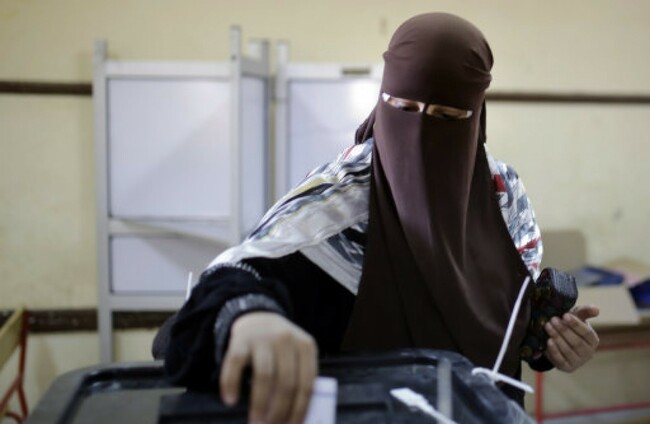
SAUDI ARABIAN WOMEN will make history today when they vote for the first time in the country’s local elections.
The vote has been hailed as a small step forward in the conservative Islamic kingdom, one of the most restrictive countries in the world for women and the last country where only men had been allowed to vote.
Women are also allowed to run in the election, with more than 900 women, along with some 6,000 men, seeking seats on 284 municipal councils whose powers are restricted to local affairs including streets, public gardens and rubbish collection.
However, it is not expected that any women will be elected.
Ballots for local councils have only taken place twice before, in 2005 and 2011, with only male candidates and voters participating.
Difficult to vote
Um Mohammed, a 47-year-old woman living near the Kuwaiti border, said her daughters helped to organise the campaign of a female candidate, but she herself would back a man.
“I am voting for this candidate because he is from our tribe and he will ensure our rights. He also has a good personality and we have never heard anything negative about him,” she said.
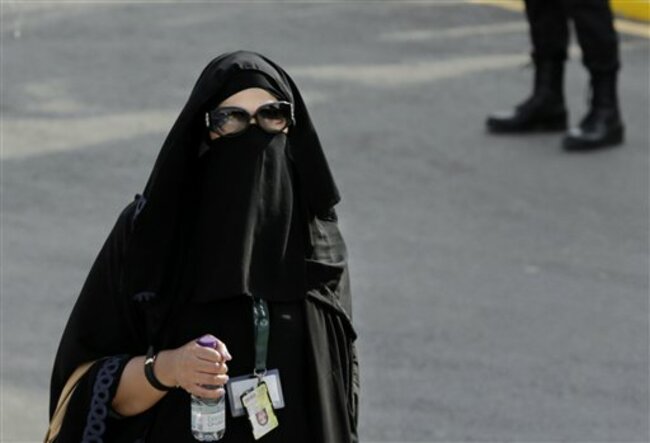
Um Mohammed may have chosen her candidate but whether she makes it to the polling station today is another matter.
Unable to drive and with no taxis in her community, she said she can only vote if her husband takes her, or if a group of women rent a car and drive together.
Saudi Arabia is the only country in the world where women are not allowed to drive. They must also cover themselves in black from head-to-toe in public and require permission from male family members to travel, work or marry.
There is a strict separation of sexes, which applies to election facilities as well as elsewhere like restaurants.
Ruled for decades by the al-Saud royal family of King Salman, oil-rich Saudi Arabia has no elected legislature and has faced intense Western scrutiny over its rights record.
However, in recent years a slow expansion of women’s rights began under the late king Abdullah, predecessor to the current king, who died in January.
“A good man”
While the vote is seen as a small step forward for the ultra-conservative nation, very few people believe any women will actually be elected.
A male voter in the eastern city of Hafr al-Batin said it was difficult to know whether to support a woman candidate as men have been unable to meet them or see their faces.
“You have to work extra hard to understand a female candidate,” he said, while he could share food or coffee offered by male contenders.
“I don’t think any man here would vote for a woman,” the man said, adding that he will cast his ballot for a fellow tribesman.
“Even without the campaign I already know he’s a good man,” he said, declining to be named.

To embed this post, copy the code below on your site















have your say