Sign in. It’s quick, free and it’s up to you.
An account is an optional way to support the work we do. Find out more.
Sign in. It’s quick, free and it’s up to you.
An account is an optional way to support the work we do. Find out more.
POLITICAL PARTY INDEPENDENT Ireland has called for banks to reintroduce 100% mortgages to the market to help renters and young people buy their first home.
It comes as the product, synonymous with the Celtic Tiger era, has increased in popularity in the UK.
In Ireland, however, 100% and 95% mortgages are not available under Central Bank lending rules that came into force in 2015.
Last week, another lender in the UK introduced a 100% mortgage to the market. It is not available for new build properties and comes with an initial higher interest rate (5.99% compared to an average of about 4%).
The Journal contacted housing experts and the housing spokespeople of all of Ireland’s main political parties to get their views on whether products of this kind should be reintroduced in a bid to help first-time buyers.
Independent Ireland was the only party to call for their reintroduction.
Party leader and TD Michael Collins told The Journal:
“We are not advocating for a return to the reckless lending that preceded the financial crisis. However, it is equally irresponsible to ignore the reality that people are spending €2,000 or more each month in rent, yet cannot qualify for a mortgage that would cost them far less.
“There is a clear need for targeted, responsible mortgage products that reflect today’s economic realities.”
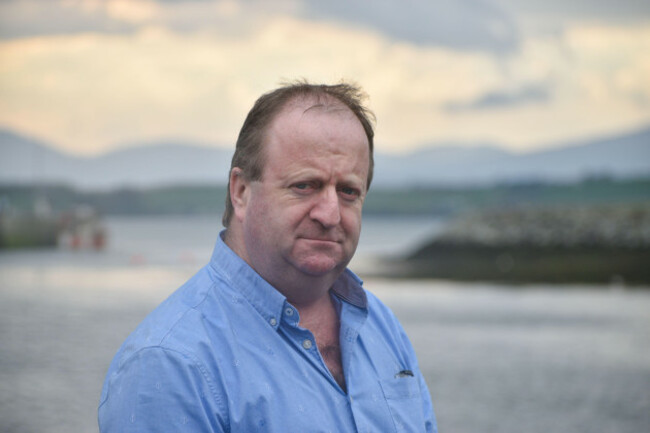
He pointed to the rise in availability of the product in the UK and said that with appropriate affordability checks and regulatory safeguards, 100% mortgages can be a “valuable tool in addressing the housing crisis”.
His party colleague, Cork North Central TD Ken O’Flynn added:
“It defies logic that someone can be trusted to pay €2,500 to a landlord but not be considered eligible to repay €1,800 to a mortgage lender.
“A properly structured 100% mortgage could turn long-term renters into homeowners and provide dignity and stability to countless families.”
Other politicians contacted by The Journal, however, urged caution.
Sinn Féin’s housing spokesperson Eoin Ó Broin said there should be “no return to the high-risk Celtic Tiger lending of the past”.
He added that mortgages of this type would not help increase housing supply and would only add to house price inflation.
Similarly, Social Democrats housing spokesperson Rory Hearne said 100% mortgages were an “absolute disaster” during the Celtic Tiger in terms of contributing to house price inflation.
“We are absolutely in the same upward spiral as we were in the Celtic Tiger… and adding more credit into that in order to enable people to pay higher prices will, in the context of restricted supply, just add to higher house prices,” he said.
Hearne said what first-time buyers really need is State-provided affordable housing to rent or buy, on a “massive scale”.

This sentiment was shared by People Before Profit TD Paul Murphy, who warned against repeating “the mistakes of the Celtic Tiger” and Labour’s housing spokesperson TD Conor Sheehan, who said he was “deeply uneasy” about the prospect of their return.
“With a 100% mortgage, the buyer does not have any equity in the property and if the housing market contracts, they could find themselves in negative equity…The higher interest rate offered by these loans will also make them more expensive over the longer term,” he said.
Shane Cullen, head of mortgages at Ask Paul (Fairstone), also explained how limited a homeowner’s options are if they avail of a 100% mortgage and house prices begin to fall.
“The main issue you have here is that the buyer is at 0% equity at the outset. Now while this is okay in a time where there’s property price inflation, a dip in the market can have massive consequences for the buyer, throwing them into negative equity,” he said.
“They may want to sell due to personal or financial reasons and not be in a position to do so as they’re in negative equity. House prices can take years to recover as we saw in 2008 and led to the Central Bank of Ireland measures being introduced to protect consumers and encourage more responsible lending.”
What about a 95% mortgage for first-time buyers?
“Even at 95%, you’re still leaving buyers extremely vulnerable to a dip in the market,” Cullen said.
He argued that opening up the first-time buyer schemes to second-hand properties would be a more sensible approach, as consumers would be better protected from a crash.
“Returning to 95 or 100% mortgages will be great for increasing the lenders’ bottom line, and while it looks as though they’re doing it to help consumers, there is no consideration for the associated risks attached.”

To embed this post, copy the code below on your site













have your say