Sign in. It’s quick, free and it’s up to you.
An account is an optional way to support the work we do. Find out more.
Sign in. It’s quick, free and it’s up to you.
An account is an optional way to support the work we do. Find out more.
LAST UPDATE | 30 May
(Seo alt ónár bhfoireann Gaeltachta. Is féidir an bunleagan as Gaeilge a léamh anseo)
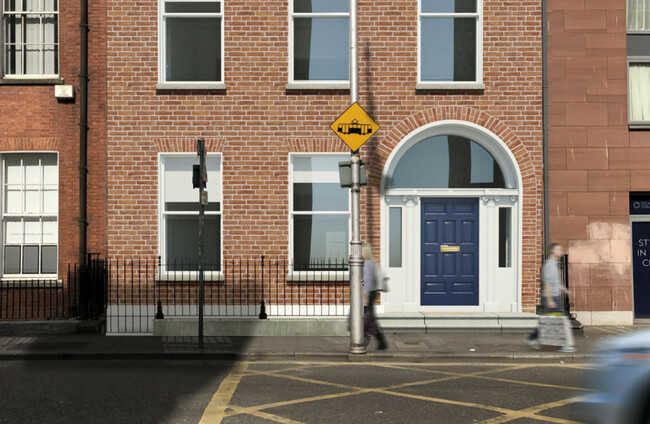
THE PERSON APPOINTED as director of Dublin’s Irish Quarter will be tasked with working to establish Irish as the primary language in the area around Harcourt Street in the city centre.
That, in summary, is the description contained in a recruitment ad which has been circulated this week to find a director for this pilot project, with the employers – Conradh na Gaeilge, the country’s main Irish language advocacy organisation – working in partnership with Dublin City Council and City of Dublin Education and Training Board on the initiative.
The area around Harcourt Street, Camden Street and Synge Street, extending as far as the National Concert Hall, is what is envisaged for the Irish language Quarter – a project specifically referenced in the Dublin City Council Development Plan 2022-8.
An Irish language quarter in Dublin city could also be called a Gaeltacht but in an urban context. This means that businesses in the area would be encouraged to use Irish and organisations involved in Irish language activism across education, youth culture and rights would be located in the vicinity. A part of West Belfast has been rebranded as a Gaeltacht Quarter/Ceathrú Gaeltachta centred around Cultúrlann McAdam Ó Fíaich and Coláiste Feirste on the Falls Road.
The area includes the Irish-medium primary school already open on Synge Street, and the Irish-medium secondary school being planned for that campus will also be included.
Chapter 12 of the plan states that it is a goal of the City Council to promote an Irish Quarter and to seek that designation for the area in the south of the city centred around Harcourt Street as an ‘Irish language network’.
It is also an objective to support the exploration of opportunities to increase the use of Irish within a selection of urban villages in the city.
At the heart of this project is the redevelopment of Conradh na Gaeilge’s historic headquarters on Harcourt– a project that will take a further three years and millions of euros to complete.
Among the new facilities that will be available at Number 6 will be a café, a multi-use centre, a theatre and much more.
While Gaeilgeoirí in Dublin and across the country will welcome this, this is just one element of what is planned for Dublin’s Irish language Quarter, as Conradh na Gaeilge general secretary Julian de Spáinn explained.
“It was always our intention to do something that would provide far wider access to Irish in the area than just Number 6,” he said.
De Spáinn indicated that other groups are supporting the initiative as well – among them Trinity College Dublin and the Office of Public Works – and that a working group has been meeting regularly to bring the project to fruition.
A Gaeltacht Quarter has been in development in west Belfast for a number of years, with considerable progress made, and good work has also been done in Wales, and representatives from the Dublin working group have visited to learn lessons.
“We are trying to develop this on a basis that it will serve as a model for the rest of the country once it is fully developed,” he said, acknowledging that he was excited about what had been achieved and what is currently under way.
He said Number 6 Harcourt Street would be completed within three years and that there were many more steps in the project still to be achieved, though good progress had been made on the front of the building.
The bulk of the work now to be done involves restoring the buildings at the rear.
While Uimhir/Number 6 will be at the heart of the Irish Quarter, there is clearly a great deal of other work underway to build an Irish language ecosystem in the area around the historic building, and this is part of the work of Gaeilge 365, a project of the City Council.
Dáithí de Buitléar is the director of Gaeilge 365, and the project has done a great deal of work to inject more life into the language – and to support it – in the capital.
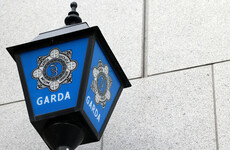
In this particular area, the State has invested through garda stations, parks, the Museum of Literature Ireland and the National Concert Hall, among other facilities.
“One of the positive things about that is that as the number of Irish speakers coming into the public sector increases, we are seeing the cultural dimension developing naturally on Harcourt Street and on the Irish-language campus on Synge Street – with thousands of people coming into the area speaking Irish, whether for work, social activities or otherwise.”
The plans to develop an Irish medium secondary school on Synge Street have been delayed and beset by controversy but it is now set to open in September in rooms in the current primary school which is adjacent to Synge Street CBS where the Gaelcholáiste is to go eventually.
De Buitléar said that things had changed enormously in the capital since he moved there 15 years ago. Back then, people would go to Club an Chonartha for social events at the weekend.
“What we see now is that there are numerous Irish-speaking communities spread across the county and—no doubt thanks to the growth of Irish-medium education over the past 30 to 40 years—in a good number of the larger suburbs around Dublin, places like Swords and Lucan”
He said wonderful work had been done by the likes of Na Gaeil Óga, the GAA club in the west of the city, and he also noted the Foraois project, which is establishing youth clubs in places like Dunboyne.
In his view, the growth in the number of Irish speakers and in the range of activities is a reflection of the outstanding work done by Irish-medium schools in the city, county and across the country, with young people with Irish coming to study and work in the capital.
Recently, at the Digital Hub in the city, a project called Todhchaí was launched to support business founders starting and scaling enterprises through Irish wherever they are in the country, with the hope that some of these Irish-language businesses will be located in the new Irish language quarter of the capital.
He also referred to the work being done by Baile Átha Cliath le Gaeilge to encourage retailers to use Irish, and he indicated that shops, restaurants and cafés that display the fact that Irish-speaking staff members are available and that business can be conducted through Irish are generating €18,000 in additional business value.
“It stands to reason that if an Irish speaker is walking past three cafés and they know that one of them has Irish-speaking staff, they will choose that one,” said De Buitléar.
Even setting aside its intrinsic value as a language worthy of love and respect, the additional business and increased income it can attract is certainly an extra incentive for any shop or café.
This quiet revolution is in full swing and continuing apace. A solid start has been made on the work to bring the dream of an Irish language Quarter for Dublin to life in the heart of the city.
“It won’t happen overnight but we are creating the space at the heart of Ireland’s capital where people – whether they are from Dublin, from the Gaeltacht or from abroad – if they wish, will hear Irish being used as a community language, a commercial language; where they understand that there is a distinct area they can go to and know they will hear Irish, see Irish, and that it is theirs to use,” said De Buitléar.
The competition to recruit a director for the Irish Quarter is open until 22 June.
The Journal’s Gaeltacht initiative is supported by the Local Democracy Reporting Scheme
This article was originally written in the reporter’s native Irish and has been translated to English here. AI was used as part of the translation process before final edits.

To embed this post, copy the code below on your site








have your say