Sign in. It’s quick, free and it’s up to you.
An account is an optional way to support the work we do. Find out more.
Sign in. It’s quick, free and it’s up to you.
An account is an optional way to support the work we do. Find out more.
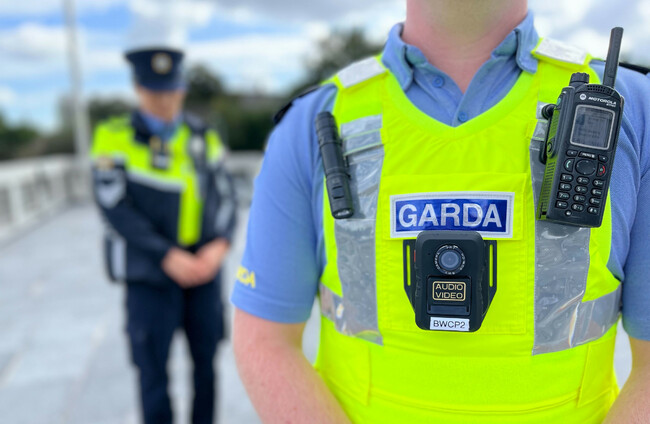
GARDAÍ HAVE BEGUN the process to purchase body cameras for all frontline officers.
At an event in Dublin today the force unveiled their plans as the legislation allowing for the new equipment to be used in Ireland is being considered in the Seanad.
The gardaí have liaised with police forces across Europe and large cities in the United States as they research the best options.
Gardaí said they were unable to give exact costs but it is anticipated that the system would cost in the region of €10m – similar to the amount that mobile devices cost for the entire force.
The cameras will be attached to the chest of gardaí on patrol and they will be activated by the user only when in contact with members of the public during specific times.
The force anticipates that they will be operational on a pilot basis in mid-2024 in various urban and rural areas across the country before fully being rolled out in 2025.
At a press conference the gardaí revealed:
- The cameras will not be recording for the duration of the garda’s tour of duty and only activated at a specific incident when they believe there is a need to gather evidence
- Incidents will include traffic stops and other interactions such as arrests
- The cameras themselves will not have facial recognition software but it will be used afterwards through a specific computer program.
- While policing protests it will not be switched on but instead only when an incident happens
Civil liberty groups have raised concerns about how and when cameras will be used and also about the potential risks of facial recognition software.
Liam Herrick of the Irish Council for Civil Liberties welcomed news that the cameras will be piloted before full deployment.
“Much of what has been announced today reflects what ICCL has been calling for and to this end, we cautiously welcome the news that An Garda Síochána intends to pilot the use of bodyworn cameras before moving to a national roll-out.
“The pilots should assess whether the cameras deliver on their promised benefits, and the results should be reviewed and published before moving to any national roll-out. A national roll-out of this technology should not be a predetermined outcome of this process,” he said today.
Gardaí have said they believe the equipment will reduce complaints while also enhancing accountability.
Chief Superintendent Derek Smart said that the cameras will be “overt and visible” and only used when it is “proportionate, legitimate and necessary”.
He said that the public will see a light on the camera when it is switched on. There are also plans, like in other jurisdictions, that there will be an initial buffer period which will record, without audio, a preceding minute or so of footage before the activation.
“The use will be incident specific and it does not replace normal forms of evidence – it merely supports it,” Smart said.
The gardaí said a “public engagement” will take place before the cameras are deployed.
All of the imagery gathered will be inputted into a Digital Evidence Management System (DEMS) and will be retained for 31 days unless it is identified as evidence for a case.
DEMS is a software that will enable An Garda Síochána to collect, store, manage and analyse digital evidence from BWC footage. The new system will also manage CCTV collection also.
“They provide a safeguard, not just to Gardaí, but to the public and to the people we interact with on a daily basis,” the Chief Superintendent added.
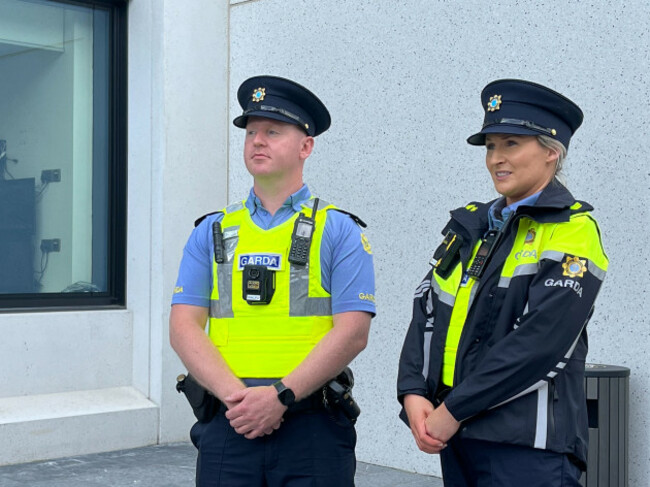
Smart also said that a discussion will take place between gardaí and the Garda Síochána Ombudsman Commission to determine how it will be used in discipline investigations.
He said that there will be statistical collection of data which will include how many times gardaí turn on their cameras and that gardaí who do not routinely activate the devices will be asked to explain why that is happening.
“There is obviously going to be a big education piece for us in regard to our training, in regard to how members use it,” he added.
Andrew O Sullivan, Chief Information Officer for An Garda Síochána, said that the use of body-worn cameras is forming part of a broader move to “digitalise”.
“One of our core principles is that every decision that could impact on a person is made by accountable, identifiable Garda personnel.
“There is no question of autonomous machine decision making, ever. Today’s RFI represents another major milestone in the delivery of the Garda data and technology vision, and for public safety in Ireland,” he added.
The cameras themselves will not have facial recognition software but it will be used afterwards using a specific computer program

To embed this post, copy the code below on your site














have your say