Sign in. It’s quick, free and it’s up to you.
An account is an optional way to support the work we do. Find out more.
Sign in. It’s quick, free and it’s up to you.
An account is an optional way to support the work we do. Find out more.
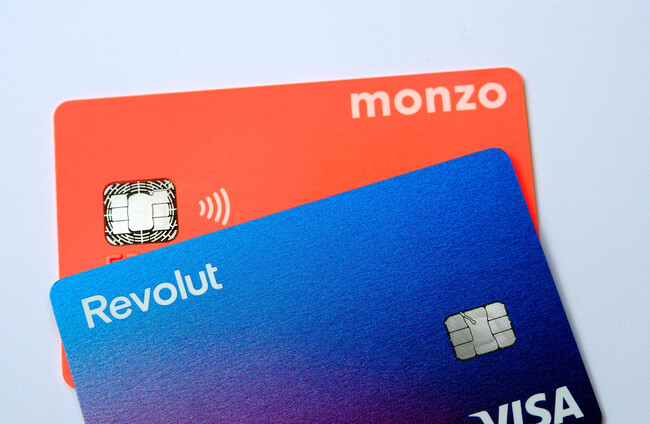
TAPPING YOUR PHONE to pay, and then not hearing the reassuring electronic ping that indicates the payment has gone through, is not a good feeling.
That is what happened to Revolut’s Irish customers last Tuesday. Transfers and ATM withdrawals were also kaput for several hours, leaving people who depend on Revolut for their main day-to-day banking temporarily skint.
Many, many people were inconvenienced. Almost half of Irish people now have a Revolut account.
Some were hit particularly hard: the proportion in Ireland using Revolut as their main bank account is small but not insignificant, at 6%. It’s also growing rapidly, having doubled in the past year.
Other so-called ‘challenger banks’ or ‘neo-banks’ such as Monzo, N26 and Bunq are also enticing customers away from the three traditional retail banks still operating in the Irish market: AIB, Bank of Ireland and PTSB.
So should the Revolut outage be a factor to weigh up for customers still considering making the switch? And what are the other elements potential switchers should consider?
“It’s not like this is the first time a bank has suffered issues with its payments processing,” points out Daragh Cassidy of comparison website Bonkers.ie.
Bank of Ireland’s online banking service and mobile app have had their fair share of issues, even as recently as last year.
Or remember that time, in 2023, when technical problems meant Bank of Ireland customers could not check how much was in their accounts or transfer money, but some people reported being able to withdraw more than was in their account? Queues formed at ATMs. The government expressed concern. The bank apologised profusely.
AIB customers with Android phones were unable to use its mobile app one day in January this year, while PTSB had to apologise last year for an outage on its app, and again when debit cards didn’t work.
Marty Meany, editor of tech reviews website Goosed.ie, notes that this is the first major Revolut outage we have seen. Legacy banks have legacy technology problems, and now the neo-banks are discovering their own next generation issues.
“They have new ways of working where they’re built on third-party [technology],” Meany explains.
“The Revolut outage was a Google Cloud outage, so it wasn’t actually technically Revolut’s fault – except for the fact that they have a single point of failure where they rely on a third party, which they’ll probably now address.”

Cassidy, of Bonkers.ie, reckons there are more pressing questions than last week’s outage to consider if you are weighing up switching to a neo-bank.
“It’s not that this is necessarily just something that has affected Revolut. It does happen other banks as well from time to time. The issue is: should you move to an account like Monzo or Revolut?
“The big thing, to me, is around customer service and cash.”
For the uninitiated, the neo-banks basically offer digital banking: there are no bricks-and-mortar branches, and you’re likely to struggle to get through to someone on the phone. Charges can apply for ATM withdrawals – more on that below.
The big draw for many people is that the neo-banks offer apps with significantly more sophisticated functionality and design than what is available from the traditional Irish banks, making it easier and more intuitive to track your spending and saving.
The other big draw is that the neo-banks can save you money. Unlike the big three, the neo-banks don’t charge a monthly fee for the privilege of banking with them, at least on their standard accounts.
It’s €6 per month to hold a basic personal current account with Bank of Ireland or AIB, €8 for PTSB. Whatever way you look at it, almost €100 for a basic PTSB current account is quite a lot of money.
PTSB would no doubt point out that it offers 5% cashback up to €5 per month on card transactions, which can defray that cost a good bit. It would probably also point out that it does not charge for ATM withdrawals.
Central Bank data is clear that we are taking out less and less cash.
Four years ago, more than one in six card transactions was a cash withdrawal. Now it’s more like one in nine. On average, we are taking cash out at ATMs or through cash-back in the shop just 15 times a year.
Some people won’t even be able to remember the last time they took out cash – but there are many who do, or who will feel it is important to have the option.
“If you are someone who withdraws a lot of cash, or maybe gets paid in cash, an online bank account like Monzo or Revolut or N26 isn’t going to be for you,” Cassidy says.
With Monzo, for example, you can withdraw up to €300 every 30 days, but after that you will pay a 2.5% fee per withdrawal, or €1 at a minimum. A charge of €20 to take out €800 if, say, your landlord asks to be paid in cash is quite a lot.
With Revolut, the cap is €200 or five withdrawals per month, after which you are charged a €1 fee or 2% of the amount withdrawn – whichever is greater. You can’t put cash into these accounts either.
And then there’s getting a bank card in the first place – not a given with neo-banks. N26 charges €10 to issue a physical MasterCard debit card.
Cassidy notes that N26 offers cash deposits via corner shops in Germany, and believes this would be really popular if it was brought in here.
So if you’re in the ‘cash is king’ camp, the traditional banks may still be for you. However, it is debatable whether the unlimited ATM cash withdrawals offered by the traditional retail banks are really “free” given their monthly charges.
In terms of what else customers are getting in return for those monthly charges, the most tangible is probably access to a physical branch – but when was the last time most of us visited one? Even if you do, the staff may put you on a phone to their help centre rather than resolving your issue in-person.
Cassidy believes that given many people will not have walked into a bank branch in 10 years, the benefit of having access to a physical branch network is likely to be overstated.
However, what he argues we shouldn’t underestimate is the value of still being able to call AIB or PTSB or Bank of Ireland if something goes wrong and speak relatively quickly to a human on the other end of the phone.
“We love to complain about the banks, we love to give out, but my experience is that they do have reasonably good customer service,” Cassidy said.
“Revolut is a different thing. It’s tough to talk to someone. You’re dealing with AI chatbots and when something goes wrong and it’s to do with your money, people panic and they don’t want to be talking to an online person or a chatbot.”
In a way, the neo-banks offer a version of the traditional banks monthly fee by offering fancier current accounts for a fee, which give access to better customer service.
Bunq offers a 24/7 emergency customer phone line that will get you through a “Bunq employee” (yes, a real human) for users of its €3.99, €9.99 and €18.99-per-month upgraded accounts. The phone-a-human service is not available for the great unwashed using Bunq’s free current account.
If you pay €9.99 per month for Revolut’s “premium account” you can skip the customer support queue. That’s the second tier up in terms of its upgraded accounts – it also offers €3.99, €17.99 and €55 per month plans.
(For €55, in case you were wondering, the add-on benefits include airport lounge access and subscriptions to Tinder ‘Gold’, the meditation app Headspace, Chess.com, the premium version of language learning app Duolingo and the Financial Times.)
So more limited customer service is potentially one of the downsides of the neo-banks. What are the advantages?
“The biggest advantage is the user experience,” says Meany.
He has been using Revolut for his main day-to-day banking for a couple of years and also has an account with Monzo, although their later entry to the Irish market means that like many people he is probably already too embedded with Revolut to switch.
He has downgraded his Bank of Ireland account’s role to that of the joint account for paying bills and so on.
Meany firmly believes that a good user experience is “not just a nice-to-have”.
“If your banking app is nice to use, you’re more likely to log in, and you’re more likely to monitor your financial health.
“This morning I had to log into my Bank of Ireland account and I actually felt it in my gut: it’s just such a pain.”
If we’re managing our money better we can finish each week with a bit more in our pocket, Meany reckons. The neo-banks can help us do this.
He notes that easy log-in with biometrics is an “out-of-the-box, default” setting with neo-banks.
“The apps are absolutely brilliant,” agrees Cassidy.
“The level of insight that you get, the level of information. You can obviously transfer money easily to other people, although now the [traditional] banks have launched Zippay, which works absolutely fine.”
Monzo’s app in particular is very focused on helping people keep track of their spending, for instance by labelling and tagging purchases for different purposes (#house, #car and so on, or whatever labels you choose yourself).
A few other considerations in favour of the neo-banks are worth weighing up too.
Cassidy notes that the foreign exchange fees for neo-banks tend to be lower. N26, for example, offers free ATM withdrawals abroad (although N26 only offers two free monthly ATM withdrawals).
Some people might be keen to ensure they are doing their main banking on an account with an Irish international bank account number of Iban. Revolut, Monzo and Bunq all offer these, but N26 doesn’t (it is based in Germany and offers German Ibans).
It’s worth noting that although they are not traditional banks these four are actually regulated banks, and that means deposits are protected up to €100,000 if the institution goes bust (as with the AIB, Bank of Ireland and PTSB).
Meany notes that, as ever when something online is free, it probably means you’re the product. There’s an obvious benefit for the neo-banks in encouraging users to spend more time on their excellent apps – the apps are partially a storefront, and they hope that people will sign up to the other products offered, such as investing and trading accounts, or insurance plans.
Bank outages like last week’s will surely happen again.
“Right now, everybody’s focused on the modern banks having issues and correctly so – this shouldn’t happen. But the traditional banks are just as likely to have issues. None of them are perfect,” Meany says.
He says he always advises people to have multiple payment options – including a bit of cash, just in case.
“Always have a backup and no matter what happens, be prepared that your bank could go down in the morning. I know it sounds very doomsday prepper – I’m not telling people to stash gold at home – but it is worth considering, and to have backup plans if one payment feature or payment method doesn’t work.”
So whatever option you go for day-to-day banking, it may make sense not to have all your eggs in one basket.
Even the most committed online banker may be considering a trip to the ATM to get some spare cash after last week’s outage – although given the prevalence of contactless payment now, some of us may struggle to remember our pin.

To embed this post, copy the code below on your site















have your say