Sign in. It’s quick, free and it’s up to you.
An account is an optional way to support the work we do. Find out more.
Sign in. It’s quick, free and it’s up to you.
An account is an optional way to support the work we do. Find out more.

IRISH PEOPLE ARE the most optimistic citizens in Europe, an EU agency has found.
Just under half of Irish respondents to the latest quality of life survey by Eurofound said they feel optimistic about the future, which was 15 percentage points higher than the European average.
Eurofound, the Dublin-based EU work and society research centre, also found that Irish citizens record higher rates of life satisfaction compared to other European countries.
The survey, conducted in Spring 2024 and published today, shows that Irish respondents have the most optimistic view on life, with Denmark and Austria the next most optimistic countries.
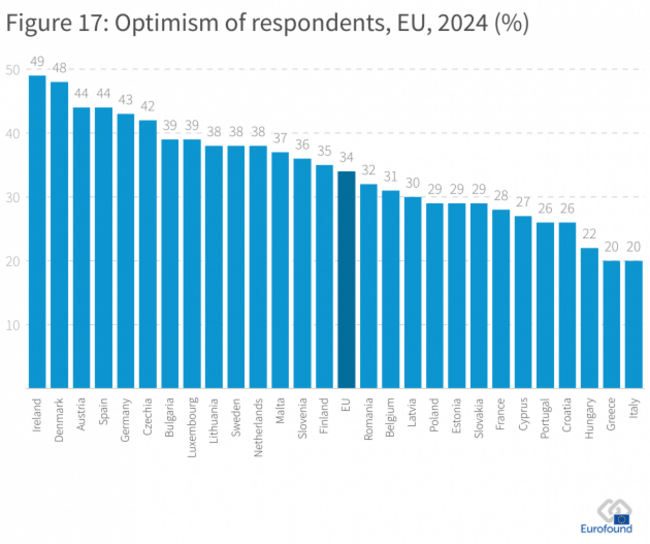
The researchers said rates of optimism recorded in those aged between 16-29 were, on average, 18 percentage points higher than those aged 40-45.
Within age groups, recorded rates of optimism also fluctuate depending on factors such as disability, employment and relationship status, gender, education and income levels and whether or not the respondent lives with a significant other.
Those with higher levels of disposable income were more likely to record positive rates of optimism compared to those on lower income levels. Respondents who were unemployed or had a disability were also found to have significantly lower rates of optimism.
Meanwhile, Ireland placed joint third, with six other nations, in the life satisfaction rating, by country. Respondents recorded a satisfaction level of 6.2, slightly higher than the European average of 5.8.
Joining Ireland in the third-place spot are Germany, Spain, Czechia, Luxembourg and Finland.
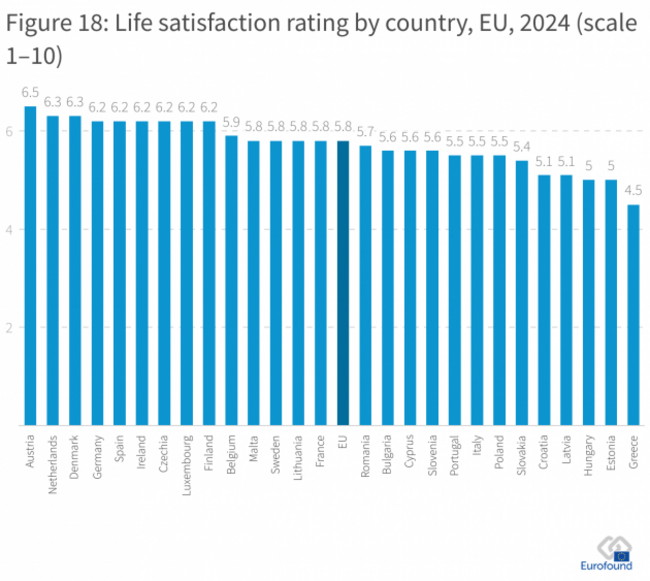
Researches found there has been a declining level of life satisfaction among respondents aged between 35-64 in recent years. Researchers also found that employment status and levels of income impacts respondents’ satisfaction levels.
Ireland scored higher-than-average in areas like the rates of remote working, and also on views towards the status of democracy and trust in public institutions, as well as on being able to make ends meet.
However, the research centre states that a notable cohort of European citizens, three in ten, are struggling to make ends meet.
One in ten respondents said they had missed a rent or mortgage payment since the end of the Covid-19 pandemic, while 15% reported that they were in arrears due to utility bills.
Citizens in Greece, Estonia and Croatia were most-likely to report financial difficulties to researches. The most common unaffordable expenses included new furniture, leisure activities and holidays.
Others reported having a only small amount of money to spend on themselves each week or for meeting with family or friends at least once a month.
Head of social policy at Eurofound, Massimiliano Mascherini, said the results of the survey reveal that sustained levels of inflation have “depleted” financial resilience.
He said it has led to certain cohorts of society struggling every day.
“This is having notable social and political consequences,” he added.
Eurofound recommended that EU nations implement stronger social security nets for citizens who are financially struggling and address unmet healthcare needs for those with disabilities, mental health needs and general long-term health issues.
Separately, the research institution also recommends that member states implement national strategies to address the mental health needs of European citizens.
On employment, Eurofound suggest the continued promotion of flexible and hybrid working structures – such as the right to disconnect already in place in Ireland – and encourage more employment for people with disabilities.

To embed this post, copy the code below on your site















have your say