Sign in. It’s quick, free and it’s up to you.
An account is an optional way to support the work we do. Find out more.
Sign in. It’s quick, free and it’s up to you.
An account is an optional way to support the work we do. Find out more.
WELCOME TO POLICY Matters, a series from The Journal that takes a deep dive into the ideas and solutions proposed by Ireland’s politicians on some of the biggest issues of the day.
As part of the series, The Journal sits down with different spokespeople from across Ireland’s political parties to take a deeper look at what they believe needs to be done across areas like housing, health, the environment and childcare.
Last time around we spoke to Pauline O’Reilly in the Green Party about forest schools.
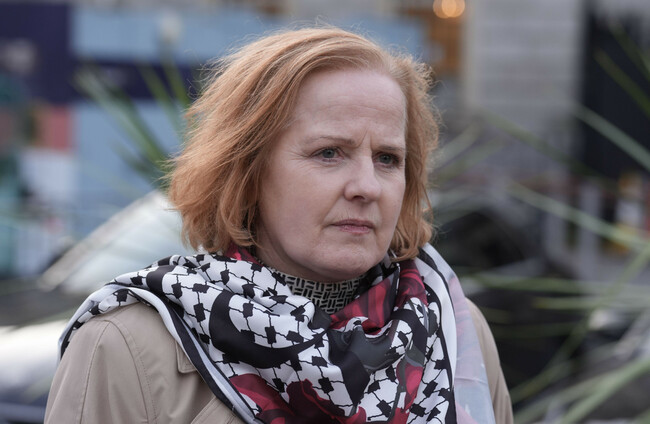
This time, we spoke to People Before Profit-Solidarity TD Ruth Coppinger about a bill she is drafting to fully ban the use of counselling notes in sexual violence court cases.
———
RUTH COPPINGER IS back in the Dáil – and picking up where she left off in her advocacy for more state action against gender-based violence.
The Dublin West TD has a 10-point plan and first up on the list is a bid to outlaw the use of survivors’ counselling notes being used as evidence in court cases related to sexual violence.
Survivors of sexual violence have spoken out about the damaging impact the practice has on their recovery, while the Dublin Rape Crisis Centre has long called for a more victim-centred approach in the courts.
In the last government, Justice Minister Helen McEntee pledged to outlaw the practice, but that promise now looks likely to be rolled back, due to concerns over the constitutionality of such a move.
Coppinger is having none of it.
She has drafted her own bill to ban the practice and hopes to have it ready to bring to the floor of the Dáil later this month.
“I see no reason why somebody would need to read the therapy notes of a complainant in order to get a fair trial,” Coppinger told The Journal.
She noted that such a practice does not exist in some other countries; the UK recently made it more difficult for counselling notes to be requested as evidence. She believes the right to a fair trial faces a competing right – the right to privacy.
Coppinger argued that the practice is a misogynistic one used to discredit victims, to intimidate them and to undermine them as a credible witness.
As things currently stand in Ireland a victim of a sexual offence is asked whether they consent to their counselling notes being shared with the defence team or not.
If they do not consent, the judge can still decide if the records should be released to the defence, and the accused, if the judge deems them to be relevant.
If they are deemed relevant, the victim can be asked questions about them in court.
“It is a barrier to recovery and a barrier to prosecution,” Coppinger said.
By this, she is referring to the women who have spoken out and said they did not go to counselling after sexual assault because they were afraid of their counselling notes being read out in court or used against them.
“There was so much talk by the government about zero tolerance. They have to vindicate the right of somebody who’s been sexually assaulted as well,” Coppinger said.
Any attempt to water down the pledge to outlaw the practice is simply not good enough in Coppinger’s view.
“What happens is the Constitution always gets cited and it’s used as this barrier.
“We have to stand up against this and say no, we’re not accepting it.”
This bill on counselling notes is the first of a number Coppinger plans to propose on gender-based violence now that she is back in Dáil Éireann.
Coppinger was a TD from 2014-2020 before losing her seat in that year’s general election.
During her time in the Dáil, Coppinger was never one to shy away from controversy.
In 2018 she famously held up a black lace thong in the Dáil chamber (using props is against the Dáil rules) after the defence in a sexual assault case being heard in Dublin mentioned to the jury that the 17-year old complainant was wearing a thong.
“How do you think a rape victim or a woman feels?” Coppinger said to then-Taoiseach Leo Varadkar.
Reflecting on the stunt six and a half years later, she says: “What has actually happened to make things easier?”
“I’m not saying there is nothing, but fundamentally it is so difficult [for victims].”
One change she welcomes is some survivors waiving their anonymity to speak from the steps of the court.
“It’s been a brilliant development and I think it is symptomatic of changing consciousness,” she said.
Among her priorities for this Dáil term is fighting for better education around gender-based violence in schools and advocating for increased investment in the legal system and women’s rights.
International Women’s Day takes place on 8 March. This year, Coppinger is pushing for it to be a day of action for survivors of male violence.
“We’re putting it up to this Dáil to make gender-based violence a priority… to move on the things they haven’t moved on in the last Dáil.”

To embed this post, copy the code below on your site















have your say