Sign in. It’s quick, free and it’s up to you.
An account is an optional way to support the work we do. Find out more.
Sign in. It’s quick, free and it’s up to you.
An account is an optional way to support the work we do. Find out more.
LAST UPDATE | 7 May 2025

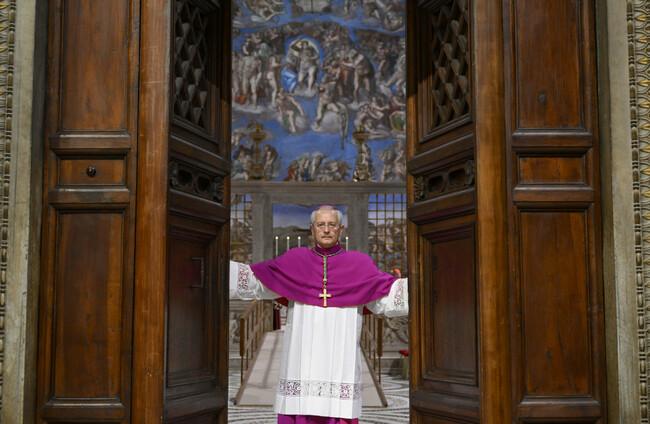
AT THE HOLY Mass this morning in St Peter’s Basilica to prepare cardinals for the conclave, the Dean of the College of Cardinals urged the electors to set aside “personal considerations” and only keep in mind the “good of the Church”.
But not only do cardinals have to set aside their personal considerations, but also their personal belongings.
Yesterday, cardinals had to give up their phones, tablets, laptops, and radios.
These devices were confiscated and placed into sealed bags labelled with each cardinal’s name – the devices will be returned once conclave concludes.
On the CBS broadcast of the cardinal’s procession into the Sistine Chapel, one commentator had a peculiar turn of phrase to describe the devices being confiscated.
CBS on the cardinals: "One thing we know they're not doing is checking Instagram because their devices have all been confiscated. I believe the kids call it rawdogging." pic.twitter.com/rNse1AJkTk
— Aaron Rupar (@atrupar) May 7, 2025
Meanwhile, it’s deemed that closed doors are not enough to maintain secrecy, nor is the oath of secrecy that cardinals must take.
The floor of the Sistine Chapel where the conclave takes place has been altered to prevent trip hazards, but there are also reports that signal jammers are placed under the temporary floor to prevent electronic surveillance.
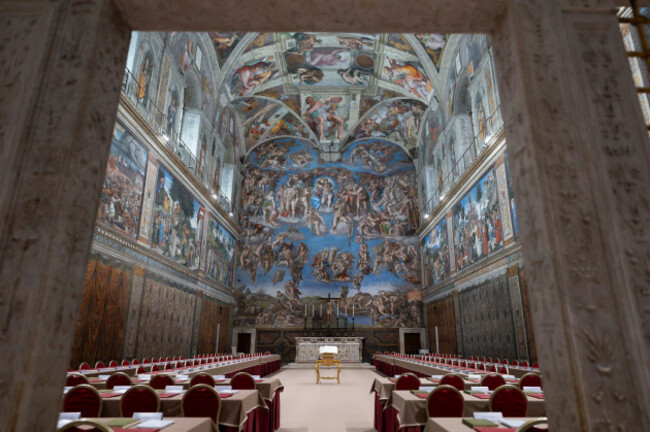
Italian media also reported that phone signal in the Vatican was cut off at 3pm Rome time, an hour and a half before the cardinals proceeded to the Sistine Chapel to begin the conclave.
While cardinals won’t have access to their phones, they are not the only people involved in the conclave.
Around 70 to 80 people will help to ensure the conclave runs smoothly, from doctors and nurses to servers and cooks.
They are in full-time service during the conclave and stay overnight in the Vatican, without contact to their family and the outside world.
But while these 80 or so people will lack phone signal, a Vatican spokesperson said the signal deactivation will not affect St. Peter’s Square, where the public will gather during the conclave.
And while the Sistine Chapel is out of bounds to the public during the conclave, the rest of St Peter’s Basilica remains open as usual.
The 80 or so people who help run the conclave must swear an oath of secrecy, which they undertook yesterday.
Officials and staff involved in the upcoming Conclave have taken an oath of secrecy.
— Vatican News (@VaticanNews) May 6, 2025
The oath, administered by Cardinal Kevin Joseph Farrell, Camerlengo of the Holy Roman Church, was taken by all individuals—both clergy and laity— who will be present for the conclave.
This… pic.twitter.com/5eQEOpoBTi
Everyone, both clergy and laypeople, are subject to excommunication if they violate the conclave’s secrecy.
Such secrecy and security measures have a long history within the Church.
Indeed, the term conclave comes from the Latin “cum clave”, which literally means “with key” – it’s meant to evoke the image of cardinals being locked away “with key” until there is a new pope.
Meanwhile, Vatican journalists have quipped that the security operation around the conclave would put Fort Knox to shame.
“Even the windows will be sealed, including the shutters, so no one can so much as glance outside,” one Vatican source told the Jesuit magazine America.
The Santa Martha where cardinals will be staying is a hotel-like guest house built during Pope John Paul II’s reign – it’s primary purpose is to house cardinals during conclaves, though Pope Francis decided to live there rather than the apostolic palace.
According to Vatican sources, each room had to be inspected, secured and sealed before cardinals could move in for the conclave.
These seals are broken once the cardinal-elector arrives, under the watchful eye of the Swiss Guard.
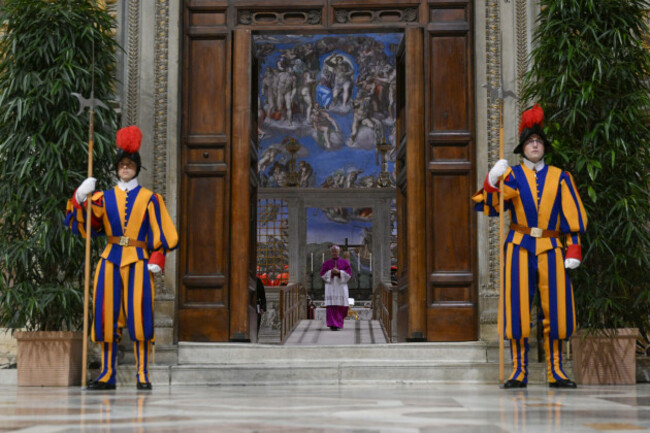
Meanwhile, this conclave will be the largest in history with 133 cardinal electors – only cardinals aged 80 or under when a pope dies or resigns has a vote.
This means there isn’t room at the inn for five cardinals and Irish-born Camerlengo Kevin Farrell had to draw lots to see who would reside at the old guesthouse.
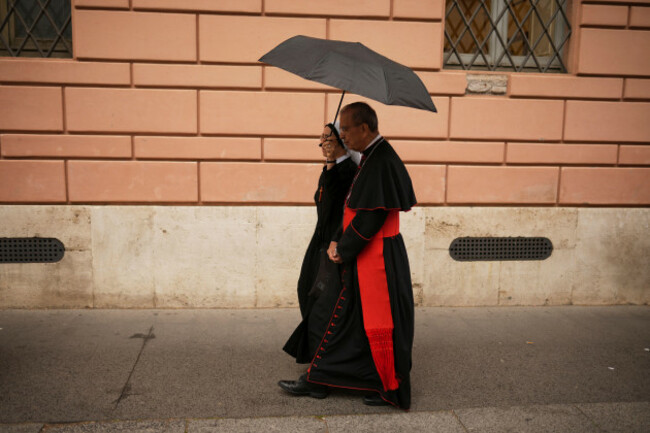
Cardinals can travel from Santa Marta to the Sistine Chapel “as they wish, even on foot”, according to a Vatican spokesperson, but it must follow a “protected route“.
A small team of two Italian cooks and a female chef from Africa will keep the cardinals fed, and while some of them may be accustomed to the finer things, the Vatican source said the food will be high quality but not “luxurious”.
This promises to be better than the food served during the conclave in 1268 which lasted close to three years.
This conclave was held in the small town of Viterbo, north of Rome, after a temporary relocation of the papal see and the townspeople had to pay for the cardinals’ room and board expenses.
Taxes had to be raised to finance the conclave and as impatience grew, drastic action ramped up to bring the conclave to a conclusion.
The roof was removed from the election hall and the diet for cardinals was reduced to bread and water.
It took 1,006 days to elect Pope Gregory X and along the way, three of the 20 cardinals involved died.

To embed this post, copy the code below on your site














have your say