Sign in. It’s quick, free and it’s up to you.
An account is an optional way to support the work we do. Find out more.
Sign in. It’s quick, free and it’s up to you.
An account is an optional way to support the work we do. Find out more.
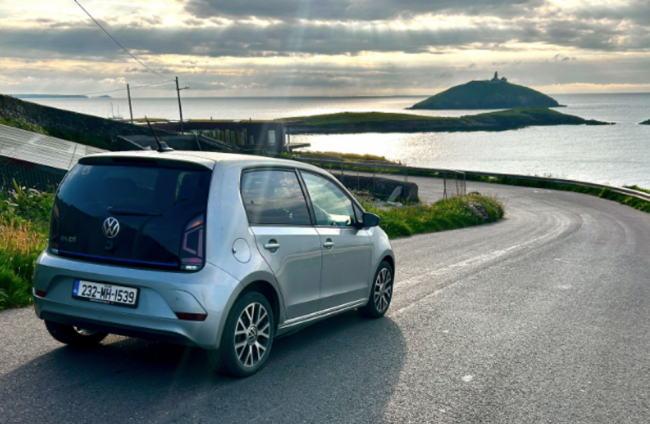

A QUESTION I get asked very often – aside from which EV I would buy – is whether I trust the battery in mine.
I have been driving a Volkswagen eUp for three years now, and I say goodbye to it next week. It is small, it is cheap to run, and it has never given me a day’s bother. I even have a little Aviloo box that tells me exactly how healthy the battery is. After 36,000km, mine is sitting at 96% of its original capacity.
And still, people ask. A neighbour, a cousin, someone at a christening who has had a sherry and wants to talk about cars. Is the battery going to die? What happens when the warranty runs out? How would I even know?
I used to think this was a quirk of the people I know. It turns out it is the whole country.
This summer, we ran the DoneDeal Cars EV Survey. Between 7 August and 7 September, 792 Irish car buyers gave us clean, usable answers about how they think about electric cars. Some of what came back confirmed what I suspected. Some of it surprised me.
Let’s start with the headline. Three in four respondents, 75%, said they were interested or very interested in switching to an EV. That is a lot of appetite.
But why? Not for the reason the government’s advertising would suggest. When we asked what the main attraction was, 61% said lower running costs. Just 12% said the environment.
I am not saying that to be cynical. I think it is healthy. Nobody ever bought a car because it made them feel guilty. People buy cars because they fit their lives and their budgets, and electric cars increasingly do both. If you can charge at home overnight, an EV is brilliant value. The honest pitch has always been the sums, not the sermon.
We asked people to rate, out of 100, how confident they felt about choosing the right EV today. The average answer was 57.
Three quarters of the country are curious, and they are marking themselves barely above a pass. That is not a lack of interest. That is a lack of information, and in particular a lack of trust.
When you dig into where that anxiety lives, it is almost always the battery.
For people looking at a brand-new EV, the single biggest thing that would give them confidence is a manufacturer warranty on the battery. Not a discount. Not a longer test drive. A warranty. 88% picked it, which is nearly three times as many as the next answer, a clear running cost comparison against petrol and diesel.
And what are they worried about? Range, mostly. 71% named driving range on a single charge as their biggest concern, followed by how long the battery will last (42%). Only 19% pointed to the purchase price compared with a petrol or diesel.
That last figure fascinated me. We spend a huge amount of time arguing about the sticker price of EVs. Yet the buyers themselves are more worried about what happens in year eight than what they pay on day one.
The used market is where this gets properly interesting, because more than half of those we surveyed, 54%, say their next EV will be a used one.
Of those thinking about buying second-hand, 81% said battery health and remaining capacity is their top concern. Nearly nine in 10, 89%, said it is important, very important or extremely important that a dealer selling a used EV provides a battery state of health report. Only 3% said it did not matter.
Look at what would make them feel confident. A battery health report (65%), remaining manufacturer battery warranty (60%), and a full service history (55%). Notice what is not on that list. Nobody is asking for a bigger discount. They want evidence.
That is a really useful insight for anyone selling a used EV. People are not asking you to drop the price. They are asking you to prove the car is what you say it is.
It also fits with what worries them most financially. 69% said they would be somewhat or very worried about overpaying for a used EV. Just 3% said they would not be worried at all. If you cannot tell a buyer what is inside the battery pack, they have no way of knowing whether €25,000 is a fair price or a very expensive mistake.
Dealers are also being asked for more than a handshake on the warranty side. Almost half of respondents, 48%, want at least a one-year dealer warranty, and another 43% want two years or more. Only 1% would accept three months.
I was curious what would tip a curious buyer into a committed one. Half of respondents said a higher government grant or incentive. That was the top answer, ahead of a stronger battery warranty or health guarantee (39%), lower purchase prices (37%) and longer driving range (36%).
I am not going to pretend grants are a bad idea. But it is worth noticing that nearly four in 10 also said a better battery guarantee would do it. That does not cost the taxpayer a cent. It costs manufacturers and dealers some nerve.
On brands, Volkswagen (48%), Toyota (41%), Skoda (32%) and Hyundai (32%) lead the consideration set. The surprise for me was BYD in fifth place at 31%, ahead of Audi, Volvo, BMW and Tesla. When we asked people to pick one brand they were most likely to buy, Toyota came out on top, with BYD second.
A few years ago that would have been unthinkable. A Chinese brand with almost no history here is now on nearly a third of shopping lists. It tells you how quickly the market is moving and how open buyers are when the car stacks up.
I do not think there is a mystery here. If you want more Irish people in EVs, and particularly in used EVs, make the battery visible.
That is why I would encourage any buyer to look for ads that spell out the battery state of health up front. It is increasingly common on DoneDeal Cars to see a percentage in the listing, and when I search used Volkswagen ID.3s from 2023, several come with a stated SOH figure in the mid-90s.
That is the kind of thing that turns a nervous browser into a confident buyer. And if a listing does not show it, ask. Any decent dealer should be able to produce a report in minutes.
For sellers, the message is just as clear. Put the number in the ad. Attach the report. Show the service history. The survey says buyers will reward you for it.
As for me, my eUp goes back next week, and I will be doing exactly what I tell everyone else to do with the next one. I will ask for the battery report first, and the price second.
I’m not sure what to buy next, but I will of course, let you know.
Paddy Comyn is the head of automotive content and communications with DoneDeal Cars. He has been involved in the Irish motor industry for more than 25 years.
Journal Media Ltd has shareholders in common with DoneDeal Ltd
To embed this post, copy the code below on your site













have your say