We need your help now

Support from readers like you keeps The Journal open.

You are visiting us because we have something you value. Independent, unbiased news that tells the truth. Advertising revenue goes some way to support our mission, but this year it has not been enough.

If you've seen value in our reporting, please contribute what you can, so we can continue to produce accurate and meaningful journalism. For everyone who needs it.

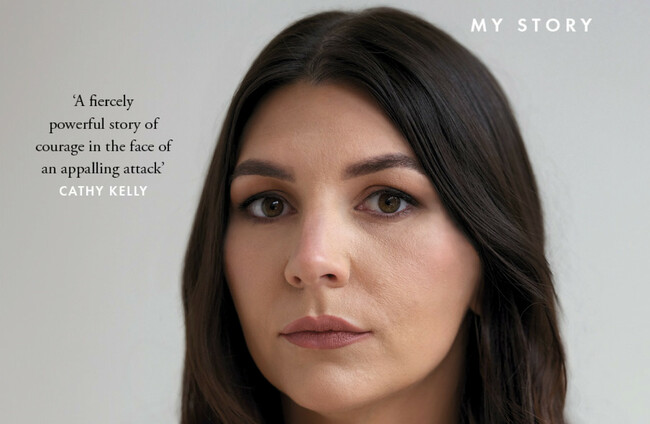
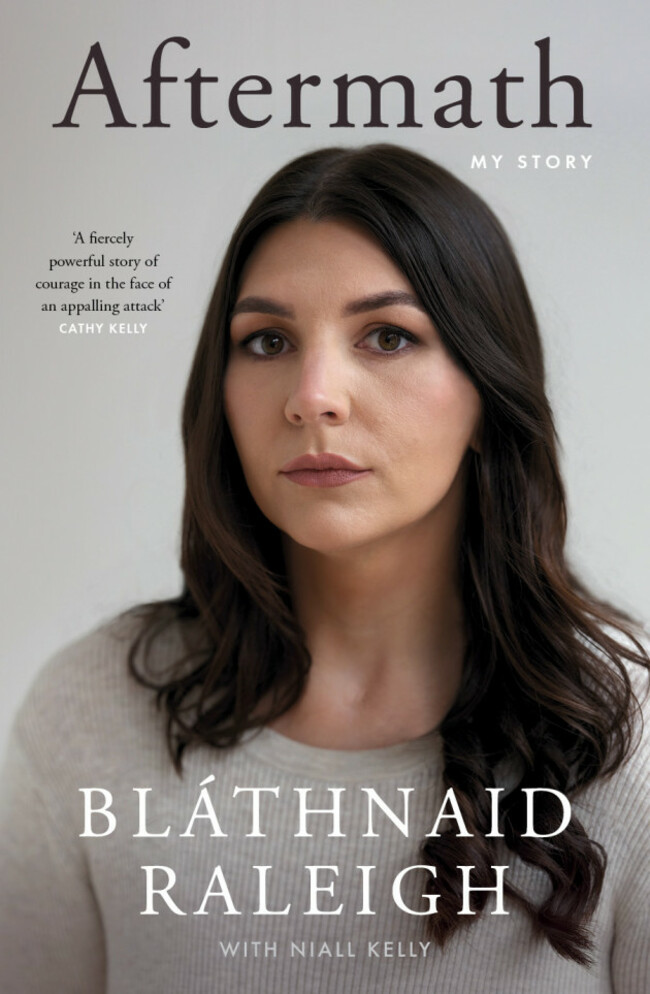
Aftermath by Bláthnaid Raleigh with Niall Kelly. Gill Books

Extract 'I see him as he was that night, before he was a rapist, before he shattered my life.'

An extract from Bláthnaid Raleigh’s new book in which she writes about the impact Jonathan Moran’s attack had on her and navigating the justice system.

In July 2019, Bláthnaid Raleigh was enjoying a typical night out in Galway with friends and a few acquaintances from Mullingar before going back to a house party. It was there that she was attacked and raped by Jonathan Moran.

In their hometown of Mullingar, Bláthnaid would spend the next five years living with the after-effects of that night while her attacker, who was unable to be identified for legal reasons, continued his life as if nothing had happened. On 1 July 2024, Moran was sentenced to eight years in prison.

In her powerful new book, Aftermath, Bláthnaid writes about the attack, its impact on her life and going through a justice system that claims to be victim-centric.

I TAKE MY seat on those cold church pews beside Mam and Dad and we listen to the morning’s evidence. Everything that’s said in that witness box is a check against my statement and my memory.

Who was driving the car to Galway that night? Tick.

Who put the address into the map on the phone? Tick.

When you left the pub for the evening, did you tell Ms Raleigh that you were leaving? Tick.

I’m sitting watching this battle for the truth argued out in front of me. Without a conviction, I’m lost. I wish I didn’t feel that way. No matter what happens here over the next two weeks, I will always know the truth of what happened to me that night, but without a conviction, I feel censored. I don’t feel free to tell the truth and tell it publicly.

I’ve noticed that in myself already, even down to the words I choose. Without a conviction, I can say that there was an incident. I can say that I was assaulted. But I don’t know if I can use that word, the right word, the only word.

Rape.

When we come back in after lunch, I spot Sharon – Detective Garda Sharon Noone – in the lobby outside the courtroom. I met her for the very first time on the morning that I made my initial complaint to the Gardaí, and she has led the investigation ever since.

When we go back in, she’ll take the stand as the prosecuting guard in the case.

‘Look, the next bit of evidence is CCTV,’ she warns me quietly. ‘I don’t know, you mightn’t want to be in here for it. But you might,’ she suggests. ‘It’s up to you. It’s going to be a hard watch.’

I’m very grateful for the heads-up but it’s no massive surprise. The group of us were in and out of a couple of pubs that night so of course there were cameras and CCTV. Sharon doesn’t need to spell it out for me – I know that this won’t be easy – but no matter how hard it is, I want to be in the room. I need to know what is being said. If the jury are hearing it, I need to hear it too. I need all of the information.

There’s a pendulum in my head, swinging between guilty and not guilty, guided by all of these forces that are out of my control. Every word said inside the courtroom gives it a nudge one way or the other. Even at my most optimistic, it never seems to swing past maybe. Just maybe.

I go back inside and when the jury and judge return to the court, I take my seat again.

Sharon is called to the stand. She must have done this hundreds of times before.
There is a big screen at the top of the room that everyone can see, and the first piece of footage is introduced. It’s exactly as I’m expecting: me, Orla and Andrew in the pub not long after we first met up. Chatting, laughing, catching up, making plans for the rest of the evening. Enjoying our drinks. Enjoying each other’s company.

The most normal summer’s night out in town for a 21-year-old college student and her friends. Life was so simple. I feel a pang of mourning.

When Sharon introduces the footage from the next pub, it’s no longer just the three of us. The group is much bigger and I see him for the first time on the CCTV. I see Jonathan Moran.

I see him as he was that night, before he was a rapist, before he shattered my life. Not as he is now: in the dock, emotionless, wordless, while his lawyers try to prove that he didn’t do any of the things he did that night. Try to find any thread that they can pull at. Try to take any of the black and white facts of what happened and muddy it until it’s just grey enough.

Aftermath_RGB_230925 Aftermath by Bláthnaid Raleigh with Niall Kelly. Gill Books Gill Books

Reasonable doubt. That’s all they need. How many times have I weighed up those two words and the one that goes alongside them: beyond reasonable doubt. That’s the burden of proof. It’s all on my side of the table. And reasonable doubt means that he walks out the door, back to his old life, his job, his rugby, his hometown.

My hometown.

As Sharon gives her answers and the CCTV plays, it feels like the room is watching a direct link to my brain, as if the images are being projected directly from my memory on to the screen, not from a camera. The buzz of people coming and going, chatting, drinking, dancing. Every last detail matches. You’d easily be forgiven for thinking that they’d somehow brought the wrong CCTV to court. It’s so unremarkable in every single way. So normal.

I start to wonder about everyone else in the courtroom. What are they noticing in the footage? What are they seeing in it? I’m fixated on my every move, on my body language.

I know how it was. I know there were no mixed messages, no leading anybody on. And even if there had been, so what?

‘Did it look flirty or anything like that?’ I ask Mam later that afternoon, when the court has adjourned for the day, but she is as definite as I am.

‘No,’ she reassures me without missing a beat.

I saw everything that night through my own two eyes as it happened. It’s been seared into my memory since, but now I’m seeing it from the outside, not as it looked to me but as it looked to everyone else.

It’s … the same. Exactly as I remembered it. The relief washes over me. I’m so glad that I didn’t sit this one out. I needed to see the evidence of this for myself. I needed this validation.

Sharon is still talking, still being questioned, as the screen switches to show the CCTV camera outside the bar and a small group of us leaving together. I’m waiting for the barrister to wrap things up, to ask his final questions, to let the defence come in with any cross-examination that they might have, but the screen keeps moving to more and more clips.

The four of us walking through Galway, lit up only by the streetlights.

The four of us getting to the house.

There’s a security camera on the front of the house as well, and for the first time, the footage catches me off guard. You can see us turning off the road and coming to the front door. You can see Jonathan losing his footing, stumbling slightly, and the laughs at his expense. The key in the door. A few minutes later, another bigger group following on behind us, keen to keep the party lit for another few cans and another few hours.

When the screen changes again, it cuts to another camera, to a place that I’ve only ever been to once but that will stay with me forever. It takes a moment for me to realise what I’m looking at, but once I do, the weight of what I’m about to see hits me like a bus.

Nobody ever told me that there was a camera in the back garden of the house. I suddenly become very aware of Mam and Dad sitting beside me.

From the house, the figures of two people step out into the darkness. The man lights a cigarette and, a few moments later, walks away from the house and into the small garden.

I’m frozen watching this horror movie because I’ve seen it before. I’ve lived it. I know what happens next.

I see him walk towards the back of the garden, and I see the woman start to follow him. I want to scream, reach out, grab her, pull her away, do anything to tell her not to go through that door and into that shed. That if she turns around, goes back inside the house, she will be safe. For as long as she’s outside, she has a chance at a different future, but I am powerless.

Stop.

Stop.

Stop.

But she can’t hear me.

He walks out of shot and into the shed. She follows him. As the door closes behind her, I can still hear it click shut.

Bláthnaid Raleigh is a 27-year-old from Mullingar, Co Westmeath. She grew up in rural Ireland, as the youngest of three children. Bláthnaid is passionate about her career in education and is now looking for ways to bring her advocacy work into her day job. Aftermath, with Niall Kelly, is available now. 

Readers like you are keeping these stories free for everyone...
A mix of advertising and supporting contributions helps keep paywalls away from valuable information like this article. Over 5,000 readers like you have already stepped up and support us with a monthly payment or a once-off donation.

Close
JournalTv
News in 60 seconds