We need your help now

Support from readers like you keeps The Journal open.

You are visiting us because we have something you value. Independent, unbiased news that tells the truth. Advertising revenue goes some way to support our mission, but this year it has not been enough.

If you've seen value in our reporting, please contribute what you can, so we can continue to produce accurate and meaningful journalism. For everyone who needs it.

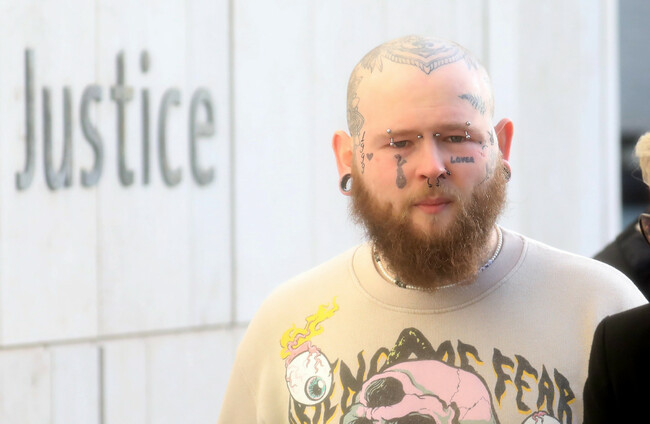
Aaron Connolly. irishphotodesk.ie

Man's conviction for 2018 murder of teenager Cameron Reilly is quashed

Aaron Connolly had pleaded not guilty to the murder of Cameron Reilly on 26 May 2018.

AARON CONNOLLY, WHO has spent over three years in jail serving a life sentence for the murder of teenager Cameron Reilly, has had his conviction quashed on appeal.

The Court of Appeal found today that the trial judge’s charge to the jury lacked balance and in parts may have been seen as “advocacy” for the prosecution case.

Judge John Edwards said that “such were the stridency and emphasis” of comments made by Judge Tony Hunt while he charged the jury, “there is a real possibility the jury could have perceived that he was personally convinced of the guilt of the accused and that, implicitly, he was pressing them to deliver a guilty verdict”.

While acknowledging that Judge Hunt gave the jury “impeccable instructions as to the applicable legal principles” involved, Judge Edwards said that some of the trial judge’s comments were capable of being perceived as “disparaging” and “mocking” of the defence case.

The trial jury heard that Connolly, who is now aged 26, initially denied that anything sexual happened between him and Cameron Reilly on the night and had told gardaí that he was “straight”.

However, on the seventh day of the trial, Connolly made admissions through his lawyers that he performed oral sex on Cameron Reilly on the night he was killed. The accused said that when he left, Mr Reilly was still alive and standing up.

Friends of Mr Reilly gave evidence to the trial that he had confided in them that he was bisexual shortly before his death.

Evidence was also heard from a witness who said he and Aaron Connolly had sexual relations on numerous occasions when they were teenagers. He said Connolly would tell people he was “straight”.

Connolly, of Willistown, Drumcar, had pleaded not guilty to the murder of 18-year-old Cameron Reilly at Shamrock Hill, Dunleer, Co Louth on 26 May 2018, but was found guilty by a unanimous jury verdict in December 2022.

Cameron Reilly, a Dundalk Institute of Technology (DKIT) student, had been part of a group of around 15 young people who gathered in a field on the outskirts of the town on the night of 25 May.

Alcohol and cannabis were consumed by some of those present, although Mr Reilly’s best friend told the trial Cameron never took drugs. The group went to a local takeaway to get food shortly after midnight.

Mr Reilly’s body was found in the field the following morning by a man out walking his dog. Chief State Pathologist Dr Linda Mulligan told the trial the teenager’s cause of death was asphyxia due to external pressure on the neck, with no other contributing factors.

In his initial statement to gardaí, Connolly said he and Mr Reilly went in different directions at the end of the night and after the pair parted, he “never looked back” to see which way Cameron went.

The accused said he could not remember what he was doing during a “missing hour” on the night Cameron Reilly died violently, as he had taken a combination of drugs that made him black out.

Connolly told investigating officers he had taken two grams of cocaine and half a gram of MDMA.

“I blacked out after I left Cameron,” Connolly said. “I told you everything I know. I’d know if I killed someone.”

In launching an appeal against the conviction last June, Michael Bowman SC, representing Connolly, said Judge Hunt had sought to reduce the defence case to the possibility of a “peeping Tom” who had come out of the bushes aroused or angry and killed Mr Reilly.

“That is nothing if not denigrating of the defence case,” he said.

He asked the three-judge court to look at the possibility that “a line had been crossed” and amounted to “a deconstruction of the defence closing and thereby of its defence”.

Counsel also suggested the trial judge had been excessively critical of the conduct of the defence in relation to some prosecution witnesses.

He said the judge had raised the issue of “finger pointing” in relation to one witness and had told the jury that no apology had been offered to this person. Mr Bowman said this had the effect of “disparaging” the defence case.

Mr Bowman also raised the issue of how admissions made by Mr Connolly through his counsel during the trial were dealt with in the judge’s charge.

These admissions were made under section 22 of the Criminal Justice Act 1984, which allows an accused person to admit certain parts of the prosecution case, removing the need to call witnesses to prove those aspects. Under the Act, such admissions become “conclusive evidence” of the fact admitted.

Among the admissions was a claim that Mr Reilly was “in good health” when Connolly left him.

In delivering the Court of Appeal’s judgment today, Judge Edwards said that Judge Hunt had given “impeccable instructions as to the applicable legal principles” in the case.

However, the court agreed with the submission of Connolly’s barristers that Judge Hunt’s charge to the jury lacked balance and that in places, “it may have been perceived by jury members as advocacy”.

“He did over and over again, and with great insistency, seek to make clear to the jury that he had strong personal views on certain aspects of the case,” said Judge Edwards.

He observed that Judge Hunt told the jury that, if the new narrative put forward by the Section 22 admission had been put forward four years previously, the gardaí would have sought to probe this further.

Judge Hunt also said to the jury that this new narrative could not be received unquestioningly and be taken at face value “as being the answer to everything”, adding the idea that it could “is not something that sits comfortably with me, and I don’t think it would have sat comfortably with the guards”.

While acknowledging that many of the concerns being raised by the trial judge were legitimate ones, Judge Edwards said that in commenting on the evidence, the trial judge did not confine himself to commending questions to the jury that they might consider asking.

“Rather, he repeatedly went further and told them what his personal views were on how such questions should be answered,” said Judge Edwards.

He noted that Judge Hunt had “assiduously and repeatedly” told the jury that while his views were offered as personal comments, the jurors were not bound by them and were free to disregard those comments if they disagreed with them.

“We think that the trial judge’s said repeated exhortations betray a consciousness on his part that he had entered perilous territory and had gone right up to the boundary of what was permissible”, said Judge Edwards, going on to say that Judge Hunt was conscious he had expressed views that would “prove controversial”.

“We are satisfied that the trial judge did not intentionally seek to influence the jury inappropriately, and indeed tried his best, albeit unsuccessfully, not to do so,” he said.

Judge Edwards went on to say it was “particularly unfortunate” that Judge Hunt had aligned his views with views he was prepared to attribute to the gardaí, which added to the real possibility of a perception by the jury that the trial judge had aligned himself with the prosecution.

With regard to the other submissions, he said the trial judge’s references to “the spectre of some kind of peeping Tom nearby” were also capable of being perceived as disparaging and “mocking” of the defence case.

Judge Edwards said that the trial judge’s remarks that he had “formed bits and pieces of a view about bits and pieces of the evidence” were unwise, as they may have invited speculation among the jury as to what views the judge had formed.

He said the conviction was therefore quashed, with the Director of Public Prosecutions now to decide whether to apply for a retrial of the accused.

The matter has gone back to 4 June.

Readers like you are keeping these stories free for everyone...
A mix of advertising and supporting contributions helps keep paywalls away from valuable information like this article. Over 5,000 readers like you have already stepped up and support us with a monthly payment or a once-off donation.

Close
JournalTv
News in 60 seconds