Sign in. It’s quick, free and it’s up to you.
An account is an optional way to support the work we do. Find out more.
Sign in. It’s quick, free and it’s up to you.
An account is an optional way to support the work we do. Find out more.
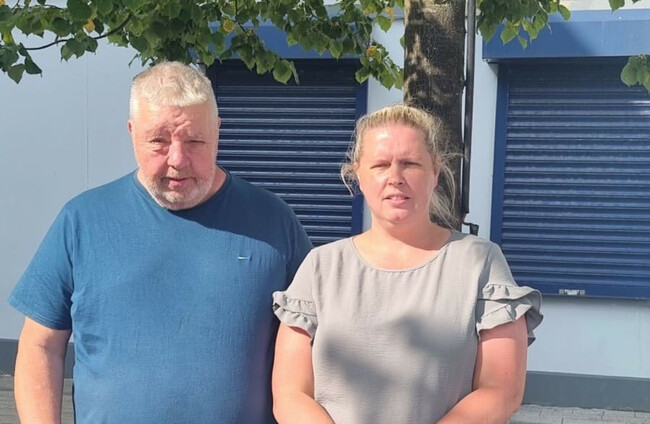
THE HIGH COURT in Belfast has ruled that a woman who witnessed her father being shot by the IRA in her home was unlawfully refused a payment scheme for Troubles victims.
Jeanitta Larkin was 10 when her father Peter McCabe was shot multiple times in her family home in Newry, Co Down in 1990.
She and her family applied to the Troubles Permanent Disabilities Payment (TPDP) scheme in November 2021.
The scheme, which opened in August 2021, provides payments to those living with physical or psychological injuries sustained in Troubles-related incidents.
Larkin suffers from fibromyalgia, which she said is worsened by the stress of the incident she witnessed in 1990, and also suffers from PTSD.
While both she and her father were turned down for the scheme, her mother was successful with her application.
Larkin’s solicitor Kevin Winters previously told The Journal that there is “clearly an inconsistent and contradictory approach taken” given that her mother has been accepted to the scheme.
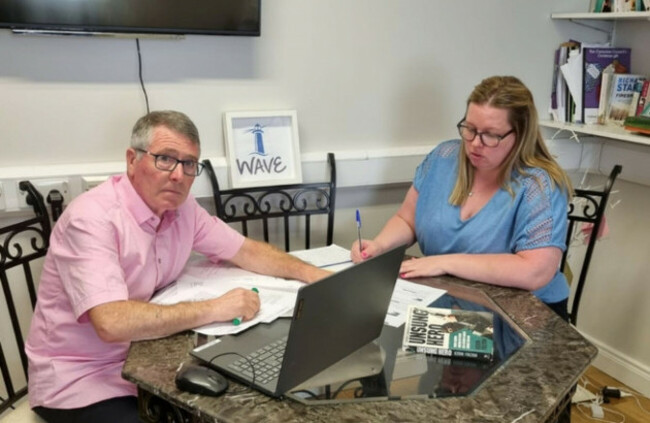
Larkin and her father sought a judicial review and at the High Court in Belfast today, Justice Scoffield said he had identified a legal error in the decision to deny payment under the scheme.
The judge said both applications should now be reconsidered by the scheme’s panel.
He also backed their challenge to the qualifying guidance which says punishment attacks carried out by paramilitary vigilantes may be ineligible.
The scheme is operated by the Victims’ Payments Board.
Justice Scoffield held that the board had wrongly sought to identify one motivation for the attack.
In its ruling denying the payment, seen by The Journal, the board acknowledged that the attack was carried out by a “paramilitary organisation”.
However, it argued that “it could not be concluded on the balance of probabilities that the attack was carried out for a reason related to the constitutional status of Northern Ireland or for a reason related to political or sectarian hostility between people in Northern Ireland”.
The board held it was likely that the attack was “punishment for engagement in anti-social behaviour”.
However, Justice Scoffield remarked that “those who perpetrated such acts during the Troubles, or were pressured into doing so, did not always have single or clearly defined reasons”.
Speaking to The Journal, Larkin said today’s High Court decision was “such a relief”.
“The scheme was set up to acknowledge the harm that victims had endured through no fault of their own, and I said that we were being embarrassed by the board.”
She said the board overseeing the scheme tried to make it seem that she and her father were “pushing for something we weren’t entitled to”.
“There was a checklist that had to be adhered to, and we ticked all the boxes on that checklist.
“We met the criteria, but it just went horribly wrong.
“We felt like we were going to be acknowledged by this scheme for the harm and the injuries we suffered, and all of a sudden it turned into our worst nightmare.
“So to have the judge acknowledge that wrong was done and to correct that was a real relief.”
A spokesperson for the Victims’ Payments Board has said it will “consider the full judicial review judgment in detail before determining the appropriate next steps”.
Larkin told The Journal that she “would like to think that the board will acknowledge what the judge has said and also acknowledge the level of injury that we have endured”.
“This was a long drawn-out process, and a very tough one at that, so I’d like to think that the board would respect this ruling and acknowledge it.”
Setanta Marley of KRW Law represented Larkin and her father and said “they have been vindicated by the judgement”.
He added that there were “hundreds, if not more, applications that are waiting on the outcome of this judgement because it has such a wide-ranging impact on our society”.
Local MLA Justin McNulty said it is “very regrettable that the horror and trauma they experienced was dismissed and that they were forced to take this matter all the way to the High Court”.
The SDLP MLA added: “This family are clearly direct victims of the Troubles and that should have been recognised when the scheme’s criteria were first established.”
McNulty said the ruling “raises important questions about other families who may now be eligible for compensation”.
He called on the Victims’ Payment Board to “urgently clarify what this judgment means for the future operation of the scheme, including a possible extension to the application process” which is due to close in August.

To embed this post, copy the code below on your site












have your say