Sign in. It’s quick, free and it’s up to you.
An account is an optional way to support the work we do. Find out more.
Sign in. It’s quick, free and it’s up to you.
An account is an optional way to support the work we do. Find out more.
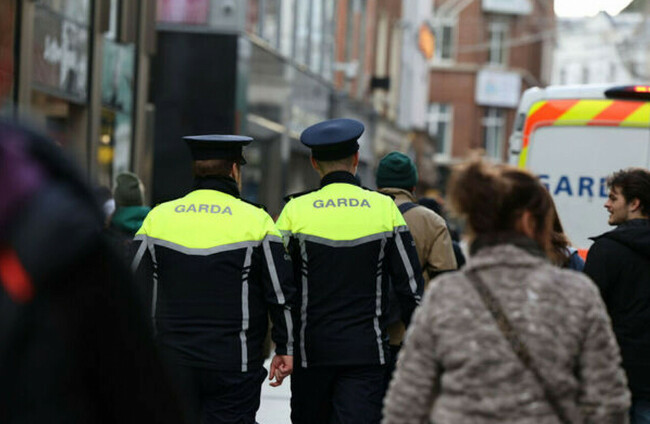
IS DUBLIN SAFE? Is it okay to go into your local town tonight? Whichever town it is, has it “gone to the dogs”?
These are the questions people involved in a community safety project that is running across the country have grown used to hearing, and have been trying to address.
The government has set up 36 groups around the country, with one in each local authority area. The groups meet around every three months and are made up of a large cast: local politicians, people working in the HSE and Tusla, drug addiction workers and local gardaí.
Each group has the autonomy – and more importantly, a small budget – to come up with ideas to make their area safer, whether it’s to provide places for teenagers to go after school, to get drug users the help they need or to find out what’s driving anti-social behaviour on the ground.
The groups have replaced an old system called Joint Policing Committees (JPCs), where gardaí would come before local authorities to discuss crime and safety, and often face questioning on same.
At The Journal we have been covering the rollout of these groups, from three initial pilots – in Dublin’s north inner city, Waterford and Longford – to now across the country.
The pilots were touted in the aftermath of the November 2023 Dublin riots as a way of resolving the issues that lay behind that chaos, but it’s in the library of Edgeworthstown, Co Longford, where a small group is trying to answer the questions at the start of this article for their local area.
Janine Bartley, coordinator of the Local Community Safety Partnership, explained during our visit that one of the most challenging aspects of the group’s work has been figuring out how to address people’s perceptions of safety in their local area.
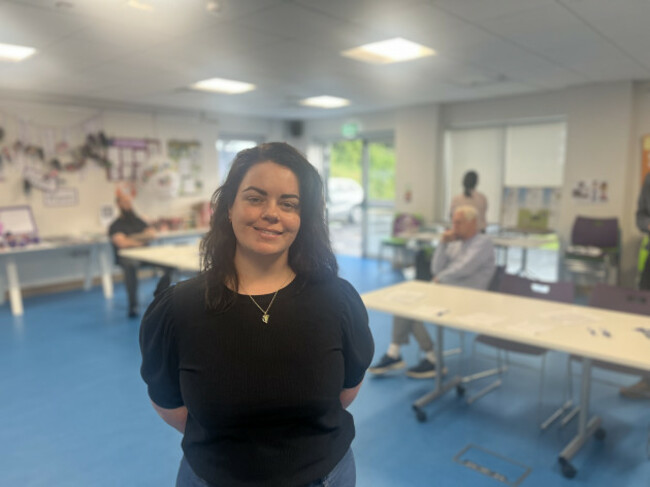
“We have to listen to what people say,” Bartley said.
“We can tell them that the stats say Longford is relatively safe, but people’s perception of crime is their reality. If people say, ‘I don’t feel safe and I’m not going into town,’ whether that’s Longford, Edgeworthstown, or Granard, it’s their experience, so we have to tackle that.”
But how do you do that?
In Longford, the partnership is trying to do this by coordinating important services in different communities, often honing in on specific housing estates.
This has included securing a ‘community house’ in two different housing estates, Ardnacassa and Farnagh, in Longford town.
The houses have been provided by Longford County Council, with funding for community groups looking to use the spaces also given by local arms of the Department of Health.
They serve as a base for outreach for their immediate area but also house homework clubs and weekend cooking classes. Community groups and state agencies can book time there, rather than someone from the council being present full-time.
The partnership is chaired by Seamus Boylan, a former senior garda in the county.
Broadly, Boylan views Longford as a “very safe place to live” but said the county has to deal with “feuds between people selling drugs, and family feuds”.
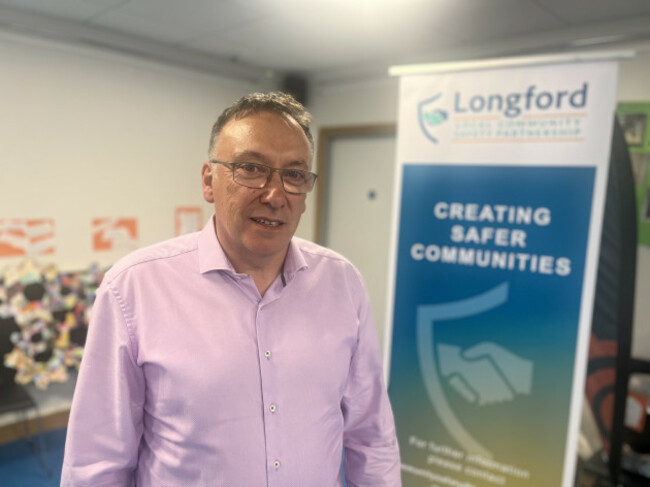
Bartley said the partnership is trying to “fill a gap” in family resource services in Longford by providing the houses.
“There are complex issues in some of these areas,” she said, “but putting more CCTV cameras or more guards on the beat is never going to solve all issues. These issues are systemic.”
When he was superintendent at Longford Garda Station, Boylan had direct experience of the old JPC model, which he described as a “talking shop” at times.
“Things got done in some JPCS, some were better than others. But there is more emphasis here on going out to the community, finding out what the people want,” he said.
This gets at what the Department of Justice hopes will be the key difference between the old and current structures. Where before there was an emphasis on crime, the new model sees An Garda Síochána as only one of a number of state agencies around the table, joined by the HSE, Tusla and more.
Boylan added that the use of the community houses has allowed agencies on the ground to be “way more proactive” in addressing local issues.
“Before it was intelligence-based,” Boylan said of garda knowledge of issues in various estates. “I wouldn’t say it was guesswork, but you weren’t as well-informed as you are now.”
Fine Gael councillor Paul Ross, who used to sit on the old JPCs, also believes there have been significant strides made under this model.
“It’s made me look beyond crime. Like every village has issues, but there can be a lot of background problems to crime, whether it’s drug addiction or something else. The partnership tries to dig a bit deeper,” Ross said.
A survey run by the Longford group raised the issues of race and discrimination, with the results throwing up examples of people expressing discomfort with the “changing face” of the county, explained Bartley.
“There are people that feel, ‘I don’t recognise everybody anymore’. And Longford is an extremely diverse county, as we probably have more than 75 different nationalities here, so it is a fact that Longford is very diverse and changing – so how do we bridge that gap?”
She added that there is “negative and rhetoric” on the issue, so the partnership is seeking to find ways to come at the issue.
In Dublin, the original North Inner City pilot has concluded and the new programme is now up and running, with its own intentions to try and capture the full experience of non-white people in the capital.
Janet Horner, a Green Party councillor sitting on the partnership, told The Journal about safety issues experienced by the migrant community.
“I am hearing all the time of racist abuse and general fear,” she said of contacts with migrant communities.
“But I often ask people, did you report to the gardaí? And people say no or that, if they did, nothing happened. With that in mind I think it would be really worthwhile to have a way to build a relationship with the gardaí, notice the patterns and understand a bit better what’s going on.”
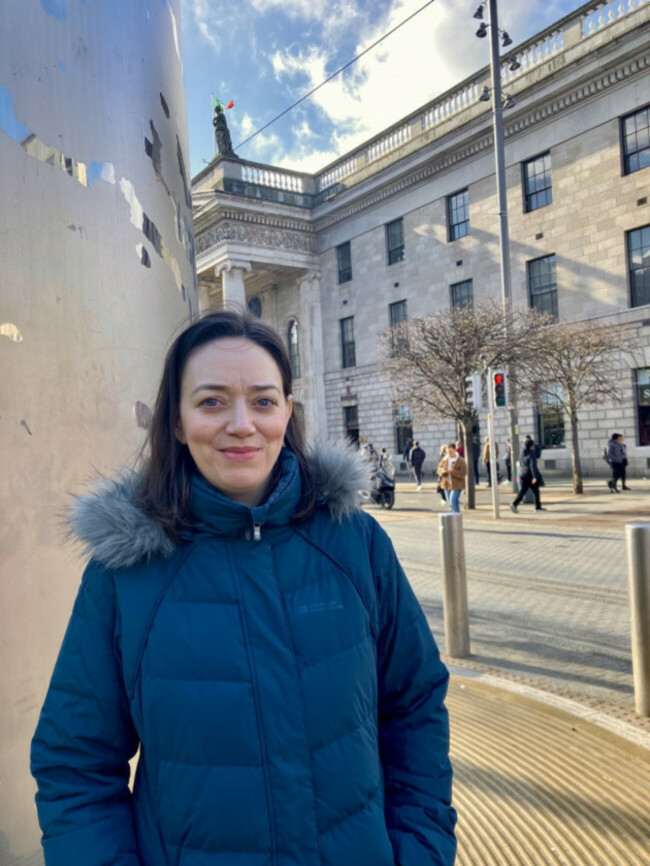
But overall, Horner summed up the experience on the LCSP as “slow-moving and frustrating” since she joined it.
“I’ve been through three years of a pilot that went nowhere so I need proof that this is going to go somewhere when we’re putting time and effort in,” Horner said.
Horner and others in the Dublin have cited contact with gardaí as remaining an issue.
This is one of the issues surrounding the capacity for scrutiny under the new partnership model. Several of the local groups elsewhere in Ireland have opted to sit mainly in private for this year, following guidance from the Department of Justice, with media unable to attend any of the meetings bar one.
The move has been widely criticised by the National Union of Journalists, media groups and politicians.
However, the three pilots, which are the most established groups to date, have all decided to hold their future meetings in public.
As with Longford and the North Inner City, the Waterford project is attempting to put a focus on specific areas.
One of the big projects it undertook was a study of the north-west suburbs of Waterford city. Known as Carrickphierish, the area was once earmarked as the future of Waterford’s expansion before the 2008 recession halted many construction ambitions.
Some of these have hit the headlines in recent months, as when a balcony came apart from an apartment block that had been blighted for years by structural issues. Two children were injured in the process.
A survey by the partnership of almost 80 locals found the area is viewed as lacking services and in need of development.
A 68-point action plan was developed as a result, touching on everything from developing community clubs to remote work offices, with the partnership now attempting to make this a key feature of its work.
As The Journal reported previously, there had been tensions among the original membership that saw resignations, but a spokesperson for the partnership said that the group is “working well, with strong attendance, good positive engagement by all partner representatives and media invited to meetings”.
Bartley and Boylan conceded they were taking on a big slate of work at the Longford partnership, and questions do remain over whether the new structures will be properly resourced to succeed.
Ian Marder, an associate professor at the school of law and criminology at Maynooth University, told The Journal that for the new model to become a success and relevant, each one needs to be confident with the difficult local issues at play.
He pointed to how research shows that prevention of public drug use needs to be tied to greater housing and investment in harm reduction such as supervised consumption sites.
Marder added:
Good local partnerships will be those that involve non-justice actors and prioritise multi-agency and evidence-based approaches to prevention.
But this, Marder added, requires the people who sit on these partnerships to be “motivated to be there, have enough authority within, and resources from, their organisations to take decisions and commit to actions” during meetings.
According to Boylan, the chairman in Longford, there was an emphasis on “gardaí getting quizzed” when they appeared at the old JPC fora.
“The guards used to go in and give the crime figures,” he said.
“This is different. It’s everybody working together. The guards are working very closely with key workers all the way across different groups, be it domestic violence issues, youth groups and so on.”
The Journal’s reporting of the new Local Community Safety Partnerships is supported by the Local Democracy Reporting Scheme.

To embed this post, copy the code below on your site















have your say