We need your help now

Support from readers like you keeps The Journal open.

You are visiting us because we have something you value. Independent, unbiased news that tells the truth. Advertising revenue goes some way to support our mission, but this year it has not been enough.

If you've seen value in our reporting, please contribute what you can, so we can continue to produce accurate and meaningful journalism. For everyone who needs it.

Alamy

The FOI Files: How we discovered 4 out of 5 culled badgers tested free of TB

The Access to Information on the Environment is a powerful tool that works alongside the FOI Act to bring us nuggets like this.

The FOI Files is a new series from our team at The Journal Investigates. Each week, one of our investigative journalists brings you inside the fight for information that we’re all entitled to. They’ll share their documents, their stories – and tips on how to take the journey for yourself.

This week’s file is from investigative journalist Patricia Devlin.

See here for The Journal Investigates’ most recent investigations.

THIS WEEK’S FOI file is technically not the result of an FOI request at all.

While strikingly similar, a request made under Access to Information on the Environment (AIE) Regulations is a separate legal route the public can take to obtain environmental information.

It works much like an FOI, but can be a stronger tool in environmental cases because refusals must be interpreted narrowly and weighed against the public interest in disclosure.

And that’s how I discovered that almost 80% of badgers culled and then tested by the Department of Agriculture, Food and Marine (DAFM) were found to be completely free of the disease.

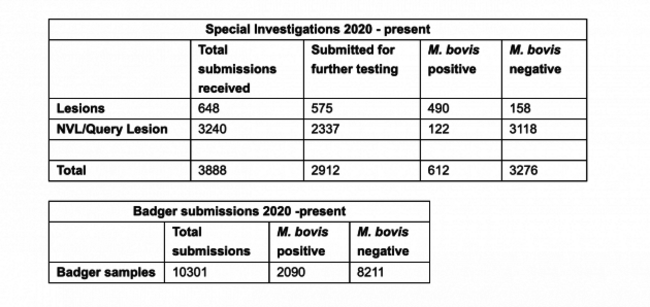
In May last year, The Journal Investigates revealed that between 2020 and April 2025, DAFM submitted 10,301 culled badgers for testing. Of those, 8,211 were found to be clear of Mycobacterium bovis, the bacterium that causes bovine TB.

The figures related only to the culled badgers that were submitted for testing, rather than every badger killed during that period.

But even with that caveat, the finding was striking – around eight out of 10 animals destroyed and tested by the State were TB negative.

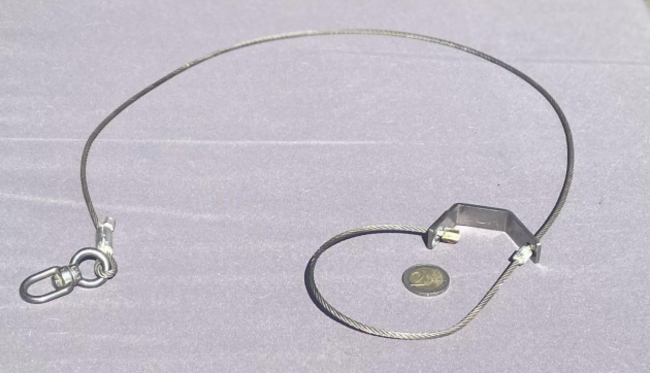
image1 A DAFM ‘stopped body restraint’ used to capture badgers in Ireland. Ruairi O'Leochain Ruairi O'Leochain

The question behind the investigation

Our investigation actually started by examining the devastating financial and emotional impact of bovine TB on Irish farming families.

Tens of thousands of cattle are destroyed each year, with the proportion of herds affected by the disease rising. Again and again, however, the issue of badgers emerged.

DAFM’s bTB eradication programme involves both the vaccination and killing of badgers. This is based on the department’s position that cattle and badgers can carry the same strains of TB and share the same environment.

Every year, thousands of these protected animals are caught in what the department describe as “stopped body restraints”. Some are vaccinated and released, others are shot and destroyed.

It led to a fairly obvious question – just how many of the badgers killed actually had TB?

The answer couldn’t be found in a press release or a public departmental document, so The Journal Investigates used an AIE request to find out.

We asked for records showing the number of badgers culled which later tested negative for TB following post-mortem examinations between 2020 and 2025, as well as the number of cattle reactors which later tested negative for TB in the same period.

You can see the record which DAFM sent us below.

DAFM statistics provided to The Journal Investigates on the number of badgers destroyed and and tested for Mycobacterium bovis, the bacterium that causes bovine TB. The number of cattle reactors which later tested negative for TB following post-mortem examinations between 2020 and April 2025.

How an AIE request works

The AIE system operates alongside the FOI Act and gives the public a legal right to environmental information held by public authorities.

It has different rules and grounds for refusal and requests must specifically state that they are being made under the AIE regulations.

That is an important lesson when seeking information from any public body – identifying the correct access regime can be as important as the wording of the request itself.

We asked for a number of records from DAFM surrounding its badger culling programme. This included records which broke down badger removals by area and by year, from 2014 to 2024.

DAFM responded with a spreadsheet for each year, with figures separated into the number of badgers destroyed in designated cull areas from those killed in so-called vaccine areas.

That distinction became one of the most important parts of the investigation.

Over 66,000 badgers legally killed

The spreadsheet showed that 66,475 badgers had been destroyed nationally between 2014 and 2024.

It also showed that 7,319 were culled during 2024 – the highest annual figure recorded in the 11 years covered by the data. But the most revealing column concerned the vaccine areas.

These are locations where vaccination is supposed to be the principal method of managing TB in the badger population. Yet 1,690 badgers were culled in those areas during 2024.

That represented 23% of every badger killed that year. In 2023, the corresponding figure was 777 (12.5%).

In 2018, the government announced its intention to move away from widespread culling in favour of vaccination.

In that year, just five badgers were recorded as having been culled in vaccine areas. By 2024, the number was 300 times higher.

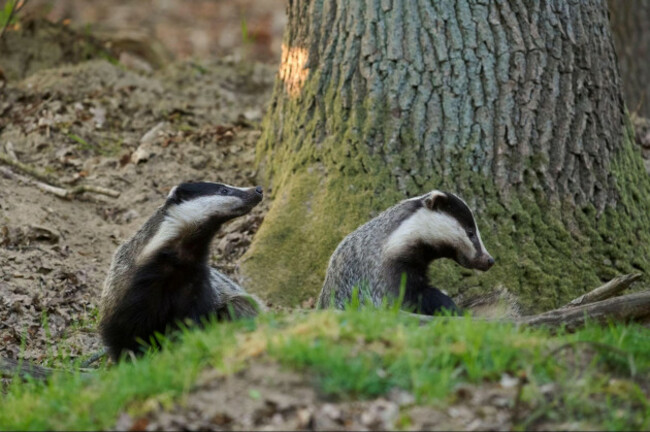
image2 Between 2014 and 2024, over 66,000 badgers were destroyed under DAFM’s bTB eradication programme. Alamy Stock Photo Alamy Stock Photo

Asking the same question across the border

Another useful technique is to ask neighbouring jurisdictions for comparable information.

I sent similar questions to the Department of Agriculture, Environment and Rural Affairs (DAERA) in Northern Ireland, using the Environmental Information Regulations – the UK equivalent of the AIE process.

DAERA said no badgers had been culled under licence in Northern Ireland between 1 January 2020 and 31 March 2025.

Its response recorded 120 badgers culled between 2014 and 2018, all as part of a five-year field research project. Over the wider 2014 to 2024 period, 807 individual badgers had been vaccinated under licence.

The two jurisdictions are not directly comparable, as farming systems, disease patterns and wildlife policies differ. But the comparison demonstrated that governments facing the same disease can make significantly different choices about how they manage wildlife.

In a follow up press request to DAFM ahead of publishing our findings, a spokesperson said it remained necessary to remove badgers around farms experiencing particularly serious TB outbreaks.

It cited research supporting its wildlife strategy and said reducing badger density had helped to reduce infections in cattle.

At the same time, the department acknowledged that culling was “not sustainable in the long term” and said its own trials had found vaccination to be “no less effective than culling”.

The Journal Investigates team will be back with another installment of the The FOI Files next Tuesday.

Readers like you are keeping these stories free for everyone...
A mix of advertising and supporting contributions helps keep paywalls away from valuable information like this article. Over 5,000 readers like you have already stepped up and support us with a monthly payment or a once-off donation.

Close
18 Comments
This is YOUR comments community. Stay civil, stay constructive, stay on topic. Please familiarise yourself with our comments policy here before taking part.
Leave a Comment
    Submit a report
    Please help us understand how this comment violates our community guidelines.
    Thank you for the feedback
    Your feedback has been sent to our team for review.

    Leave a commentcancel

     
    JournalTv
    News in 60 seconds