We need your help now

Support from readers like you keeps The Journal open.

You are visiting us because we have something you value. Independent, unbiased news that tells the truth. Advertising revenue goes some way to support our mission, but this year it has not been enough.

If you've seen value in our reporting, please contribute what you can, so we can continue to produce accurate and meaningful journalism. For everyone who needs it.

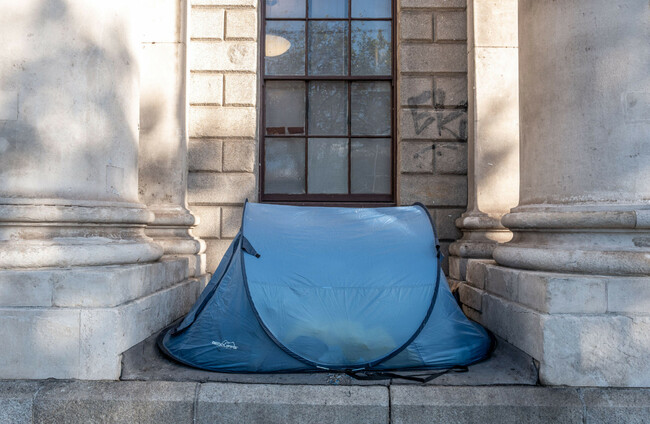
Mike Allen, Director of Advocacy at Focus Ireland said the rulle will increase the risk of vulnerable people being forced to sleep rough (file photo of tent). Alamy Stock Photo

New housing rules could leave people without shelter as beds lie empty, homeless charity warns

The new legislation will formally require people applying for social housing to prove they are both legally resident and habitually resident in Ireland.

HOMELESSNESS CHARITY FOCUS Ireland has warned that new housing legislation to be passed through the Dáil Wednesday night means a vulnerable person might be denied shelter for the night while a bed lies empty.

The Housing and Residential Tenancies (Miscellaneous Provisions) Bill 2026 will amend housing legislation to formally require people applying for social housing to prove they are both legally resident and habitually resident in Ireland.

Lawful residency requirements already exist in practice (neither illegal immigrants nor international protection seekers are eligible for social housing), but have not previously been set out in legislation. 

Housing Minister James Browne said the changes are designed to bring greater clarity to the rules around who qualifies for social housing support, while placing existing residency requirements on a statutory footing. 

Last month the Irish Human Rights and Equality Commission wrote to the housing minister expressing concern over provisions in the legislation that they said “are likely to result in more people being denied access to social housing assistance”. 

‘Inevitably increase’

Now, Mike Allen, Director of Advocacy at Focus Ireland said the bill includes “so many ill-considered measures, it is impossible to detail them all in one press statement”.

Allen said the new legislation will “inevitably increase the risk of vulnerable people being forced to sleep rough”.

He said the requirement to prove habitual residency often requires detailed paperwork which people in vulnerable situations, such as those fleeing domestic violence, are unlikely to have.

Allen said: “Under the old legislation, local authorities had the discretion on humanitarian grounds to offer on-going shelter to people. The Government amendments remove the legal basis for this humanitarian safety net and replaces it with a new so-called ‘safety net’ of night-time only shelter for two nights.”

“This Bill is the first change in homelessness legislation since 1988, but instead of using the opportunity to bring the homeless system up to date, the Government is slipping through a range of measures which bring it back to the Victorian past.”

Allen was also critical of the legislation setting down in law the times in which people are entitled to access shelter. He said it makes “no provision for winter darkness or people who have children with them”.

“There is still time for the Government to put this legislation on hold while it is given the detailed consideration it merits, or for the Seanad to play its constitutional role,” he said.

“If the legislation is passed unaltered, it will result in on-going tensions between homeless NGOs and local government about how its provision are implemented and monitored.”

The Department of Housing told The Journal that the bill brings “greater clarity on eligibility for both social housing and homelessness services”.

“The amendments are being brought to add lawful residency and habitual residency to eligibility criteria for social housing and homeless supports,” they said.

“Residency requirements already exist in practice but are now being place on a firm statutory basis. However, underpinning the policy on a statutory footing brings clarity to the eligibility of supports for all applicants and will ensure consistency with immigration policy.”

“It is not expected that this Bill will have material effect on the numbers accessing social housing or homeless services. By placing it on a statutory footing it will ensure that successful applicants have a long-term right to reside in the State.”

“In addition, the new habitual residency requirement will ensure all social housing applicants have a close link to the State and have made Ireland their home.”

They said that “concerns in relation to the changes to the legislation” were discussed at the National Homelessness Action Committee chaired by housing minister James Brown and a further meeting was held with officials from the Department and NGOs and legal organisations that work in the area of homelessness.

“As discussed at those meetings the Minister and the Department have taken steps to ensure that the legislation does not result in an increase in rough sleeping by including a safety net service for those who are not eligible for emergency accommodation due to their legal and habitual residency status,” they said.

“This legislation will provide a clear and robust statutory framework for local authority decision making in relation to social housing and homeless supports. The Department will provide training and guidance to local authorities to ensure that the legislation is interpreted and applied consistently.”

Readers like you are keeping these stories free for everyone...
A mix of advertising and supporting contributions helps keep paywalls away from valuable information like this article. Over 5,000 readers like you have already stepped up and support us with a monthly payment or a once-off donation.

Close
JournalTv
News in 60 seconds