Sign in. It’s quick, free and it’s up to you.
An account is an optional way to support the work we do. Find out more.
Sign in. It’s quick, free and it’s up to you.
An account is an optional way to support the work we do. Find out more.
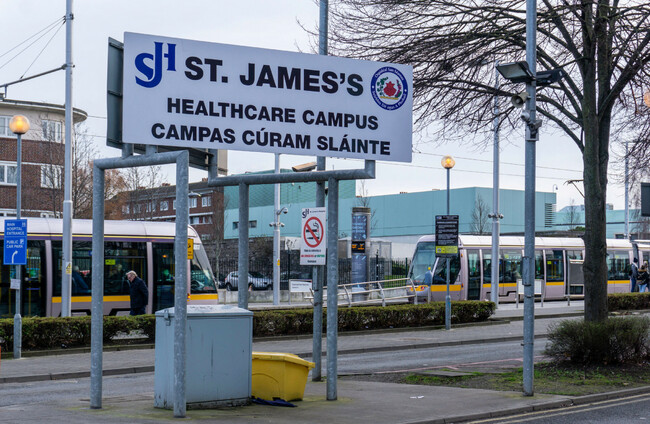
A DUBLIN HOSPITAL recorded the highest number of incidents of violence or aggression against staff, patients and members of the public over the past three years of any hospital in the country.
Data released to The Journal under the Freedom of Information Act shows that St James’s Hospital recorded more than three incidents of alleged violence or aggression every day on average over the course of 2023 to 2025.
The total number of recorded incidents – 3,837 – was the highest posted by any hospital over the same period.
That figure is from the Datix system used by the hospital staff to record adverse incidents.
Yet the hospital’s security department logged an even higher number of incidents of what it called ‘interpersonal safety’ incidents – 5,271 across the three years, equating to almost five every day on average.
The hospital explained that the larger number includes any incident that is notified to security and so is understood to include the 3,837 incidents recorded by staff and which took place within hospital buildings.
The overall increase in incidents of violence, aggression and intimidation in the country’s hospital network had previously been detailed by The Journal Investigates earlier this year using data from every other large hospital in the country.
A delay in the release of the data from St James’s under FOI meant its figures were not included. Now it can be factored in, meaning that at least 23,608 incidents were recorded across major voluntary and HSE-run hospitals across the three years.
The figures from St James’s show that 1,394 incidents were recorded in the Medicine and Emergency Department Directorate, which covers a number of areas including Cardiology and Neurology, while another 786 were recorded in the Emergency Department (ED) itself.
Another 794 incidents took place in the Surgery Anaesthesia and Critical Care Directorate, with 612 incidents recorded in the Department of Medicine for the Elderly.
A spokesperson for the hospital said many incidents recorded involve patients displaying challenging behaviours arising from underlying medical conditions, including dementia and other cognitive impairments.
As for those most likely to be impacted, staff were affected in 2,240 incidents, while patients were affected in 1,433 cases and the remaining 164 people affected were members of the public.
While 2024 was the year with the most recorded incidents with 1,770, the number of incidents involving staff increased each year, from 435 in 2023 to 710 a year later and 1,095 last year.
By contrast, the number of incidents in which patients were impacted has fluctuated from 224 in 2023 to 958 in 2024 before falling back to 251 last year.
Separate data provided by the hospital’s security department shows there were a total of 5,271 interpersonal safety incidents across the three-year period, peaking in 2024 at 2,348 alongside a figure of more than 2,000 for last year.
A total of 792 calls were made to gardaí, which included 301 calls made to gardaí relating to interpersonal safety in 2024 and 2025, with data unavailable for 2023.
The hospital said there were “enhanced reporting rates” from 2024 after its security department undertook a more supportive role in direct incident reporting on the hospital’s electronic platform.
According to the hospital’s security department, the term ‘interpersonal safety’ describes the prevention and management of violence, aggression, abuse, threats, harassment and behaviours that challenge which may impact staff, patients, contractors or members of the public.
A spokesperson for the hospital said St James’s is one of Ireland’s largest acute academic teaching hospitals, providing highly specialised care to a large and diverse patient population, including many patients with complex medical, mental health and cognitive care needs.
The spokesperson also stressed that management was committed to providing a safe environment for patients, their families, staff members and all who visit the hospital.
“The hospital promotes a strong culture of incident reporting to ensure incidents are recorded, reviewed and acted upon appropriately in support of patient, staff and visitor safety,” the spokesperson said.
“The safety of patients, staff and visitors is our highest priority.
“St James’s Hospital takes a comprehensive approach to the prevention and management of violence and aggression, including a dedicated 24/7 security service, staff training, risk assessment processes, CCTV monitoring, and policies designed to support the safe management of behaviours that challenge.
“In addition, the hospital works in close collaboration with An Garda Síochána through initiatives such as the Hospital Watch programme and on-site Garda Clinics.”
Back in April the Irish Nurses and Midwives Organisation (INMO) had said that while societal issues did play a role in incidents which occurred in or around hospitals, conditions within the health system were also a contributory factor, including overcrowding in certain departments.
Also in April management at another hospital told The Journal that it was trialling the use of protective equipment for its security staff – including stab-resistant vests.

To embed this post, copy the code below on your site















have your say