Sign in. It’s quick, free and it’s up to you.
An account is an optional way to support the work we do. Find out more.
Sign in. It’s quick, free and it’s up to you.
An account is an optional way to support the work we do. Find out more.
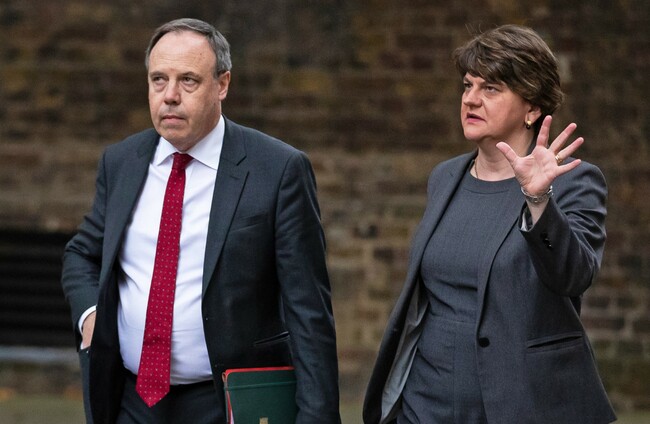
UK PRIME MINISTER Boris Johnson met with the DUP in Downing Street this evening.
Arlene Foster, the DUP leader, said that Johnson had ruled out the idea of a Northern Ireland-only backstop.
A backstop, solely for Northern Ireland, has been mooted as one option that could break the impasse between the UK and the EU over the issue of the border.
The idea was raised earlier in negotiations between the UK and the EU as a way to avoid a hard border. However, in February 2018 Theresa May ruled out the idea.
“History teaches us that any deal relating to Northern Ireland which cannot command cross community support is doomed to failure. That is why the Northern Ireland backstop is flawed,” Foster said in a statement after the meeting.
“Not one single unionist MLA in the Northern Ireland Assembly supports it,” she said.
Foster, whose party has been in a confidence-and-supply arrangement with the Conservative Party since the 2017 election, has consistently sought to ensure that any Brexit deal does not leave Northern Ireland with a separate regulatory system to that of the rest of the UK.
A Northern Ireland-only backstop, Foster said, is “undemocratic and unconstitutional and would place a tariff border between Northern Ireland and the rest of the United Kingdom”.
Foster said that her party wanted a “sensible deal” and that they were “encouraged by the tone and language in Dublin on Monday”.
Yesterday, Johnson met with Taoiseach Leo Varadkar to discuss Brexit and the backstop. Johnson said that he wanted to secure a deal with the EU and that a no-deal exit would be a “failure of state-craft”.
Johnson has already suffered a series of parliamentary defeats over Brexit since taking office in July. Last night, he failed to convince the House of Commons, at the second time of asking, to back an early election.
His decision to prorogue parliament, which triggered legal action and protests, has also been widely criticised both in the UK and internationally.
While the DUP is still technically provides key element of parliamentary support for Johnson, the expulsion of 21 Tory rebels means that the government does not possess a working majority in the House of Commons – even with the support of Arlene Foster’s party.
Foster said that Johnson today confirmed his “commitment to securing a deal which works for the entire United Kingdom as well as our neighbours in the Republic of Ireland”.

To embed this post, copy the code below on your site












have your say