Sign in. It’s quick, free and it’s up to you.
An account is an optional way to support the work we do. Find out more.
Sign in. It’s quick, free and it’s up to you.
An account is an optional way to support the work we do. Find out more.
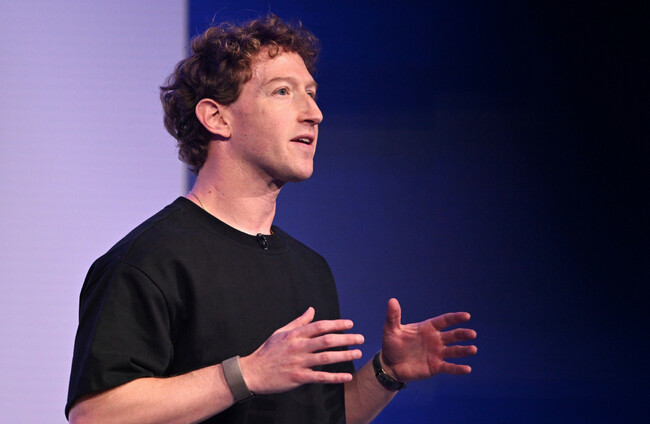
META HAS TODAY settled a landmark case brought by 29 US states and has agreed to make a number of changes to make their platforms less addictive.
In March, a court in Los Angeles found Meta and YouTube liable for harming a particular user through deliberately designing addictive features, including “infinite” scroll.
And in August, Meta was ordered by a court in New Mexico to pay $567 million (€486.19 million) on the grounds that it created a “public nuisance” and harmed children.
These are just a few cases that have been brought against Big Tech in recent months, and the momentum is growing.
Today’s settlement will see the social media giant, which owns Facebook and Instagram, pay out almost $17 billion (€14.6 billion), impose daily usage limits and restrict nighttime usage of its platforms.
The growing frequency and scale of these cases begs the question: why hasn’t a big case been brought in Ireland?
Ireland plays a key role within the EU when it comes to Big Tech. Many of the tech giants have their headquarters in Dublin, so the onus falls on us to regulate them for the EU, under the EU harmonisation rules.
With the storm brewing on the other side of the Atlantic, we spoke to some experts about the ripple effects and the likelihood of cases being brought here.
The Irish Council for Civil Liberties (ICCL) director Johnny Ryan said Ireland is the “most important” place in the EU to bring these types of cases and that what has happened in the US is “very significant”.
“A win here can have effect across the whole of Europe, which is unique,” he said.
However, Ireland is “blocked” from doing so as the State prevents the raising of funds to bring the litigation – which is crucial in a fight against Big Tech companies and their very deep pockets.
Key to this is the concept of champerty, which seeks to exclude parties who have no stake in a case, and therefore prevents other parties from funding a lawsuit.
Ireland is one of the few remaining countries in the EU to still have this law, which Ryan described as an “anachronism”.
Another difficulty lies in the type of lawsuit that can be brought in Ireland.
“It’s very difficult, if not impossible, to bring a class action in Ireland,” lawyer Paul Tweed told The Journal. “You’re really restricted to a group action.”
A class action case uses an opt-out system, meaning that affected people are automatically included unless they choose to leave. This contrasts with a group action, which requires claimants to actively opt in, and a lawyer represents multiple, named claimants.
While a class action may be brought in limited circumstances – including by a charitable organisation or a designated body, such as the ICCL – Tweed said that it is “very difficult” for individuals to band together to bring a claim.
Despite this, Tweed said that it was not a matter of if, but a matter of “when” a landmark case would be brought in Ireland.
“It’s just a question of how to pin down Meta and the other platforms.
“It will come, and I think it will come to Ireland, and Ireland will be the centre for the EU. There’s no doubt about that. The question is when.”
Tweed said that some of the cases in the US may help Ireland, as some of the “evidential groundwork” had been done.
“There’s nothing to stop a number of law firms in Ireland working together to bring a group action, with one party leading it,” he said.
However, Tweed cautioned against the “financial might” of the Big Tech giants, saying that the best course of action could be a billionaire, with addicted teenagers, bringing a case.
“You’ve got to be prepared to face their financial might from the outset… my experience has been they will test the client’s resolve to see if they’ve got the financial ability and the backbone to take the case towards the door of court.”
Tweed said that some of the cases, including the New Mexico decision of $567 million in damages, were “not even a drop in the ocean”.
$200 billion in damages, however, would definitely cause them a “degree of discomfort”, Tweed said.
Ultimately, he said that the court process is “far too slow”, and what is needed is direct legislative intervention by governments and criminal prosecutions.
Alex Cooney, director of NGO CyberSafeKids, told The Journal that the problem is with the model.
“We seem to be only able to take action once the harm has happened and been proven,” she said.
“What we need is a completely different approach which would mirror other industries, particularly other industries providing products to children that requires these products to reach a certain standard of compliance before they’re released onto the market.”
Cooney also described how many of the fines issued by the Data Protection Commission (DPC) were “chicken feed”.
The DPC has issued €4 billion in fines since 2020, with only 5% of these fines being collected so far.
The largest fine issued is a €1.2 billion fine against Meta, but most are under appeal. Only a €17 million fine against Meta and a €450,000 fine against Twitter have been collected.
When asked to comment, the DPC directed us to the list of fines that it has issued to date.
Coimisiún na Meán, the media regulator, has five investigations currently ongoing into X, TikTok, LinkedIn, Facebook and Instagram, as well as several joint investigations with the European Commission into X (and Grok), Shein and TikTok.
“It remains to be seen what the regulators are prepared to do,” said Tweed.
“The only thing that seems to get their attention is litigation in the courts.”
To embed this post, copy the code below on your site
















have your say