Sign in. It’s quick, free and it’s up to you.
An account is an optional way to support the work we do. Find out more.
Sign in. It’s quick, free and it’s up to you.
An account is an optional way to support the work we do. Find out more.
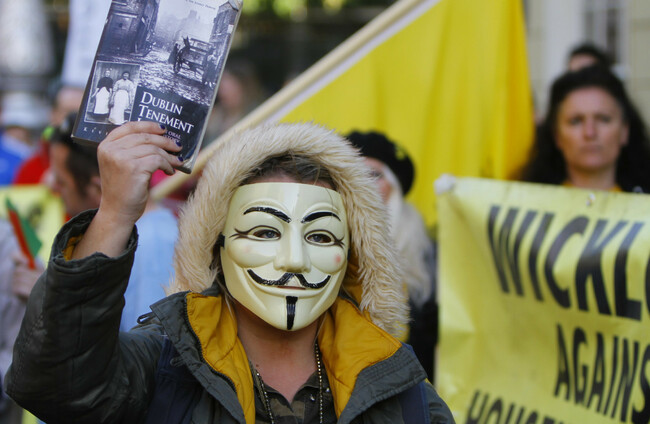
JUSTICE MINISTER JIM O’Callaghan has received Cabinet approval for legislation that includes the criminalisation of sex-for-rent arrangements, as well as measures that will impact sexual assault trials and the wearing of masks at protests.
The General Scheme of the Criminal Law and Civil Law (Miscellaneous Provisions) Bill 2025 will now be referred to the Justice Committee for pre-legislative scrutiny, the Department of Justice said.
Once the Committee’s report is received by Cabinet, “work on finalising the Bill will be prioritised”, the Department said in a statement.
The proposed legislation would introduce two specific criminal offences concerning sex for rent.
Those offences will be offering accommodation in exchange for sex and the advertising of accommodation in exchange for sex. There will be no need for complainants to prove that sexual activity has occurred and the proposed penalty is a fine of €5,000.
The Department said the provisions would cover both rental agreements between landlords and tenants, and ‘rent-a-room’ situations.
“Any attempt by accommodation providers to exploit their position and prey on vulnerable individuals through these arrangements is completely unacceptable,” O’Callaghan said in a statement.
He described such arrangements as “an appalling abuse of power by unscrupulous individuals”.
While O’Callaghan said this was “a complex issue to legislate for” he insisted that car had been taken “to ensure that the offences are clear, precise and limited in scope”.
“I am satisfied the provisions are workable and constitutionally sound, and do not create any unintended consequences such as inadvertently criminalising consensual relationships.”
Another element of the proposed legislation is an amendment that would affect the disclosure of counselling notes in cases involving sexual assault.
As it stands, notes from the counselling sessions of survivors of sexual assault can be released to the defence in pre-trial disclosures if the court deems the content materially relevant to the case.
“I am fully aware of the distress and re-victimisation that disclosure of counselling records can have on complainants in sexual assault trials,” O’Callaghan said.
He said that reforms to the law made in 2017 have “not operated as intended”.
“I am therefore proposing to amend the existing legislation by requiring that a disclosure hearing takes place in all cases and removing the provision that allows for this step to be waived,” O’Callaghan said.
He also noted that complainants have described feeling compelled to waive disclosure hearings because “they don’t want to risk a successful prosecution or delay a trial”.
“This amendment will ensure that the original intention of the legislation will apply,” said O’Callaghan.
“However, I am continuing to look at how we might further limit release of these records as I recognise that disclosure hearings can be extremely difficult for complainants.”
The Bill will also give gardaí the power to require people to remove a face covering when they reasonably expect that it is being worn in order to intimidate or conceal a person’s identity when intending to commit a crime.
The Department said this will serve as “a deterrent against disorderly conduct and intimidation at protests and in other public places”.
The proposal has been criticised by People Before Profit and the Irish Council for Civil Liberties.
TD Paul Murphy called it a “worrying threat to the right of people to privacy, and their right to protest”.
“While people have the right to protest and that right must be respected, it is subject to the rights of others in our community,” O’Callaghan said, adding that striking that balance was a complex task for gardaí.
“It has become apparent that some protesters are covering their faces in an obvious effort to alarm and intimidate individuals in various scenarios or to avoid detection when committing a criminal offence.”
Murphy said: “We are seeing a general push against the right to privacy and the right to protest in the EU and elsewhere.
Murphy said this was “Black Mirror type stuff”, and pointed to “the German state criminalising protesters for speaking as Gaeilge”, and the growing use of technology like AI and facial recognition to monitor ordinary citizens engaging in demonstrations.
“Protesters are not criminals and should not be treated as such. They have the right to wear a protective mask, scarf, religious face covering or sun-glasses without facing the threat of criminal charges.”

To embed this post, copy the code below on your site

















have your say