Sign in. It’s quick, free and it’s up to you.
An account is an optional way to support the work we do. Find out more.
Sign in. It’s quick, free and it’s up to you.
An account is an optional way to support the work we do. Find out more.
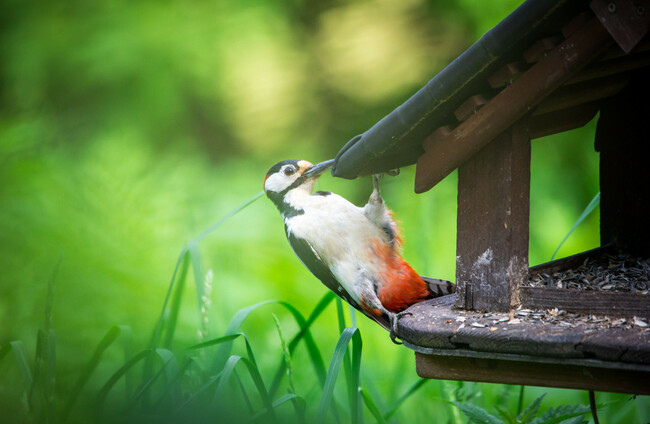
WOODPECKERS ARE BREEDING in a core woodland in Killarney for what is thought to be the first time in centuries.
Greater Spotted woodpeckers have been “spotted” in Killarney National Park. after regular hammering on a dead tree trunk was reported by walkers. A breeding pair and chicks have now been confirmed by a conservation ranger.
It is the first time in hundreds of years woodpeckers have bred in Killarney.
And while the exact location – or tree – has not been revealed the chicks are becoming more and more vocal each day as they prepare to fledge.
Eamonn Meskell, NPWS Divisional Manager at Killarney National Park said there was “huge excitement” in the park.
“There’s huge excitement here in Killarney since these birds were spotted over the past few weeks.”
Woodpeckers like to spend time in areas where there are mature trees and the iconic hammer sound indicates they are carving out a home. And Killarney with its mature oak woodlands provides the perfect nesting and feeding opportunities for them.”
Killarney, like other areas, lost huge swathes of its oak and other forestry in the 17th and 18th centuries.
Following the deforestation in those centuries Great Spotted Woodpeckers became extinct in Ireland.
The first recorded sighting of a Great Spotted Woodpecker for Killarney National Park was in 2013, where it was observed in the Tomies Wood area on the western most side of the 10,000 ha park.
This new development is felt to be significant as it is the first recorded breeding activity within the core area of the park.
Breeding was confirmed by Killarney NPWS Conservation Ranger Sam Bayley as he was ringing birds in the park as part of a British Trust for Ornithology (BTO) scheme. This was followed by reported sightings of chicks by wildlife enthusiasts and bird watchers in the Park.
Niall Ó Donnchú, Director General of NPWS said: “Stories like this reflect some of the unexpected treasures that can be found in our National Parks and Nature Reserves, and that our staff are working hard to protect.”
The Great Spotted Woodpecker is about the size of a starling. Both males and females are black and white with scarlet red underneath their tails. Woodpeckers have very long sticky tongues and feed on insects found in wood, as well as pine cones in autumn. During the breeding season, they may take the eggs and chicks of other birds.
To embed this post, copy the code below on your site














have your say