Sign in. It’s quick, free and it’s up to you.
An account is an optional way to support the work we do. Find out more.
Sign in. It’s quick, free and it’s up to you.
An account is an optional way to support the work we do. Find out more.
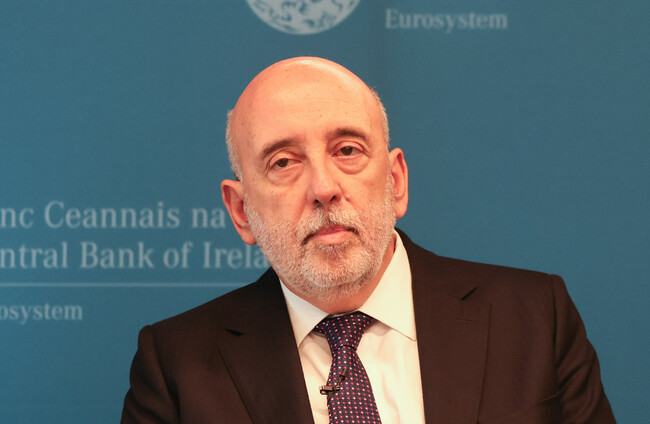
CENTRAL BANK GOVERNOR Gabriel Makhlouf has warned that Ireland’s budget deficit could reach €25.7 billion by 2030 if overspending and a reliance on tax from multinationals continue.
In a letter to the Minister for Finance, Simon Harris ahead of Budget 2027, Makhlouf warned of emerging fiscal pressures and “the long term sustainability of the current high levels of revenue”.
He cautioned especially of reliance on corporation tax (CT) receipts, which make up 23% of total government revenue, an increase from 12% previously.
Makhlouf said: “A significant proportion (estimated at around half) of Ireland’s CT receipts cannot be explained by domestic economic developments.
“[They] may be exceptionally vulnerable to external shocks and/or the activities of a small number of companies and changes in international tax regimes.”
He said that this vulnerability is exacerbated by the fact that just 10 companies were responsible for 56% of all corporation tax receipts in 2025, with IT and pharmaceutical companies responsible for at least half of CT revenue.
“A broader tax base is needed to help mitigate the risks from a possible loss of corporation tax receipts and to fund known spending pressures,” Makhlouf said.
With Ireland’s borrowing costs rising, Makhlouf said that interest expenditure is projected to double by 2030.
Key to protecting against sudden market changes is a reduction in public debt as a share of national income, he said.
Current government projections show expenditure growth outpacing revenue growth in the coming years, and Makhlouf underscored the importance of building economic resilience, recommending growing the supply side of the economy and strengthening the national business sector.
The government’s doubling of nominal public investment since 2019, is “potentially transformative”, Makhlouf said, emphasising the importance of “addressing infrastructure deficits in a timely manner” and “expenditure discipline”.
Despite above average growth since 2021, the economy rests upon “somewhat unstable foundations”.
“Our current economic conditions present a window of opportunity to strengthen the fiscal framework,” Makhlouf said.
“But this window will not remain open indefinitely.”
To embed this post, copy the code below on your site















have your say