Sign in. It’s quick, free and it’s up to you.
An account is an optional way to support the work we do. Find out more.

Sign in. It’s quick, free and it’s up to you.
An account is an optional way to support the work we do. Find out more.
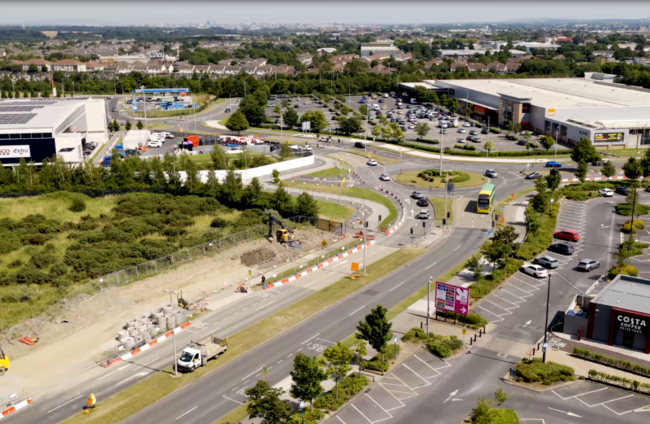

WORK IS UNDERWAY and progressing on the Liffey Valley to City Centre Core Bus Corridor Scheme, the first major infrastructure scheme to move into construction under the BusConnects Dublin programme.
The Liffey Valley to City Centre Core Bus Corridor Scheme will connect Liffey Valley Shopping Centre to Dublin city centre via Ballyfermot, Inchicore, Mount Brown, Thomas Street, and James’s Street. The scheme will deliver faster, more reliable journeys, and improved facilities for bus passengers, cyclists and pedestrians along one of Dublin’s busiest routes.
Aidan Gallagher, Head of BusConnects Dublin Infrastructure at the National Transport Authority (NTA), hailed the project as a transformational scheme for Dublin and a once-in-a-generation investment in the capital’s transport network.
We’re delighted now to be able to say that we are breaking ground on the first of 12 schemes at Liffey Valley.
More sustainable travel options
Overall, BusConnects is set to improve bus reliability and journey times.
The Liffey Valley scheme is designed to deliver wider benefits beyond public transport. The scheme will deliver new and upgraded cycling infrastructure, safer routes for cyclists and enhanced public spaces for local communities.
The scheme is intended to create a corridor that works better for everyone using the route, whether travelling by bus, bike or on foot. Aidan Gallagher added:
It’s also about improving cycling facilities, improving safety for cyclists and improving the public realm, public spaces for pedestrians and for people who live within the community.
The project will encourage more people to choose sustainable travel options while providing the capacity needed to empower Dublin’s future growth.
Managing disruption
While construction will inevitably cause some disruption for people living, working, and travelling along the route, the NTA will deliver the works in phases to help minimise impacts on local communities and road users. The short-term inconveniences will outweigh the long-term benefits to communities across the capital when it comes to sustainable traffic options.
A phased approach to construction will help keep people moving, maintain access and reduce disruption as works progress along the route.
Improving public transport
The progression of construction represents a significant step forward for the wider BusConnects programme, which has been years in development and is expected to play a central role in the future of Dublin’s transport network.
Once complete, the Liffey Valley scheme will deliver faster and more reliable public transport journeys to the city centre, alongside safer cycling routes and improved walking environments along the corridor.
Aidan Gallagher also stated that the project team is focused on delivering a top-class sustainable transport scheme that will have long-lasting benefits for the communities it serves.
“We do ask people to bear with us while the construction works are under way,” he added.
The end result will speak for itself in terms of the improvements to both public transport and also cycling and walking.
For commuters, residents and businesses, the Liffey Valley to City Centre Core Bus Corridor Scheme marks the start of a significant milestone that will reshape how people move around Dublin for generations to come.
To stay informed about the delivery of the BusConnects Core Bus Corridors programme, visit BusConnects.ie. For further information about the Liffey Valley to City Centre Core Bus Corridor Scheme, visit LiffeyValleyScheme.ie.
To embed this post, copy the code below on your site
















have your say