Sign in. It’s quick, free and it’s up to you.
An account is an optional way to support the work we do. Find out more.
Sign in. It’s quick, free and it’s up to you.
An account is an optional way to support the work we do. Find out more.
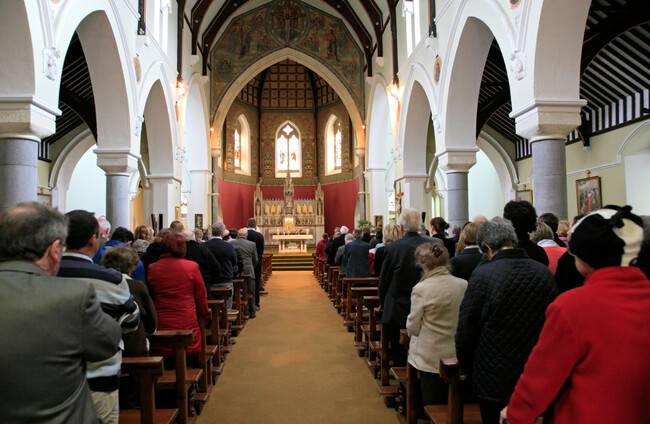
A PROPOSAL TO establish a national office for women in the Catholic Church in Ireland has been rejected by a majority of delegates at a major assembly examining the future of the church.
More than 300 delegates gathered in Gormanston, Co Meath, on Saturday for the Irish National Synodal Assembly, where they considered 35 proposals aimed at shaping the Church’s future.
The gathering brought together lay people, clergy and members of religious communities from across Ireland, as part of a consultation process launched by the country’s Catholic bishops in 2021.
The process sought to examine issues including the role of women, the legacy of abuse, declining religious participation and how the Church should respond to changing Irish society.
Among the proposals put before delegates was the establishment of a national office for women, described in the assembly’s voting document as an initiative aimed at “mainstreaming women’s inclusion”.
The proposal was one of several concerning women’s roles in the Church, an issue which has featured prominently in discussions about reform.
According to voting results released following the assembly, 56% of delegates said they did not recommend establishing the office.
Fewer than one in five delegates supported the establishment of the national office: just 12% said they highly recommended the proposal, while a further 6% recommended it.
Another 27% said the proposal required further discernment.
The recommendations from the assembly will now be passed to the Irish Catholic Bishops’ Conference, which is due to meet next week.
The voting results yesterday are recommendations from the assembly rather than binding decisions, with the bishops responsible for considering what measures will be taken forward.
The national office proposal attracted the highest proportion of “do not recommend” responses of the 35 proposals considered by delegates.
Other proposals concerning women’s participation received varying levels of support.
A proposal for women to be more visible and valued in liturgy, public prayer and public discourse was highly recommended by 38% of delegates and recommended by a further 23%.
Meanwhile, 42% highly recommended an ongoing exploration of women’s ministry, including the diaconate, with another 12% recommending it.
However, 27% said they did not recommend that proposal, while 19% believed it required further discernment.
A separate proposal concerning women and the domestic church received support from 40% of delegates, while another 40% said it required further consideration.
The assembly also considered proposals concerning healing within the Church, including the need to address the harm experienced by survivors of abuse and others who have been excluded or hurt.
Some 89% of delegates recommended or highly recommended making healing a priority in the future work of the synodal process.
A separate proposal to establish a commission for healing received support from 64% of delegates.
Una Allen, from the Archdiocese of Tuam and convenor of the Synodal Pathway’s working group on healing, said the Church now needed to move beyond listening to people’s experiences.
“Healing needs to be front and centre on our ongoing Synodal Journey,” Allen said.
“Listening to each other’s concerns may be all very well and good, but now the Church needs to act to benefit all those who have been excluded, abused, wounded and hurt.”
There was also strong support for measures aimed at engaging young people.
Some 84% of delegates backed youth coordinators and youth advisory committees, while the same proportion supported a national formation and training pathway for youth and young adult ministry.
The assembly also heard an address from Cardinal Mario Grech, Secretary General of the Synod of Bishops, who warned that the Catholic Church in Ireland needed to make concrete changes rather than simply manage its decline.
Grech, who addressed delegates by video link, pointed to declining religious practice, an ageing priesthood and the legacy of abuse as challenges facing the Church.
He said the Church needed to review its existing structures, including parish pastoral councils and bishops’ conferences, and consider whether they remained fit for purpose.
“The danger in all of this is that management of decline becomes the operative pastoral paradigm,” Grech said.
“Do not measure the future of the Church simply by what is disappearing. Discern what the Holy Spirit is bringing to birth. Do not simply manage a diminishing ecclesial landscape. Re-position the Church for mission within it.”
Grech also described Ireland as “missionary territory”, despite its long history of sending Catholic missionaries abroad.
He urged the Church to move from discussing reforms towards implementing them.

To embed this post, copy the code below on your site








have your say