Sign in. It’s quick, free and it’s up to you.
An account is an optional way to support the work we do. Find out more.
Sign in. It’s quick, free and it’s up to you.
An account is an optional way to support the work we do. Find out more.
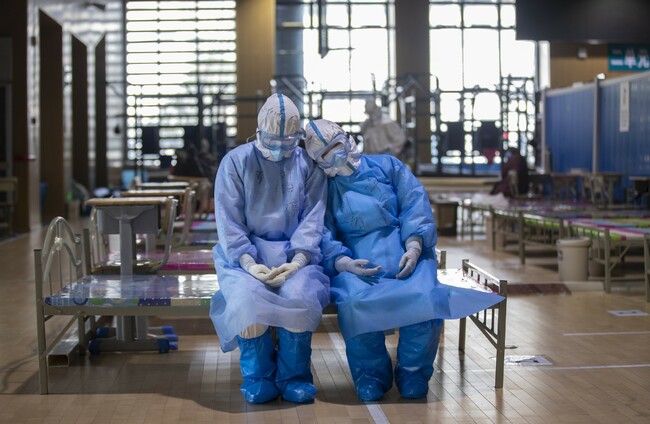
CHINA HAS ANNOUNCED that it will end travel restrictions in the province of Hubei, where the coronavirus pandemic emerged late last year.
From midnight tonight, healthy residents will be permitted to travel outside the province, two months after they were ordered to stay indoors by the government.
The relaxation of rules, which will not apply to the hardest-hit city of Wuhan until April, comes as tighter restrictions were announced in the UK and New Zealand.
But fears rose over a second wave of infections fuelled by people arriving in China from overseas.
The province ordered the shutdown in January but has been gradually easing the rules and permitting people to move about within Hubei and return to work.
People who wish to travel in or out of Hubei or Wuhan will be able to as long as they have a “green” health code issued by authorities. But schools in the province will remain closed.
New cases have slowed dramatically over the last month, although the first locally transmitted infection in nearly a week was reported in Wuhan on Tuesday, along with three cases elsewhere in the country.
But the figures pale in comparison to imported cases, which reached 74 nationwide on Tuesday, a trend that has fuelled anxiety about a possible second wave of infections just as authorities appeared to be bringing the country’s outbreak under control.
Seven more people died, the National Health Commission said, all in Wuhan.
Second wave
The 74 imported cases were the most since officials started reporting the data at the beginning of March, and the number was nearly double that reported on Monday.
As countries around the world battle to contain the pandemic, which has now killed more than 16,500 people, the total tally of imported cases in China has soared to 427.
Many cities have brought in tough rules to quarantine arrivals, and all Beijing-bound international flights are being diverted to other cities where passengers are screened for the virus.
Authorities in Beijing have said that anyone entering China via another city and then making their way to the capital in the last two weeks would also be tested for the virus and told to enter quarantine.
Shanghai and Beijing each reported a locally-transmitted infection that came from an imported patient.
State media warned of a second wave from abroad, with the nationalist Global Times saying on its front page that “inadequate quarantine measures” meant it was “highly likely, even inevitable”.
There have now been more than 81,000 cases in China and the death toll has reached 3,277.

To embed this post, copy the code below on your site















have your say