Sign in. It’s quick, free and it’s up to you.
An account is an optional way to support the work we do. Find out more.
Sign in. It’s quick, free and it’s up to you.
An account is an optional way to support the work we do. Find out more.

CHINA HAS ANNOUNCED its first population decline in decades.
Its National Bureau of Statistics has reported that the country had 850,000 fewer people at the end of 2022 than the previous year, as what has been the world’s most populous nation ages and its birth rate plunges.
The tally includes only the population of mainland China, excluding Hong Kong and Macao. Foreign residents are also not counted.
That left a total of 1.41 billion people, with 9.56 million births against 10.41 million deaths, the bureau said at a briefing on Tuesday.
Men outnumbered women by 722.06 million to 689.69 million, a result of the strict one-child policy that only officially ended in 2016 and a traditional preference for male offspring to carry on the family name.
Since abandoning the policy, China has sought to encourage families to have second or even third children, with little success, reflecting attitudes in much of east Asia where birth rates have fallen precipitously.
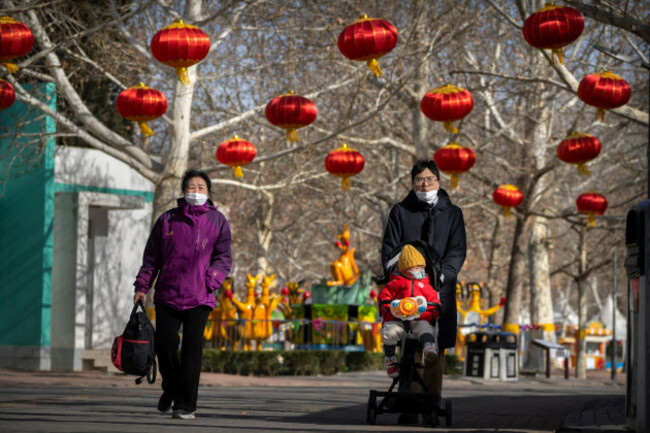
In China, the expense of raising children in cities is often cited as a cause.
China has long been the world’s most populous nation, but is expected to soon be overtaken by India, if it has not already.
Estimates put India’s population at more than 1.4 billion and continuing to grow.
The last time China is believed to have recorded a population decline was during the Great Leap Forward launched at the end of the 1950s, under then-leader Mao Zedong’s drive for collective farming and industrialisation that produced a massive famine killing tens of millions of people.

To embed this post, copy the code below on your site















have your say