Sign in. It’s quick, free and it’s up to you.
An account is an optional way to support the work we do. Find out more.
Sign in. It’s quick, free and it’s up to you.
An account is an optional way to support the work we do. Find out more.
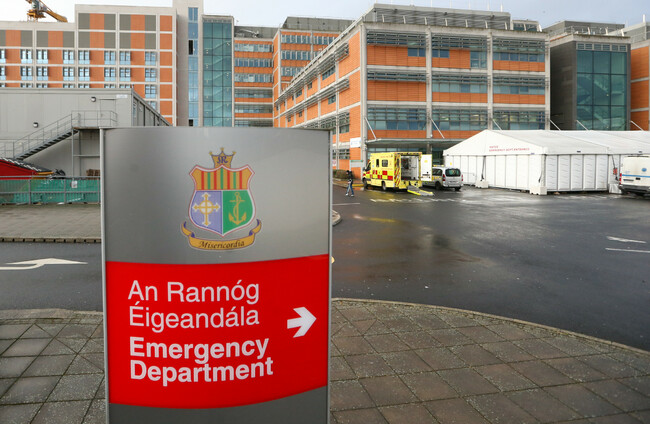
CLIMATE CHANGE WILL likely increase hospital admissions, as a growing number of people are expected to fall ill due to high temperatures.
In the worst case scenario, there could be as many as 1,400 additional deaths per year in Ireland by the end of the century.
New research by the Economic and Social Research Institute (ESRI) has found a link between climate change, temperature changes and healthcare demand.
Temperature data from Met Éireann was combined with emergency inpatient hospitalisation data. It was found that temperature increases have a significant impact on hospitalisation figures for related health conditions.
Emergency hospital admissions for temperature-affected diseases were 8.5% higher on hot days (22–25oC) compared to moderate temperature days (10–13oC).
The largest increases in hospitalisations on hot days were seen for circulatory, respiratory and infectious diseases, and amongst younger people (14 years and under).
Emma Balmaine, CEO of the Irish Heart Foundation described the findings as “stark”, saying vulnerable people, such as children and those with cardiovascular disease, will be worst affected.
“To protect public health, it is vital that we invest in our healthcare system to ensure its resiliency and adopt immediate measures to transition to a more environmentally sustainable society,” she said.
On the hottest days where temperatures exceeded 25oC, results showed potential evidence of adaptive behaviour, especially among older people, which suggests that advance notice of warm weather can help people change their behaviour and protect themselves.
Under the Paris Agreement, Ireland must reduce greenhouse gas emissions by 55% by 2030 and achieve net-zero emissions by 2050.
Dr Kelly de Bruin, Senior Research Officer at the ESRI said: “ Achieving these targets is essential to limit the negative effects of climate change on population health and the healthcare system .”
Mean annual temperatures are projected to increase by between 1 and 1.6oC in the period 2041–2060.
In light of this, in the same period, hospital admissions for health conditions linked with temperature are projected to rise by 12.2% during hotter weather under the most realistic scenario.
However, if the reality is worse than projected, climate change could lead to 1,400 additional deaths per annum in Ireland by the end of the 21st century.
This, the report says, illustrates the urgency required to tackle climate change.
Dr Anne Nolan, Associate Professor at the ESRI said: “These results emphasise the need for policymakers in moderate climate countries including Ireland to implement adaptive measures and increase capacity to accommodate the higher hospital demand from higher temperatures, especially during the summer months.”
The ESRI’s research was funded by the Climate and Health Alliance, an organisation made of health professionals from around the world with the aim of mitigating the effects of climate change in the interest of public health.

To embed this post, copy the code below on your site













have your say