Sign in. It’s quick, free and it’s up to you.
An account is an optional way to support the work we do. Find out more.
Sign in. It’s quick, free and it’s up to you.
An account is an optional way to support the work we do. Find out more.
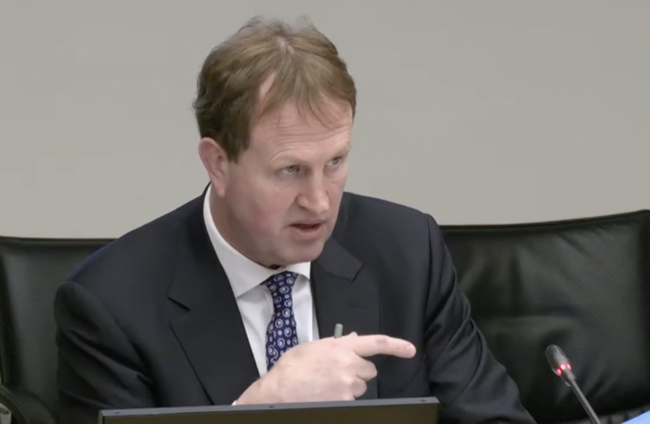
PEOPLE WHO USE cocaine and other illegal drugs need to reflect more on the consequences it has on society via gangland-related intimidation and murders, the Minister for Justice has said.
“The people who burn houses, intimidate people, kill people, they do it because they don’t want their cocaine business interrupted,” Minister O’Callaghan told the Oireachtas Justice Committee this afternoon.
“We’ve lots of young, ethical and middle-aged ethical and old ethical people in the country. We need to remind them that there’s a consequence to the purchase of drugs and the purchase of cocaine.”
O’Callaghan said society needs to “get more mature” about the consequences of purchasing illegal drugs.
“We know we boycott certain products because we don’t want to support the underlying manufacturer. People need to be aware of what they’re doing when they’re taking drugs, and unfortunately, they don’t reflect on that enough,” he said.
The Minister was appearing before the Oireachtas Justice Committee to discuss drug-related intimidation and violence.
O’Callaghan defended the Government’s record on tackling drug-related intimidation despite only 4% of incidents being prosecuted.
Operation Fogra was launched in 2021 to combat intimidation by drug gangs and dealers.
Addressing the committee, O’Callaghan said the programme has been responsible for an “increasing number of arrests, prosecutions and convictions for offences related to drug-related intimidation and violence”.
In response, Social Democrats TD Gary Gannon said that since it was launched, there has been a 37% increase in drug-related intimidation.
Gannon said that of the 2,500 incidents reported, only 4% had been prosecuted.
The Justice Minister said he still viewed the operation as successful adding: “I know from speaking to the commissioner and senior Gardaí they take it extremely seriously and people have been prosecuted.”
He also said the “prosecution rates are increasing”, to which Gannon countered: “So are the arson attacks”.
Gannon noted that there had been 13 arson attacks in 2022 and “it’s 50 this year”.
The Social Democrats TD also criticised the budget for the Government’s Drug Related Intimidation & Violence Engagement (Drive) project.
He said it had been allocated only €280,000 in 2026 and 2025 and said: “I’m a big believer in ‘show me your budgets, and I’ll show you your priorities’.”
That figure is “suitable in terms of a new project that’s starting up”, O’Callaghan said.
However, he acknowledged that the project should be publicised more.
Along with the Drive project and Operation Fogra, O’Callaghan highlighted the Community Safety Fund and youth diversion programmes as key to tackling drug-related intimidation.
He described it as a “sinister form of criminality” that “requires a multifaceted response, which both supports victims and ensures real enforcement targeting the people carrying out these crimes”.
The Community Safety Fund is an annual grant fund, which allows the proceeds of crime seized by the Criminal Assets Bureau (CAB) and An Garda Síochana, to be directed back into responses to community safety issues.
O’Callaghan said youth diversion projects are “now available nationally to every child who may need to avail of them” describing them as offering a “responsive, empathetic road towards a better life”.
With reporting from Press Associations.

To embed this post, copy the code below on your site















have your say