Sign in. It’s quick, free and it’s up to you.
An account is an optional way to support the work we do. Find out more.
Sign in. It’s quick, free and it’s up to you.
An account is an optional way to support the work we do. Find out more.
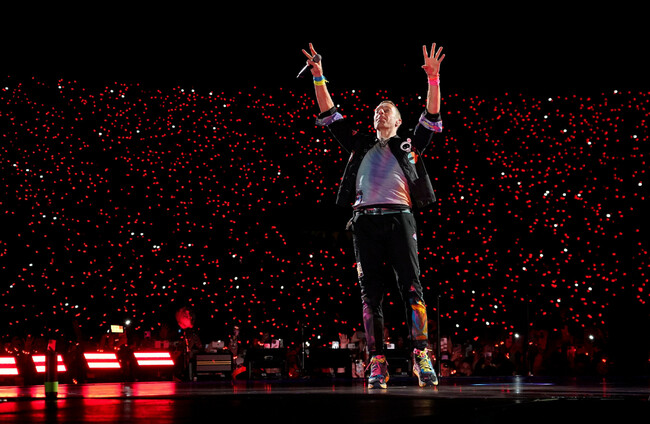
A WOMAN WHO was scammed by a catfish pretending to be Coldplay’s Chris Martin is struggling to recoup her money, five years later.
Stacey*, whose story was first reported in The Irish Times, believes more must be done by banks and the government to protect people duped by scammers through authorised push payment (APP) fraud.
APP fraud occurs when victims are deceived into making payments to bank accounts controlled by scammers posing as legitimate payees.
Figures provided by the Banking and Payment Federation of Ireland (BPFI) show that in 2023 the total value of APP fraud was €18.1 million.
In the UK, the APP Fraud Reimbursement Scheme means banks must reimburse their customers if they are the victim of such a scam.
There are no such laws in Ireland.
Stacey has been labelled a victim of APP fraud by Financial Ombudsman offices in both the UK and Ireland. Currently living in Northern Ireland, and originally from the Republic of Ireland, she is a cross-border worker with bank accounts in euro and sterling.
Her case has been complicated further by the fact that Ulster Bank, who she transferred the bulk of the money from, no longer operates in the Republic of Ireland.
Stacey is now fighting to have her money returned through the court system, at her own expense. Legal documents related to the case have been seen by The Journal.
She says she feels foolish and embarrassed by how easily she was conned by the catfish who bombarded her with messages after first connecting during the pandemic.
However, she says the stress of trying to recoup the money has made the situation worse.
“The entire process has been stressful, going through financial ombudsman offices, dealing with the bank,” she said.
The UK ombudsman contacted the UK bank straight away and the money was refunded immediately.
“In Dublin, it’s been extremely stressful. It’s very stark to me that if Ireland had the same laws as the UK, I’d have my money back. We share a land border, with thousands of cross border workers who have two bank accounts. This isn’t practical or fair.”
While living alone and battling mental health issues in the spring of 2021, Stacey was flattered by the attention from the profile pretending to be the English musician.
The fraud was sophisticated, using AI and photoshop to respond immediately when she requested proof from him, sending her pictures and videos of music studios and even video calling her.
He provided fake IDs, passports, driving licences, asked for money for charity, and sent photos of the children he was “helping”.
“Chris” requested a few hundred euro at first, to be sent to his management team contact, a woman he claimed worked for him. The amounts and requests became larger over time.
After four months of “love-bombing” and insistence by him, Stacey transferred £2,750 and €20,000 believing it was going towards a charitable foundation.
Now she is in a battle with a bank to return her life savings, convinced she’s been let down by the bank and the regulator.
Stacey says the money was transferred from her bank account despite the payee name not being the same as the name she put on the banking reference.
The payee was in a woman’s name and bank account, while the reference was to a “C.Martin”. This is reflected on the receipt.
When the scam was uncovered after her brother intervened, she contacted the police.
Gardaí tracked down the money mule in the USA, while the Chris Martin catfish is currently believed to be in the UK.
The bank in the UK refunded £2,750, but the rest of the money, transferred through Ulster Bank in Dublin, was not returned.
The catfish used multiple different women – now known as money mules – to accept the cash into their accounts.
Ulster Bank decided in 2021 not to refund Stacey. She is now attempting to have her case redirected to a court in Northern Ireland, where she has been resident for a number of years.
She believes the APP fraud laws in the north apply to her euro-designated bank as she is a cross-border worker. The case has exposed the stark difference in the experience of fraud victims on either side of the border.
Sinn Féin Finance spokesman Pearse Doherty has queried the Central Bank on the issue but it says Irish banking institutions are led by European directives, noting “member states shall not maintain or introduce provisions other than those laid down” by the EU.
“Online fraud is out of control,” Doherty told The Journal.
“The state is still fighting with both hands tied behind its back. The government has not implemented measures to protect the public.
We still do not even have an economic crime strategy that was promised more than 5 years ago.
“We do not have a shared fraud database between gardaí and the banks. Banks are still not required to compensate victims of fraud in many instances as they would be in the north and other jurisdictions.”
Ulster Bank’s remaining activities are managed by Ulydien DAC which has been contacted for comment.
*Name has been changed to protect anonymity
To embed this post, copy the code below on your site













have your say