Sign in. It’s quick, free and it’s up to you.
An account is an optional way to support the work we do. Find out more.
Sign in. It’s quick, free and it’s up to you.
An account is an optional way to support the work we do. Find out more.
THREE-QUARTERS OF ground-nesting bird species around Europe are facing a decline in numbers, leading to suggestions that predators such as crows and foxes may need to be culled to counter their impact on birds.
Researchers at University College Dublin and the University of Aberdeen have found that 74% of ground-nesting bird species are in decline around the continent.
In Ireland, the rate of decline is at 71%. That figure represents a decrease at three and half times the rate of other species.
Culling generalist predators such as crows and foxes could offer a means to protect the species around Europe, the study suggests. Its authors found patterns that indicated the decline of ground-nesting bird species were related to a significant presence of the predators.
Speaking to TheJournal.ie, UCD associate professor of wildlife conservation and zoonotic epidemiology Dr Barry McMahon said that looking at the trade-off between culling generalist predators like foxes and crows and having creatures which are nearly going extinct in Ireland is a “really, really difficult conversation”.
No one likes to kill stuff. No conservationist goes out and says ‘right, what will we kill today?’ – that’s not what they’re interested in doing. They’re interested in helping creatures that need their help.”
McMahon explained that in the last hundred years, habitats which previously saw co-evolution have been altered in ways that species have not been able to adjust to.
“It has made them suboptimal in terms of the resources they provide but it has also made them suboptimal in terms of being able to lay eggs, produce young, and be productive to an extent where the role that predation has is amplified, it’s multiplied, because it’s in a habitat that is not suitable to hold numbers of these birds.”
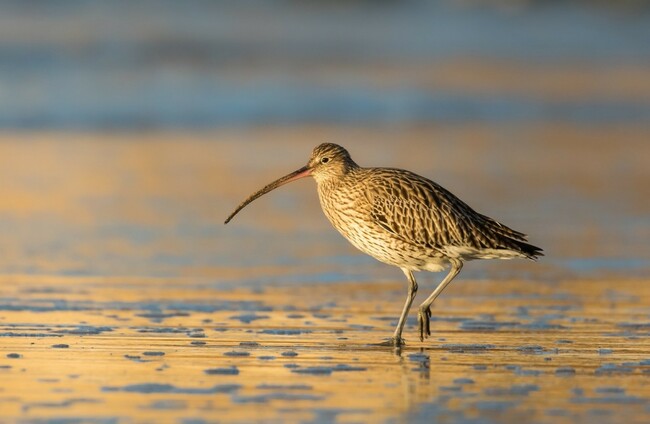
The Eurasian Curlew, the only Irish bird on the IUCN Red List of Threatened Species, is considered to be one of the species at risk in Ireland.
McMahon said the curlew is a “classic example” of a species which, if its predators are not managed in the short-term, could cease to exist, as it is “hanging on in areas in very very limited numbers”.
He said the curlew would be vulnerable to stochastic extinction, which would mean that a traumatic event to an ecosystem, such as a flood or fire, could wipe out five or six pairs of birds – a number which, in five or ten years, could “conceivably be the Irish population of breeding curlew”.
“That’s the reason why we would say you need to give these birds a help by losing predators,” McMahon said.
Other recent studies have indicated that domestic cats can have an impact on the decline in ground-nesting bird species.
“There’s absolutely no doubt that they play a role,” said McMahon. “These are creatures that are not supposed to be in the system. Many cat owners look after cats and they’re very enjoyable pets, but they don’t wear bells and even if they do wear bells, they don’t like it. If you have a cat without a bell, it’s a very very efficient predator.”
Culling, or “lethal predator control”, involves killing a select number of a wild animal to reduce its population size.
In February, 15 deer were culled in Killarney National Park in Kerry.
The National Parks and Wildlife Service (NPWS) said that the cull was necessary to manage the park’s deer population.
In the UK, a culling of over 35,000 badgers in 2019 was criticised by animal rights campaigners.
The policy, which was introduced in 2013, is intended to lower bovine-TB in cattle, but campaigners say that more badgers were shot in 2019 than cattle were slaughtered due to contracting bovine-TB.

To embed this post, copy the code below on your site















have your say