Sign in. It’s quick, free and it’s up to you.
An account is an optional way to support the work we do. Find out more.
Sign in. It’s quick, free and it’s up to you.
An account is an optional way to support the work we do. Find out more.
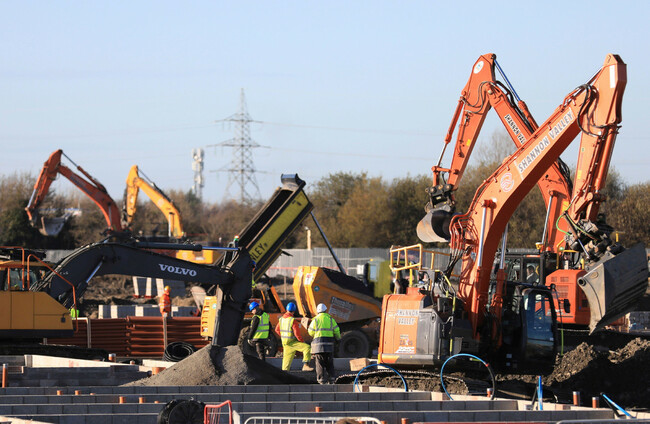
ENERGY MINISTER DARRAGH O’Brien wants the construction sector to be included in the fuel support package announced last week.
Since the announcement of the half a billion fuel support package was announced last week, other sectors sought to be included.
Sources state that other than haulage within construction, there are no specific supports targeted solely at the sector, but the general excise reductions apply.
The fuel package was intended for critical food production and supply chain transporters, they said.
However, it is understood O’Brien would like to see something done for construction, with indications over the weekend that something is being worked on.
Some accusations have been levelled that Housing Minister James Browne was “asleep at the wheel” when the package was being trashed out as there are concerns that the rising cost of running equipment such as trucks, diggers and plant machinery, which run on green diesel, could ramp up the cost of delivering much-needed housing.
It was a point being made by the CEO of the Construction Industry Federation (CIF) Andrew Brownlee this week, who told The Journal that the industry is seeing a rapid rise in costs, which is a concern.
“The raw materials that go into construction: cement, concrete, steel, they’re all generated via fuel intensive processes. So look, if you take cement as an example, it’s gone up 15% in a few weeks.
“The second big challenge is obviously the fuel that that we require to run our plant and machinery on construction sites. So the excavators, the diggers, mobile cranes – that all runs on green diesel. And I suppose we’re a bit disappointed that a lot of the action and excise reduction has focused on white diesel or auto diesel and on petrol.”
Brownlee said the government’s latest fuel support package, costed at €505m, at the moment “seems to really only focus on the agriculture sector”.
It is unclear whether the fuel support subsidy scheme is applicable to vehicles essential for construction, such as excavators, although Brownlee says he believes it may apply to large trucks. CIF has sought clarity from government on this, he said.
He repeated his point in his speech at a construction conference this week in Blanchardstown, where he said:
Construction is right in the eye of the storm when it comes to the fuel price shocks.
He said raw materials used in construction – cement, concrete and steel – are all
generated via fuel-intensive processes with price inflation already significant.
The plant and machinery on construction sites – running the excavators,
diggers and cranes, is all powered by MGO fuel, commonly known as green
diesel, he told the conference.
“Even after the excise duty changes on 24 March and 12 April, MGO fuel prices have risen by 83% – this compares to just 5% on the price of petrol,” he said, stating that other material costs like plastic pipes and insulation are also rising, with transport and logistics a major cost component for a small island economy.
“Input price inflation is therefore rising dramatically, and members are seriously
concerned about impact on business,” said Brownlee.
“The Fuel Subsidy Support Scheme, designed to mitigate some of the costs of the MGO fuel increase, seems to target support only on agriculture, but this support must be made fully available to the construction industry to get us over what is hopefully a blip,” he added.
Conor O Connell, Director of Housing and Planning with the Construction Industry Federation said right now, it seems the only thing rising faster than demand for housing is the cost of delivering housing.
“These cost pressures risk undermining the real progress that has been made in improving housing viability,” said O Connell.
“To maintain momentum, we know what we need to do, zone more land, build more infrastructure, streamline planning, and, to find a way to control spiralling costs in this unstable climate.
“We must stay focused on the goal of supplying the homes people in Ireland critically need and bringing the housing crisis to an end,” he said.
Brownlee and O Carroll are expected to repeat these calls at the CIF/ Irish Home Builders’ Association Summit, which the housing minister, and other key stakeholders in the housing sector, will be attending.

To embed this post, copy the code below on your site












have your say