Sign in. It’s quick, free and it’s up to you.
An account is an optional way to support the work we do. Find out more.
Sign in. It’s quick, free and it’s up to you.
An account is an optional way to support the work we do. Find out more.
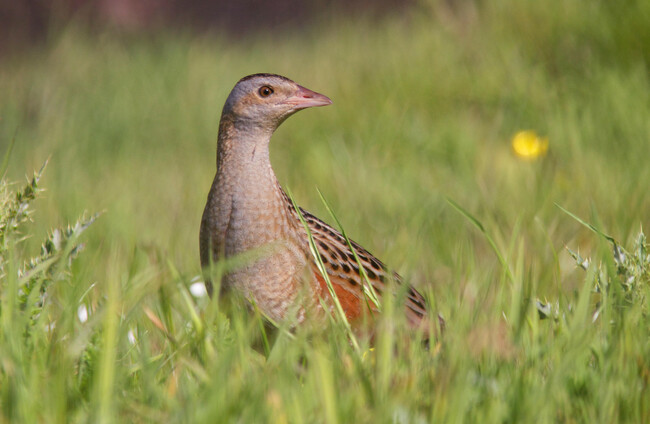
THE HIGHEST NUMBER of corncrake territories (233) have been recorded in 25 years, according to new survey data from the National Parks and Wildlife Service (NPWS).
The survey has revealed the success of the Corncrake LIFE project, a five-year project funded through the EU LIFE Programme and led by the NPWS that has been working on a number of measures to prevent the decline of the corncrake.
The number of birds has risen by 35% in project areas since it began in 2021, while the number of corncrake territories has also risen by 45% since 2018.
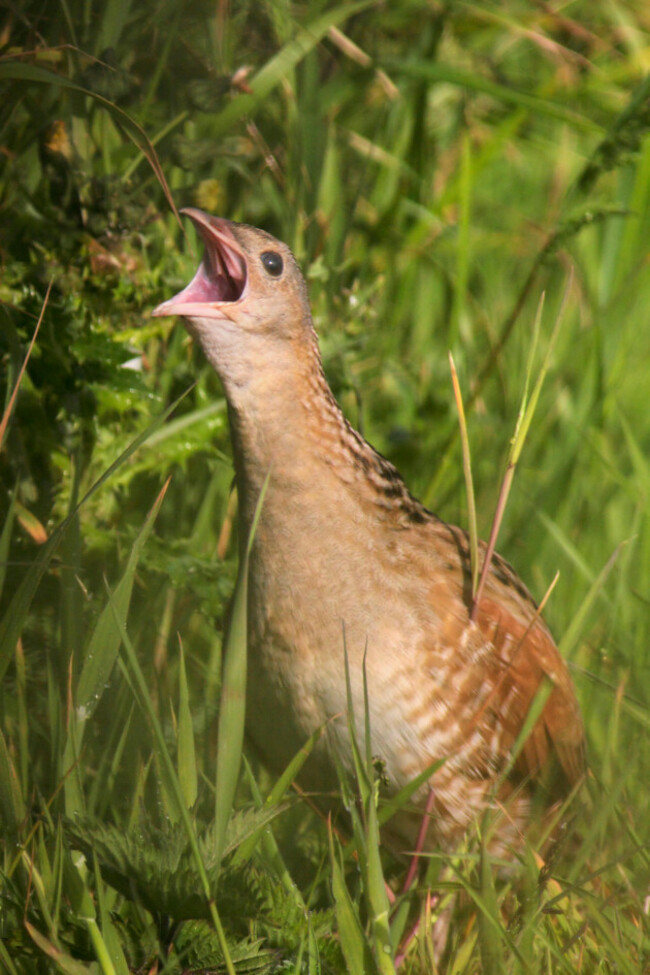
The corncrake is a shy species with a distinctive call that was once widespread across the countryside. These days it is more common in parts of the north and west coasts of Ireland.
Corncrake numbers have declined significantly in Ireland and other European countries and the bird is listed on the Red List of Conservation Concern.
Increased population
The 2024 survey from the NPWS, however, shows an increase of the national corncrake population by 15 birds, up 7% on 2023 figures.
Furthermore, the numbers of corncrake territories recorded in the core breeding areas of Donegal, Mayo and Galway have increased by 45% on 2018 baseline figures.
Almost 1,500 hectares of land is now being managed by 250 farmers and landowners to conserve the corncrake.
Responding to the survey results, Minister of State for Nature Malcolm Noonan said “these impressive results are a testament to the collaboration between farmers, landowners and the NPWS-led corncrake conservation projects”.
“As this project has shown, the NPWS is committed to working in partnership with landowners across our protected area network to deliver for both people and nature”, he continued, adding “the impact of this project is phenomenal and transformative for both local communities and the landscape”.
Corncrake conservation measures involve proactive planning with farmers in the breeding areas primarily on the north and west coast, as well as reactive measures where birds establish in new locations.
Ciaran Reaney, who co-ordinates the NPWS corncrake survey, praised the support of the farming community saying “there is still such a grá for the corncrake in Ireland that many farmers are willing to delay grass mowing in an attempt to save them and have them return”.
Still at risk
Despite the positive survey results, the corncrake is still vulnerable and at risk, and continued conservation efforts are necessary to increase corncrake numbers even further.
Dr John Carey, who manages the Corncrake LIFE project, said “while we have seen year-on-year improvements in the number of corncrake territories and the expansion of birds to areas where they have been absent for a generation, we need to be cautious in terms of our optimism”.
“Corncrakes are still very vulnerable, both to changes within our landscape but also to the dramatic shift we are seeing in our weather patterns. This summer was very tough on a lot of wildlife, with a notable drop in insect numbers which can have a devastating downstream effect on birds like corncrakes”, he continued, adding that the key to the continued success of the project is to keep the conservation efforts going.

To embed this post, copy the code below on your site
















have your say