Sign in. It’s quick, free and it’s up to you.
An account is an optional way to support the work we do. Find out more.
Sign in. It’s quick, free and it’s up to you.
An account is an optional way to support the work we do. Find out more.
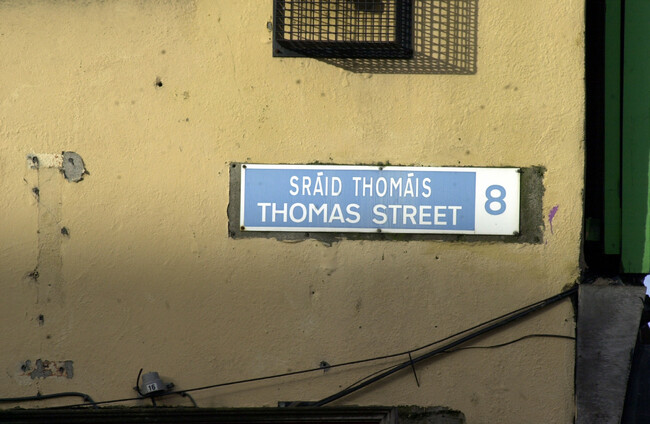
THE CRIME RATE in Dublin’s south-west inner city is more than twice the national average.
A new report shows the area is also disproportionately impacted by deprivation, low educational attainment and a lack of physical activity due to insufficient facilities.
The south-west inner city comprises areas between the river Liffey and the Grand Canal, with Clanbrassil St to the east and Tyrconnell Road to the west.
This includes the neighbourhoods of the Liberties, the Tenters, Dolphins Barn, Rialto, Kilmainham, Inchicore and Islandbridge.
Although the area contains just a quarter of Dublin’s inner-city population, it is home to nearly half of those who are classified as Extremely or Very Disadvantaged under official metrics.
Average incomes in the south-west inner city are substantially lower than the rest of Dublin.
In 2022, the average gross household income was €60,036 – 16 % lower than the county average.
The stark disparity is also seen in education.
Just 36% of students who sat the Leaving Certificate at local schools in 2024 went on to third level. That’s less than half the national average.
The report’s author Barra Roantree, who is an Assistant Professor at Trinity College Dublin, says raising progression rates to the national average would result in those students earning an extra €100,000 after tax over their lifetime. It would also mean €1.8 million in extra tax revenue for the State.
The research found that a lack of facilities is contributing to poorer health outcomes for children in the south-east inner city.
Some 92% of secondary school students and 78% of primary school students in the area are failing to meet State and World Health Organisation guidelines for physical activity.
One-in-five primary school students and one-in-four secondary school students reported never participating in organised sport outside of school.
Half of primary school students who do not participate say it is because the amenities aren’t there.
The report states that the crime rate in the area is more than twice the national average.
It is estimated that crime in the Kevin Street District, which largely overlaps with the south-west inner city, generates costs of at least €60 million per year.
This is broken down into €21 million in policing, €10 million in the prison system and €30 million in wider economic and social costs.
Meanwhile, the number of drug poisoning deaths per capita in the south-west inner city is at least twice the national average.
There were 22 drug poisoning deaths in the area in 2021, the latest year for which figures are available.
As the local health office also covers parts of Terenure, Churchtown and Rathfarnham the figure for the south-west inner city alone is likely substantially higher, the report says.
“The concentration of disadvantage highlighted in this report provides a compelling case for additional targeted investment in the south-west inner city,” Roantree said.
He said such investment could be modelled on the north-east inner city initiative, which provides funding of €8 million per year for the area.
The funding came in response to the Mulvey Report, a 2017 analysis of low educational attainment and high unemployment in the north-east inner city.
“Given the parallels, there is a compelling case for the development of a similar initiative for the south-west inner city,” Roantree said.
The report published today was commissioned by Sporting Liberties, a community-based organisation that provides opportunities for young people in the wider area to participate in sports.
JJ O’ Mahony, Chairman of Sporting Liberties said, in the next two years another 5,000 people are expected to move into the south-west inner city.
“Without a clear strategic plan and substantial investment from state bodies, there is a strong risk of a serious negative impact for a community already facing incredibly difficult social and economic challenges,” he said.
The report drew on a wide range of data sources, including the results of the 2022 Census, published administrative data and a survey of students in the area.
In recent months, the government has set up 36 Local Community Safety Partnerships around the country, with one in each local authority area to address issues, including crime and safety.
A survey is due to be run this summer on what should make up safety plans in Dublin Central, Dublin North Central, Dublin Northwest, Dublin South Central and Dublin Southeast.
-With reporting by Eoghan Dalton
The Journal’s reporting of the new Local Community Safety Partnerships is supported by the Local Democracy Reporting Scheme.

To embed this post, copy the code below on your site










have your say