Sign in. It’s quick, free and it’s up to you.
An account is an optional way to support the work we do. Find out more.
Sign in. It’s quick, free and it’s up to you.
An account is an optional way to support the work we do. Find out more.
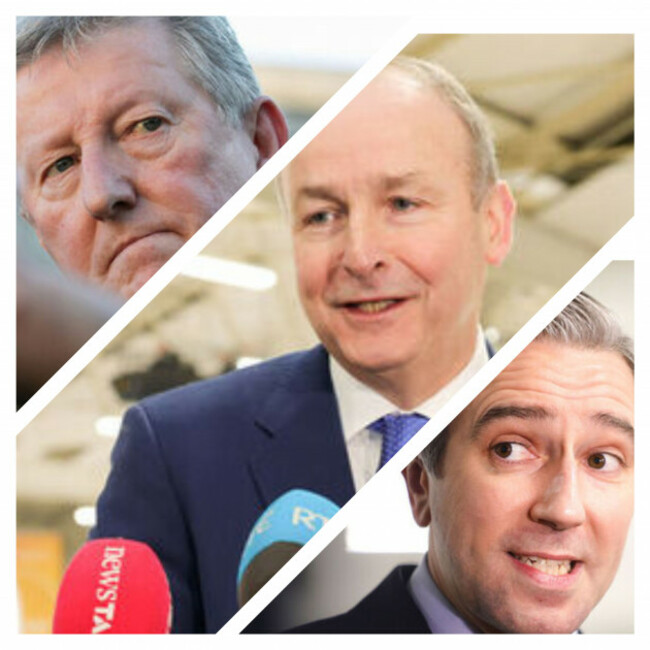
THE 162-PAGE programme for government published yesterday is a roadmap for the next five years, but there are already criticisms that it is too vague.
The word ‘continue’ is in the document 249 times, ‘explore’ is in there 34 times, ‘review’ is mentioned 126 times, ‘examine’ is contained in the document 86 times while ‘consider’ is mentioned 56 and ‘assess’ 27 times.
The firm statement of “the government will” is only in there 23 times, while the word “commit” is mentioned 118 times.
While a word search is obviously not a fully accurate assessment of the coalition document, the vagueness of some of the promises has raised eyebrows among the opposition already.
Sinn Féin’s Pearse Doherty dubbed it a “copy and paste job from five years ago”, stating that it contained “vague aspirations”.
Meanwhile his colleague David Cullinane said it lacked depth and vision.
While it is hardly surprising that Sinn Féin would pick holes in the programme, it is fair to say that the public rolls its eyes when it sees statements like:
The government will “open the National Children’s Hospital”.
No timeline, no date, no firm commitment.
The project has been one of the biggest disasters for the last government.
It is one of the country’s largest infrastructure projects where no one knows what the end cost will be. If ever a politician should utter the phrase “lessons must be learned” its with this project.
But the mention of it speaks to the point that the public are fed up with vague promises and missed deadlines.
In the setting of new year’s resolutions, people might say: “I will be able to run 5K by June” or “I will save €5,000 by Christmas”. Both measurable goals.
They don’t write down “I will explore the idea of running 5K some time in the future” or “I will continue to save some money and assess at some point later on how to reach my goal of €5,000″.
Why? Because no one would ever achieve those goals.
So, it is no surprise that such ambiguity might make the public nervous for the next five years.
In fairness, there are concrete, measurable commitments contained in the document, such as:
While the public might scan the document in search of the new government’s can-do attitude and ambitious targets, unfortunately, those things aren’t always jumping off the pages of programmes for government.
It serves an incoming government to shy away from precise details in such a document, instead stating that minute details will be hammered out later in policy plans.
One TD on the negotiating teams told The Journal that the new programme for government was never going to be as detailed as the 2020 document.
Why so? Because the Green Party are not in government.
The political landscape was a lot different then. An election had been held in February 2020, Fine Gael and Fianna Fáil needed to make up the numbers, and in quick time, as the country was barrelling towards a pandemic.
This source said that the Greens insisted on an increased level of detail around commitments in the programme for government as they knew they would need to hold Fine Gael and Fianna Fáil to their promises.
They had been burned once before when entering into government and they knew they needed clear commitments in black and white so they could hold their coalition partners feet to the fire.
Wooly promises wouldn’t have cut it in the 2020 programme for government as the other two larger parties would have rode roughshod over the Greens once they had signed on the dotted line and entered into government.
Those on the negotiating teams this time around said that this programme for government, in terms of the level of detail and format, more resembles the 2016 document, and that was the ambition.
Similarly, in 2016, the Fine Gael-led government signed a deal with a group of Independents. But comparing and contrasting the two programmes, it is clear the 2016 programme contained a lot more detail.
Firstly, the 2016 document set out clearly what the Independents were getting in return for going into government with Fine Gael, outlining the Independent’s Alliance’s wants such as more beds for cystic fibrosis patients (which was a demand of then TD Finian McGrath) and second Cath Lab in University Hospital Waterford (a demand of then TD John Halligan), among other things.
This time around, those in the larger parties state there are no constituency concessions for the Independents (although we don’t think anyone is believing that one).
Secondly, in terms of housing, under the heading of ‘More Homes’ (an excellent ambition), in the 2025 document there is no breakdown of the type of houses the government plans to deliver or yearly targets.
In comparison, the 2016 programme for government set out promises to:
There are no such pledges to achieve anything specific in the first 100 days of this new government unfortunately.
In 2016, there were 13 mentions of actions to be completed in the first 100 days of office (there are a few “within 12 months” commitments in the new programme).
It’s taken weeks for the negotiating teams and leaders burning the midnight oil to deliver this plan for the next five years, but if the new government thinks that the vagueness on precise detail is going to get them a pass from the public, they have another thing coming.
If the promises that were made repeatedly on the campaign trail and that everyone heard so much about aren’t delivered quickly, well, they’ll know all about it.

To embed this post, copy the code below on your site













have your say